
Category: Recommended Reading
From Boudicca to modern Britain: the dream of island utopias, ruled by women
Alice Albinia in The Guardian:
 Throughout history, the idea of islands where women rule has been part mythological wish fulfilment, part male fantasy – and part cultural-geographical reality. In 2017 I moved to Orkney, an archipelago still dominated, as all of Britain once was, by its monumental neolithic architecture. Early one spring morning I visited the chambered cairn of Maeshowe, which is older than Stonehenge and much more complex in construction. Originally a circle of standing stones, around 2800BC it was encased in huge slabs of rock, making a domed chamber aligned to the setting winter solstice sun. Five thousand years later, on any clear evening a few weeks either side of solstice, as the sun goes down behind the hill of a nearby island, it hits the top of a standing stone, and is channelled into Maeshowe in a burst of golden light. It is a sacred moment in Britain’s year: when nature and culture collide, exploding out of winter’s darkness in a dramatic symbol of warmth and hope.
We were there to experiment with neolithic acoustics. Kristin Linklater, an Orcadian voice coach, crawled down Maeshowe’s entrance passage first, followed by me and my baby daughter, an archaeologist or two, musicians and students. Inside the central chamber, we stood up and began to sing. Kristin and I had already discussed our fascination with Maeshowe’s shape, which, with its green turf covering, looks like a giant grassy breast or pregnant womb. Together, we had enjoyed deploring the fact that the female symbolism of this monument receives little if any mention in academic literature, let alone tourist guidebooks. Yet it is just as likely that structures such as Maeshowe were designed to honour the female body as a safehouse of human potency in the world, as they were to serve a male elite priesthood.
More here.
The new puritans
Anne Applebaum in The Atlantic:
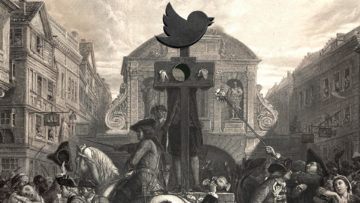 “It was no great distance, in those days, from the prison-door to the market-place. Measured by the prisoner’s experience, however, it might be reckoned a journey of some length.”
So begins the tale of Hester Prynne, as recounted in Nathaniel Hawthorne’s most famous novel, The Scarlet Letter. As readers of this classic American text know, the story begins after Hester gives birth to a child out of wedlock and refuses to name the father. As a result, she is sentenced to be mocked by a jeering crowd, undergoing “an agony from every footstep of those that thronged to see her, as if her heart had been flung into the street for them all to spurn and trample upon.” After that, she must wear a scarlet A—for adulterer—pinned to her dress for the rest of her life. On the outskirts of Boston, she lives in exile. No one will socialize with her—not even those who have quietly committed similar sins, among them the father of her child, the saintly village preacher. The scarlet letter has “the effect of a spell, taking her out of the ordinary relations with humanity, and enclosing her in a sphere by herself.”
We read that story with a certain self-satisfaction: Such an old-fashioned tale! Even Hawthorne sneered at the Puritans, with their “sad-colored garments and grey steeple-crowned hats,” their strict conformism, their narrow minds and their hypocrisy. And today we are not just hip and modern; we live in a land governed by the rule of law; we have procedures designed to prevent the meting-out of unfair punishment. Scarlet letters are a thing of the past.
More here.
Can Machines Have Common Sense?
William Hasselberger at The New Atlantis:
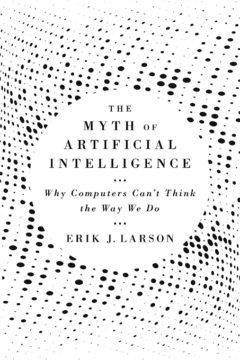 To be even remotely plausible, a computer model of the human mind must warp — and restrict — our commonsense definitions of intelligence, knowledge, understanding, and action. Larson discusses the renowned computer scientist Stuart Russell, who defines intelligence as simply the efficient pursuit of objectives, based on inputs from the environment. An “intelligent agent,” says Russell, is just a physical “process” whereby a “stream of perceptual inputs is turned into a stream of actions” to achieve a predefined “objective.” As Larson wryly notes, this definition “covers everything from Einstein ‘achieving’ his ‘objective’ when he reimagined physics as relativity, to a daisy turning its face toward the sun.” It places intelligent human activity on the same spectrum as Venus fly traps and shrimp; the difference is merely a matter of complexity.
Among other things, this ignores the reflective aspect of human intelligence — how we discover, imagine, question, and commit to our objectives in the first place, the judgments we make about which objectives really matter in life, and which are trivialities, distractions, irrational cravings.
more here.
Michael Harrington’s Democratic Socialism
Gary Dorrien at Commonweal:
 “We never said the welfare state is a substitute for socialism.” This staple of Harrington’s lecture tours had a flipside, his retort to old-school socialists: “Any idiot can nationalize a bank.” He said both things frequently after Mitterrand retreated. Harrington relied on his core message: bureaucratic collectivism is an unavoidable reality. The question is whether it can be wrested into a democratic and ethically decent form. Freedom will survive the ascendance of globalized markets and corporations only if it achieves economic democracy. Harrington had long argued that the market should operate within a plan, but in the mid-1980s his actual position shifted to the opposite. He conceived planning within a market framework on the model of Swedish and German social democracy—solidarity wages, full employment, co-determination, and collective worker funds. To many critics that smacked of selling out socialism. He replied: “To think that ‘socialization’ is a panacea is to ignore the socialist history of the twentieth century, including the experience of France under Mitterrand. I am for worker- and community-controlled ownership and for an immediate and practical program for full employment which approximates as much of that ideal as possible. No more. No less.”
more here.
In Our Time: Doggerland
https://www.youtube.com/watch?v=wcubRlMqaEs
Thursday Poem
The Priest’s Son
these five hills
are the five demons
that Khandoba killed
says the priest’s son
a young boy
who come along as your guide
as the schools have vacations
do you really believe that story
you ask him
he doesn’t reply
but merely looks uncomfortable
shrugs and looks away
and happens to notice
a quick wink of a movement
in the scanty patch of scruffy dry grass
burnt brown in the sun
as says
look
there’s a butterfly
there
The Butterfly
There is no story behind it.
It is split like a second.
It hinges around itself.
It has no future.
It is pinned down to no past.
It’s a pun on the present.
It’s a little yellow butterfly.
It has taken these wretched hills
under its wings.
Just a pinch of yellow,
it opens before it closes
and closes before it o
where is it
by Arun Kolatkar
from Jejuri
New York Review Books, 2005
Wednesday, September 8, 2021
We can’t escape the social dimension of choosing how we die
Joshua Briscoe in The New Atlantis:
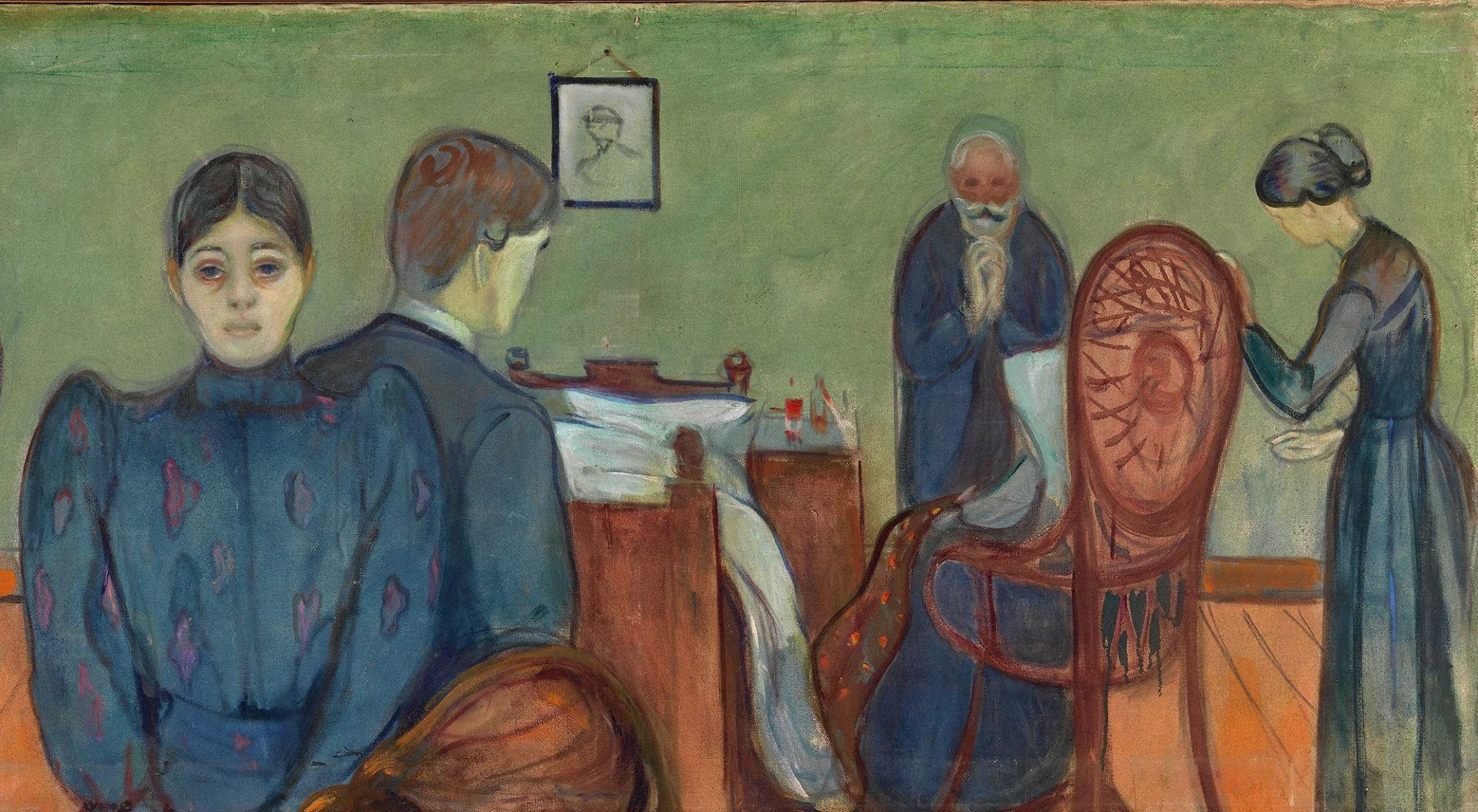 In April, the New York Times published a news article that was essentially an advertisement for physician-assisted suicide. “It’s less a question of uncontrollable physical pain,” the article explained. Rather, most patients who want doctors to help them end their lives feel they have lost autonomy, dignity, and quality of life, and are unable to “engage in what makes people’s lives meaningful.” And this type of “intractable” pain is “defined by patients, not doctors.” More state laws, so the reasoning goes, should come to allow these patients’ autonomous choice.
But what proponents of this view persistently fail to see is its double-edged nature. A patient’s choice to end her life is not “defined” by her, if by that we mean that it is a choice that is just about herself. Rather, it is a declaration about what kind of life is worth living. It is thus also a statement about other people’s lives, a statement to others about when their own lives are worth living or not.
More here.
Sean Carroll’s Mindscape Podcast: Nigel Goldenfeld on Phase Transitions, Criticality, and Biology
Sean Carroll in Preposterous Universe:
 Physics is extremely good at describing simple systems with relatively few moving parts. Sadly, the world is not like that; many phenomena of interest are complex, with multiple interacting parts and interesting things happening at multiple scales of length and time. One area where the techniques of physics overlap with the multi-scale property of complex systems is in the study of phase transitions, when a composite system transitions from one phase to another. Nigel Goldenfeld has made important contributions to the study of phase transitions in their own right (and mathematical techniques for dealing with them), and has also been successful at leveraging that understanding to study biological systems, from the genetic code to the tree of life.
More here.
Tomas Pueyo: Why stories captivate
Mohammad Hossein Jafarian on Afghanistan: “We’ve been burning for twenty years and more”
Salar Abdoh and Mohammad Hossein Jafarian in Guernica:
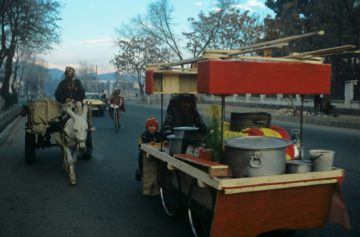 Salar Abdoh: I’ve read my share of books and articles over the years about Afghanistan and talked to people who spent stretches of time there, but it’s no exaggeration to say that I’ve never come across one person who has more in-the-field experience than you have about a land that few understand but many weigh in on, far too irresponsibly.
The thing that I want to first ask you about, the thing that I suppose has irked me as I listen to Western analyses of the debacle now brought on Afghanistan — the obscene withdrawal, the countless “assets” left behind to fend for themselves, and the general misery that Afghans faced before and will face now with a Taliban that has waited two decades to mete retribution — is this notion of “nation-building” that Americans always talk about. Both left- and right-leaning American politicians take for granted that, in fact, that is what America tried to do in Afghanistan. It’s the premise that everyone begins their conversation with. Do you think that America was ever really engaged in nation-building in Afghanistan?
Mohammad Hossein Jafarian: A false premise. Someone engages in building a nation who understands that nation – its people, what they eat, what they dream, how they walk through a door, what their aspirations are. Instead you go and pluck some guy, Ashraf Ghani, from the World Bank and install him there and imagine you are building a nation?
More here.
Wednesday Poem
Speak
Now is the time to speak
Lips not be sealed
Body unbroken
Blood coursing still
Through your veins
Now is the time to speak
Look
The iron glows red
Like your blood
The chain lies open
Like your lips
Now is the time to speak
Speak
For truth and honor shall not wait
Speak
Say all that needs to be said today
by Anjum Altaf
from Trangressions, Poems Inspired by Faiz Ahmed Faiz
LG Publishers, Delhi,2019
On Józef Czapski’s “Memories of Starobielsk”
Philip Ó Ceallaigh at the LARB:
 JÓZEF CZAPSKI was a reserve officer in the Polish army when German and Soviet forces invaded his country in September 1939. His unit surrendered to the Soviets toward the end of that month. In “Memories of Starobielsk,” the 40-page essay that gives this collection, translated by Alissa Valles, its title, Czapski tells how he and his comrades were deceived by the promise that they would be sent through neutral territory to France, from where they could continue the fight against the Germans. Instead, they were marched eastward as prisoners of war, over the Soviet frontier:
A world apart. Ruined shabby houses, dilapidated, as if they’d never had any maintenance. As for the famous electrification you read so much about: every so often there was an electric lamp blinking a wan red light, and in the city park, Stalin’s profile in red neon — that was all.
more here.
Walking with Simone de Beauvoir
Annabel Abbs at The Paris Review:
 Simone de Beauvoir’s rucksack invariably contained a candle, an alarm clock, a copy of the local Guide Bleu, a Michelin map, and a felt-covered water bottle filled with red wine. She hadn’t always walked with a rucksack: when she arrived in Marseilles, age twenty-three, to take up her first teaching post, she’d walked with a basket. It was here, among the mountains, valleys, and cliffs of Provence, that a passion for solitary rambles and “communion with nature” first took hold of her. “I derived a satisfaction I had never known in all the rush and bustle of my Paris life,” she wrote in her memoir.
But the funny thing is, no one thinks of Beauvoir as a backpacking hillwalker. We think of her sitting in smoky Paris cafes, a string of pearls at her neck, a chic turban wrapped around her head, Jean-Paul Sartre philosophizing at her side.
more here.
‘I don’t care’: text shows modern poetry began much earlier than believed
Alison Flood in The Guardian:
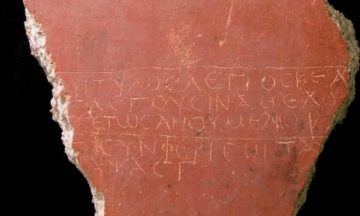 For Taylor Swift, the “haters gonna hate”, but she’ll just “shake it off”. Now research by a Cambridge academic into a little-known ancient Greek text bearing much the same sentiment – “They say / What they like / Let them say it / I don’t care” – is set to cast a new light on the history of poetry and song.
The anonymous text, which concludes with the lines “Go on, love me / It does you good”, was popular across the eastern Roman empire in the second century, and has been found inscribed on 20 gemstones and as a graffito in Cartagena, Spain. After comparing all known versions of the text for the first time, classics professor Tim Whitmarsh spotted that it used a different form of metre than usually found in ancient Greek poetry, employing stressed and unstressed syllables. Whitmarsh said that “stressed poetry”, the ancestor of all modern poetry and song, was unknown before the fifth century, when it began to be used in Byzantine Christian hymns. Before the emergence of stressed poetry, poetry was quantitative – based on syllable length.
“We’ve known for a long time that there was popular poetry in ancient Greek, but a lot of what survives takes a similar form to traditional high poetics. This poem, on the other hand, points to a distinct and thriving culture, primarily oral, which fortunately for us in this case also found its way on to a number of gemstones,” said Whitmarsh. “You didn’t need specialist poets to create this kind of musicalised language, and the diction is very simple, so this was clearly a democratising form of literature. We’re getting an exciting glimpse of a form of oral pop culture that lay under the surface of classical culture.” Whitmarsh believes the verse, with its lines of four syllables, with a strong accent on the first and a weaker on the third, could represent a “missing link” between the lost world of ancient Mediterranean oral poetry and song, and the more modern forms that we know today. It is, he says, so far unparalleled in the classical world.
More here.
September 11: An Iranian In New York
Kian Tajbakhsh in kian.substack,com:
 Twenty years ago, precisely on 9-11-2001, I was booked to fly out from NYC to Tehran. All flights were cancelled, so I witnessed the aftermath of the gruesome attack here in Manhattan. I wrote about what I saw and what I felt, drawing on what I then understood about the world. It was hardly a deep understanding especially about the Middle East, Iran, or Islamism, I admit. (That I was woefully unprepared to navigate the tumultuous waters of Middle Eastern geopolitics – which after 9-11 began churning with a new intensity – was something I would learn the hard way in the decade to come.) My essay “September 11: An Iranian In New York” was published in English in November after reaching Tehran. It was then published in Persian in one of Tehran’s main newspaper’s magazine edition. I have appended the Persian at the end this post.
I ended the essay with an expression of hope, Langston Hughes’ poem Let America be America Again. Today I know more than I did then about both the contradictions and the unfulfilled promises of America in that part of the world; I would certainly qualify some of the somewhat naively critical assessments of America’s international role, if I was to write it today. Despite the passage of two decades and much hard-won experience, I still feel the power and hope expressed in the poem, which captures, unflinchingly but in the end lovingly, the unfulfilled promise of America. A promise which I feel even more strongly today is worth striving for. I share the essay here to remember that grim day and its victims.
More here.
Sextet, by Steve Reich
Tuesday, September 7, 2021
Rosmarie Waldrop’s poems suspend time to achieve the experience of instantaneity
Ryan Ruby at the Poetry Foundation:
 The prose poem begins life as a paradox and a provocation. On Christmas Day 1861, Charles Baudelaire sent a letter to Arsène Houssaye, the editor of L’Artiste and Le Presse, journals that had published some of Baudelaire’s short prose pieces. “Who among us has not dreamt, in moments of ambition, of the miracle of a poetic prose, musical without rhythm or rhyme, supple and staccato enough to adapt to the lyrical stirrings of the soul, the undulations of dreams, and sudden leaps of consciousness?” he wrote to Houssaye. The letter was first published as the preface to a posthumous collection of 50 prose pieces titled Petits Poèmes en prose (later, Le Spleen de Paris). Along with the neo-Biblical rhythms of Walt Whitman’s ever-expanding editions of Leaves of Grass, Baudelaire’s “little poems in prose” inspired a generation of French Modernists to undertake experiments in what they called vers libre or free verse: poetry untethered from meter, the feature that had distinguished it as a literary form, in the West at least, since Aristotle’s Rhetoric.
More here.
Steven Pinker speaks about his new book, “Rationality”
David Marchese in the New York Times:
Your new book is driven by the idea that it would be good if more people thought more rationally. But people don’t think they’re irrational. So what mechanisms would induce more people to test their own thinking and beliefs for rationality?
 Ideally there’d be a change in our norms of conversation. Relying on an anecdote, arguing ad hominem — these should be mortifying. Of course no one can engineer social norms explicitly. But we know that norms can change, and if there are seeds that try to encourage the process, then there is some chance that it could go viral. On the other hand, a conclusion that I came to in the book is that the most powerful means of getting people to be more rational is not to concentrate on the people. Because people are pretty rational when it comes to their own lives. They get the kids clothed and fed and off to school on time, and they keep their jobs and pay their bills. But people hold beliefs not because they are provably true or false but because they’re uplifting, they’re empowering, they’re good stories. The key, though, is what kind of species are we? How rational is Homo sapiens? The answer can’t be that we’re just irrational in our bones, otherwise we could never have established the benchmarks of rationality against which we could say some people some of the time are irrational.
More here.
Fully autonomous weapons threaten to outpace our ethical frameworks for what is permitted in war
AC Grayling in Prospect:
 Although the aim of conflict is as it ever was—to destroy or degrade the enemy’s capacity and will to fight—at every level from the individual enemy soldier to the economic and political system behind them, war has changed in character. This evolution is prompting new and urgent ethical questions, particularly in relation to remote unmanned military machines. Surveillance and hunter-killer drones such as the Predator and the Reaper have become commonplace on the modern battlefield and their continued use suggests—perhaps indeed presages—a future of war in which the fighting is done by machines independent of direct human control. This scenario prompts great anxieties.
More here.