
Quentin Bruneau in Phenomenal World:
How should we explain periods of profound global transformation? Since the late nineteenth century, historically-minded scholars have viewed socio-political change as a reflection of property relations and technological shifts in the productive process. Capitalism was positioned as the principal driver of the international state system, with states broadly operating in the interest of maintaining capitalist social relations. In recent years, however, a parallel tradition of thought has gained ground. In this tradition, the bureaucratic and military consolidation of states operates as the driver of economic relations. From this perspective, capitalist forms of exploitation appear as a means to finance the state’s coercive power and navigate competition between states internationally. The relation between states and markets underpins nearly every major challenge of our time, from climate change, to war, to austerity and sovereign debt. Should we understand these developments through the interests of Capital, or should we instead conceive of them as the product of inter-state competition and power? The question is not merely of analytical interest; where we place emphasis directly informs the sort of solutions we envision to global problems. If climate change and war are the result of inter-state competition, greater cooperation can lead to a solution. If they are the result of Capitalism, instead, they will remain unresolved until we do away with the economic system itself. In what follows, I survey this longstanding debate and introduce an important and overlooked turningpoint: the rise of Great Power politics. Ultimately, however, I argue that our global order cannot be understood outside of the complex social contexts out of which it emerges—contexts which cannot be reduced to any single dimension alone.
More here.
Enjoying the content on 3QD? Help keep us going by donating now.
 As journalists comb through the
  Such moments of insight are written across history. According to the Roman architect and engineer Vitruvius, in the third century BCE the Greek mathematician Archimedes suddenly exclaimed “Eureka!” after he slid into a bathtub and saw the water level rise by an amount equal to his submerged volume (although this tale
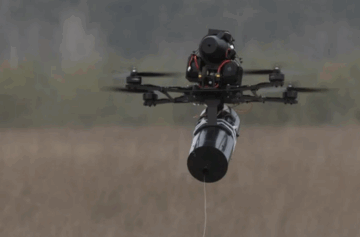 The drone is increasingly regarded as the infantryman’s basic weapon. The U.S. Army is
  I
I Jack Kerouac’s only child, Jan Kerouac, lived hard and died young. She was 44 when she succumbed to complications of liver failure in Albuquerque in 1996. She met her famous father, the author of “On the Road” and the avatar of the Beat generation, only twice.
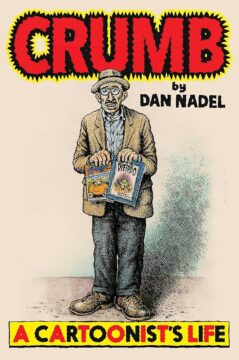 Now 82, Crumb is America’s greatest cartoonist. Inimitable and inventive as Herriman and Gould were, neither had his range, nor his independence. Crumb, who developed a rounded, cuddly style reminiscent of Depression-era cartoons, is also a great draughtsman, with a capacity to render fastidiously detailed naturalistic drawings. Technique alone cannot account for his eminence, however. Crumb is both an observant satirist and a self-aware student of his own drives. His grasp of American vernacular and his sardonic humour suggest a comparison with Mark Twain as well as with Twain’s admirer, the proudly prejudiced social critic
  We are at that strange stage in the adoption curve of a revolutionary technology at which two seemingly contradictory things are true at the same time: It has become clear that artificial intelligence will transform the world. And the technology’s immediate impact is still sufficiently small that it just about remains possible to pretend that this won’t be the case.
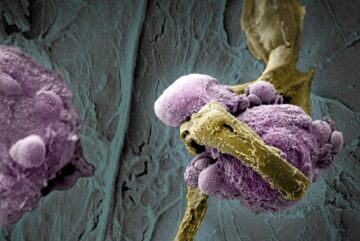 Since the 1800s, cancer surgeons have known that tumours can spread along the nerves. Today, the burgeoning field of cancer neuroscience is starting to reveal the true impact of the disease’s interaction with the nervous system. The phenomenon, known as perineural invasion, is common in certain types of cancer. “When treating patients with head and neck cancers, I see invasion into nerves in about half of cases,” says Moran Amit, professor of head and neck surgery at The University of Texas MD Anderson Cancer Center. “It’s an ominous feature. It puts patients in a higher risk category and requires us to escalate treatment.”
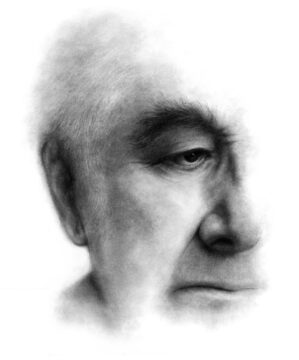 “The Poems of Seamus Heaney” amplifies a reader’s understanding of the poet’s accomplishment by putting the meticulous grandeur of each book into the context of uncollected and unpublished poems, many of them excellent and all of them illuminating. With a lucid, chronological format for the Contents page, the volume’s editors invite readers to sample the honorable outtakes and preliminaries, the range-finding preparatory studies, that underlie for instance the haunted vision of “North” (1975) or the magisterial yet intimate scope of “Station Island” (1984).
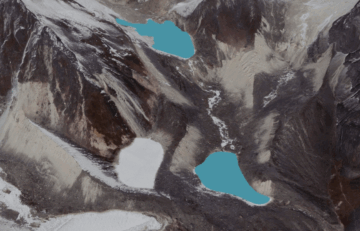 The ice of the Himalayas is wasting away. Glacier-draped slopes are going bare. The ground atop the mountain range, which sprawls across five Asian countries, is slumping and sliding as the ice beneath it — ice that held the land together — disappears. Meltwater is puddling in the valleys below, forming deep lakes.