From Harvard Magazine:
 “WORRYING SEEMS ABOUT as necessary as breathing these days,” President Lawrence J. Bacow remarked last Friday in his address at the tenth annual Harvard Initiative for Learning and Teaching (HILT) conference. “Global challenges abound, and efforts to address them will have to be based in deep considerations of equity and justice, of community and humanity. How do we prepare our students to undertake that work? How can we do a better job as teachers, as scholars, as leaders, of putting our own work in as broad a context as possible?” These questions opened the conference, this year titled “Tackling Global Challenges from the Harvard Classroom and Beyond” and attended by more than 300 Harvard faculty members and academic leaders. The conference is designed to create a University-wide dialogue about teaching and learning innovation among Harvard’s professors, senior leaders, academic professionals, and students. (Read about the 2020 conference here.)
This year’s event—again conducted virtually via Zoom—encouraged Harvard educators to reflect on their experience teaching remotely during a pandemic that “exacerbated issues” like social and healthcare inequality “that have existed in society for many, many years,” said panelist and senior lecturer in molecular and cellular biology Alain Viel. Undergraduate courses have returned to in-person instruction, but “We can’t ignore what happened during the last 17 months,” said Bharat N. Anand, vice provost for advances in learning. Those 17 months—marked by the pandemic, remote teaching, protests against systemic racism and police brutality, and economic hardship for millions of people—made it clear to educators that their students will enter a changed world after graduation.
Graduate School of Education (HGSE) dean Bridget Terry Long noted that as students spread around the world into a wide variety of communities, Harvard was no longer “far removed in Cambridge in the ivory tower.” With both the state of the world and the global reach of remote teaching in mind, the conference posed one central question: “How can we best prepare students to address global challenges in thoughtful and creative ways?”
More here.

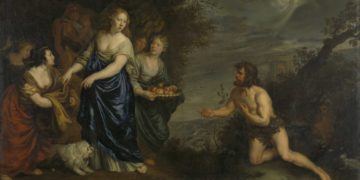 In case we wonder why not all of us have healthy, sustaining, lifelong friendships, this issue offers some answers to the riddle of why and how friendships, begun in such pleasure and good faith, can derail so catastrophically.
 The United States began bombing the border zone, then known as the Federally Administered Tribal Areas (FATA), in 2004, ostensibly to combat al-Qaeda and the Taliban. It has bombed the area at least 430 times, according to the London-based Bureau of Investigative Journalists, and killed anywhere between 2,515 to 4,026 people.
 The term ‘atheist’ can be just as ambiguous as ‘religious’ and ‘God’. In the 17th century, it was essentially an all-purpose word used against anyone whose view of God departed from orthodoxy – much in the way that ‘communist’ was (and is) used in the USA to cast aspersion on political opponents (and much in the way that ‘Spinozist’ was used in the early modern period after Spinoza’s works were posthumously published and condemned). But Spinoza does not only dismantle the orthodox notion of a personal God, which he regards as a source of human misery. He also famously refers to ‘God or Nature’ (Deus sive Natura), which suggests that God is nothing but nature, and that ‘God’ can broadly be construed to refer both to the visible cosmos and to the unseen but fundamental power, laws and principles that govern it. And this, to me at least, looks like true atheism. In Spinoza’s view, all there is is nature. There is no supernatural; there is nothing that does not belong to nature and that is not subject to its causal processes.
 “Normal behavior and physiology depends on a near 24-hour circadian release of various hormones,” said Jeff Jones, who led the study as a postdoctoral research scholar in biology in Arts & Sciences and recently started work as an assistant professor of biology at Texas A&M University. “When hormone release is disrupted, it can lead to numerous pathologies, including affective disorders like anxiety and depression and metabolic disorders like diabetes and obesity.
 Urging the German people to “stop the steal,” Donald J. Trump claimed that he was elected Chancellor of Germany over the weekend. Trump said that, once the official vote tallies have been recounted, it will be clear that he won the German election by a “landslide.” Reflecting on his purported win, Trump said,
 Dave Eggers’s newest book,
  In the question to understand the biology of life, we are (so far) limited to what happened here on Earth. That includes the diversity of biological organisms today, but also its entire past history. Using modern genomic techniques, we can extrapolate backward to reconstruct the genomes of primitive organisms, both to learn about life’s early stages and to guide our ideas about life elsewhere. I talk with astrobiologist Betül Kaçar about paleogenomics and our prospects for finding (or creating!) life in the universe.
 “Leave? Certainly not. This Brit is staying” wrote journalist Stephen Vines in July 1997. Vines had given up his full-time position at the Observer in London to be stationed in Hong Kong on a part-time basis in 1987. At the time of the Handover, Vines had been living and working in Hong Kong as a journalist and businessman for ten years. He had faith in the people of Hong Kong, in the energy and audacity of the city. He believed that it was “foolish to jump before being pushed,” referring to those who had made plans to leave the city before the governance of the territory was returned to China. Vines kept his resolution and stayed in Hong Kong for another 24 years, constantly reporting on the business, finance, and politics of this city for a wide range of local and international media outlets. In 2021, he paid homage to the people of Hong Kong with his new book, Defying the Dragon: Hong Kong and the World’s Largest Dictatorship. In August, two months after the book’s publication, Vines ended his 34-year-long sojourn in the city and departed for London.
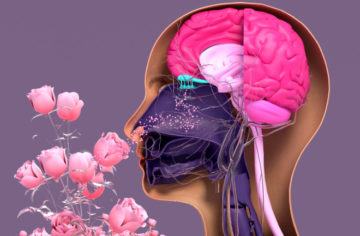 In 2018, Jennifer Culverson was at home in Charleston, South Carolina, when she was violently assaulted by her then-boyfriend. (Culverson’s name has been changed to protect her identity.) Her attacker overpowered her and battered her head against the floor with such force that it caused a traumatic brain injury. In the weeks and months that followed, Culverson couldn’t walk or get out of bed. She had trouble putting words together and her speech was slurred.
 Reading between the lines, I think she learned pretty much the same thing a lot of the rest of us learned during the grim years of the last decade. Of the fifty-odd biases discovered by Kahneman, Tversky, and their successors, forty-nine are cute quirks, and one is destroying civilization. This last one is confirmation bias – our tendency to interpret evidence as confirming our pre-existing beliefs instead of changing our minds. This is the bias that explains why your political opponents continue to be your political opponents, instead of converting to your obviously superior beliefs. And so on to religion, pseudoscience, and all the other scourges of the intellectual world.
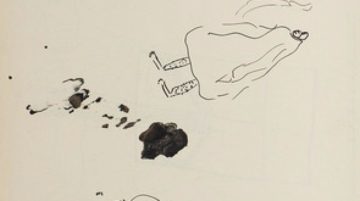 The author of some of the most acclaimed works of the modern literary canon, including The Trial (1925), The Castle (1926), and The Metamorphosis (1915), was drawing and sketching extensively before he published a single word. Brod, Kafka’s closest friend and literary executor, held on to as many of the drawings as he could. When Kafka died in 1924, Brod famously disregarded the author’s instructions that everything was “to be burned, completely and unread.” He spent the rest of his life publishing and promoting Kafka’s work, and when he fled the Nazi occupation of Prague in 1939 for Palestine, he took Kafka’s papers and drawings with him. He published a small selection of the pictures in his biographical writings on Kafka and sold two of them to the Albertina in Vienna. Others appeared in Kafka’s diaries, today at the Bodleian Library at Oxford, which Brod edited for publication in 1948. This is all the world has known until now of Kafka’s art — scarcely 40 or so drawings and sketches from what was once a far larger corpus, much of it lost or destroyed, and the rest mostly invisible to the public until this year.
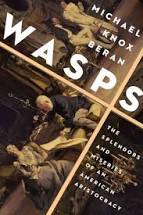 Michael Knox Beran begins his exploration brutally by telling us that the WASPs are finished, quite dead. Edie Sedgwick, one of Andy Warhol’s muses, was the last desperate gasp of the WASPs, reduced to being brought to prominence (of a kind) by someone from Pittsburgh and then cruelly abandoned. She died of a drug overdose in 1971. Her father, Fuzzy, was bad enough, removing himself to California, where he turned his vast private estate into a version of the Playboy Mansion. The book goes backwards from there but things don’t get any better. Early on comes this extraordinary sentence: ‘There is … great difficulty in writing about people whose time has passed, who were bathed in the lukewarm bath of snobbery, who, with flashes of insight, were largely mediocre.’
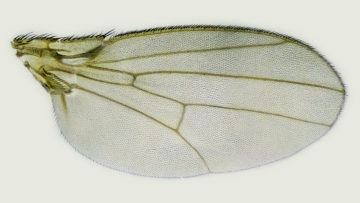 Two years ago, to prepare for an unusual photo shoot, a team of scientists plucked the wings from thousands of fruit flies and pressed each flake of iridescent tissue between glass plates. As often as not, the wing tore or folded, or an air pocket or errant piece of dust got trapped along with it, ruining the sample. Fly wings are “not like Saran wrap,” said