
The Day After American Samoa Is Under Water
The evening news helicopters compete for the best camera angle
above the water, fighting to find anything worthy of coverage.
A floating high chief. A baby’s arm flattened by a coconut tree. Anything
Even the Titanic was enormous enough to leave remnants of itself
to buoyancy. They were a giving people. There’s gotta be something here.
Congress assembles immediately to vote on a bill that supports relief efforts
for our displaced, and our Congressman sits in his own numbing silence,
knowing that by law: he still does not have a vote that will count for anything
due to the U.S. national status of our island country, as he watches
his colleagues raise and lower their hands amidst his own spinning head.
The Department of Homeland Security calls an emergency meeting to strategize
where FEMA should deploy relief efforts. After ten minutes, they declare relief
pointless and decide to go home. The Pentagon, however, collapses
into the arms of their own fiscal grief, realizing that their #1 army recruitment
station for enlisting the most soldiers in the world is now underwater.
On land, news anchors are practicing their pronunciation of American Samoa
to themselves, struggling to stretch the long “ah” sound across the country
of their mouth. The cameraman rolls, and every news anchor forgets everything
they have spent three whole minutes trying to not mess up. Except American,
of course. No lips ever slaughter that word. Critique it til dissection, sure.
Slice it down its chest, skin pinned back like butterfly wings, but even that
is a careful cruelty. Even that requires gloves and good lighting. Patience.
All across the world, maps are being dusted off and pulled out of desk drawers.
Google overheats in frantic frequency and the search for where exactly American Samoa
is begins. Was. Where it was. In other people’s homes, parents press
their child’s hand to the blueness of the gridded paper and pronounce Pacific
slow to the rhythm of their child’s puckered lips. To make it more interactive,
world maps are being taped to the walls of living rooms
blindfolds are tied softly across the budding eyes of toddlers
ribbon in hand, as they are instructed to pin the tail on the island that once was.
In our homes, you can hear the wailing of our grandparents
through every avenue that sound can travel. Never could I have imagined
the day where all of us Samoans would curse the U.S. for treaty writing us
into owning us, but here we alive ones are, a panic of mouths swollen at the throat
of our American nightmare. In my home, grandpa is alone in his room,
looking outside the window. I walk over to sit beside him, my hands cupping
his hands in my lap, as he mumbles quietly through a stream of tears:
Where will the family bury me now?
by Terisa Siagatonu
from Split This Rock
 Rachel Kushner in n+1:
 Megan Marz in The Baffler:
 A forum over at The Boston Review with a lead piece by Dan Breznitz:
 For many people, the Golden Record was less a testament to belief in alien life than a gesture: humanity’s bold shout into the abyss. Indeed, facing criticism about the project, those behind it sometimes insisted it should be taken symbolically. Yet the care that went into the design of the records belies this dismissal. In a 2017 essay for the New Yorker, Timothy Ferris, one of the architects of the Golden Record, explained that the overrepresentation of Bach and Beethoven was meant to aid aliens in understanding the music, even if their hearing doesn’t resemble ours. “They’d look for symmetries—repetitions, inversions, mirror images, and other self-similarities—within or between compositions,” he hypothesized. “We sought to facilitate the process by proffering Bach, whose works are full of symmetry, and Beethoven, who championed Bach’s music and borrowed from it.” The careful curation—not to mention the bare bones of a turntable included with the records, along with a detailed diagram for its assembly—suggests that the Golden Record was not a lark, but a serious attempt to reach someone.
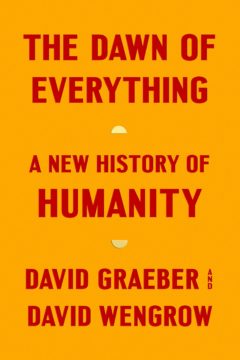 Of course, few modern scholars accept either Hobbes’s bleak caricature or Rousseau’s romantic musings. Nonetheless, Graeber and Wengrow argue, these antithetical conceptions of human nature feed into the consensus that has been popularised by figures such as Diamond and Harari.
 As a novel, “Dune” has never been unconditionally admired. I know sophisticated readers, devoted science fiction fans, who can’t stand it, finding Herbert’s prose inept, the action ponderous, and the whole book clumsy and tedious. But sf readers are contentious, often cruelly so, and nearly all of the field’s most beloved novels and series also have cogent and vocal detractors: Isaac Asimov’s “
 In May 1453, Ottoman military forces under Sultan Mehmed II captured the once great Byzantine capital of Constantinople, now Istanbul. It was a landmark moment. What was viewed as one of the greatest cities of Christendom, and described by the sultan as “the second Rome”, had fallen to Muslim conquerors. The sultan even called himself “caesar”.
 We turn to the Internet for answers. We want to connect, or understand, or simply appreciate something—even if it’s only Joe Rogan. It’s a fraught pursuit. As the Web keeps expanding faster and faster, it’s become saturated with lies and errors and loathsome ideas. It’s a Pacific Ocean that washes up skeevy wonders from its Great Garbage Patch. We long for a respite, a cove where simple rules are inscribed in the sand.
 In the last chapter of his first book, Reign of Terror: How the 9/11 Era Destabilized America and Produced Trump, Spencer Ackerman reminds his readers of Bernie Sanders’s June 2019 assertion: “There is a straight line from the decision to reorient U.S. national-security strategy around terrorism after 9/11 to placing migrant children in cages on our southern border.”
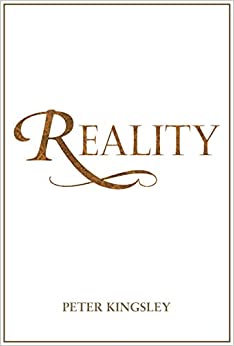 Academics use the category of magic, well, often magically, to dismiss the phenomenon they are studying, to banish the subject matter from living contact with their present reality. Ancient philosophy is over there, good and dead, and we enlightened modern philosophers and scholars are over here, living, present, pristine and modern, washed clean of ancient superstitions. But magic is rather sticky, hard to wash off from the hands or the delicate underside of the modern mind, to which it clings like a sinister visitor who has always arrived, but is still waiting to announce itself.
 Take the word “understand;” in daily communication we rarely parse it’s implications, but the word itself is a spatial metaphor. Linguist Guy Deutscher explains in
  For the longest part of our history, humans lived as hunter-gatherers who neither experienced economic growth nor worried about its absence. Instead of working many hours each day in order to acquire as much as possible, our nature—insofar as we have one—has been to do the minimum amount of work necessary to underwrite a good life.
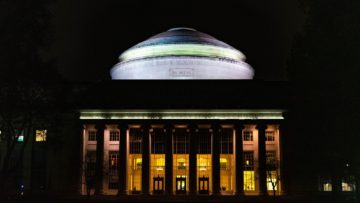 Sometimes our most precious cultural institutions fail to live up to their high educational and moral commitments and responsibilities. These failures especially damage the social fabric because they tend to harm many people who rely on them and tarnish the high ideals that the institutions claim to exemplify.
 We don’t know his real name. In early inscriptions it appears as Yhw, Yhwh, or simply Yh; but we don’t know how it was spoken. He has come to be known as Yahweh. Perhaps it doesn’t matter; by the third century BCE his name had been declared unutterable. We know him best as God.