
On David Attenborough’s Possibility of Grief without Anthropomorphising
The problem for the scriptwriter is being human, desperately seeking proof in the lay of a trunk, the nudge of a mother’s foot against her child’s cracked hide lying in the dust and drought, flies swirling helixes in the air. What should we make of her refusal to move, the others who keep moving toward the horizon’s dull shimmer? The stretch of an elephant’s foot contains muscles capable of interpreting vibrations through the ground. How do we measure the frequencies of our loss? A raised leg, a pointed toe, the nudge of a mother’s foot. Even though you have been gone for two years, my mind continues to stumble over your body, the quick pause of surprise, my mother’s stubborn refusal to leave your side, the lack of sound where your breath should be. When they find bones whose bleach they recognize as their own, a herd will stand in a circle together, faces gray, vibrating low moaning syllables as the sun and shadow, like a rib cage, expand.
by Jared Beloff
from Contrary Magazine

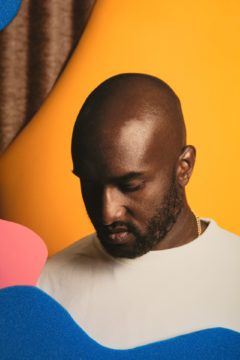 For the polymath, there is always a cardinal subject, a chief preoccupation around which all the other interests spin. For the fashion designer Virgil Abloh, the polymath of his cohort, who died on Sunday of a rare cardiac cancer, offensively too young, the center was architecture. He studied as an architect, and the training never really left him, even as he ventured into other arts. Abloh’s thinking was organizational, spatial, and mind-numbingly lofty. He longed to build an intricately structured life for his muse, the young Black man. Abloh designed not only this man’s clothing but also his shoes, the music he listened to in order to prime himself for the workday, the furniture he looked upon before leaving for said workday, the shiny vernacular he used in his speech, the high-concept museum exhibition at which he could practice this speech. At forty-one years old, Abloh already did all that, and so the question coursing through the minds of his mourners, whose lives had been quite literally stamped with the fruits of his imagination, is this: What was next?
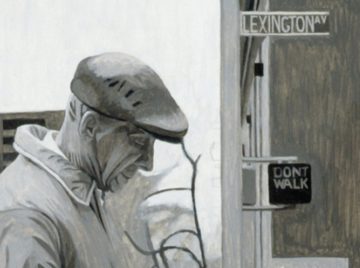 If childhoods have leitmotifs, mine was the steady, subtle, though sometimes bullying insistence on the unsurpassed importance of my Jewish American identity. On one side of my two-track upbringing, there was the uncontested conviction that Jews were the chosen people, the main players in God’s plan for humanity; on the other side, the daily pledge of allegiance to the American Republic, in all its shining-city- on-a-hill exceptionalism. How it is that my self-importance is not positively Trumpian is as big a mystery as why Muammar al-Qaddafi took over Libya and declared himself colonel, not king, or why, as John Berryman once wondered, cats love fish and hate water.
 In the face of escalating
 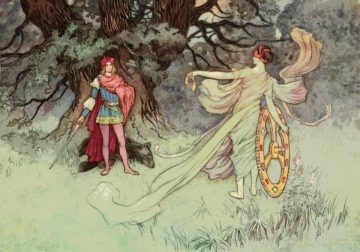 In the mid-2000s I set out, along with my colleagues Joseph Carroll, John Johnson, and Dan Kruger, on a large-scale study of classic Victorian novels by such authors as Jane Austen, George Eliot, and Charles Dickens, among many others. We distributed a survey to hundreds of knowledgeable people—professors, graduate students taking courses on Victorian literature, and authors who had published articles or books in the field. The respondents rated the attributes of characters in the novels exactly as if these fictional people were actual people.
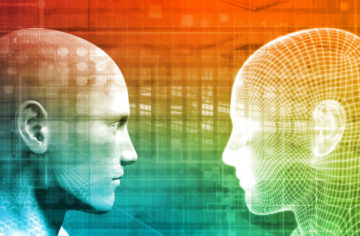 The ethical rules that govern our behavior have evolved over thousands of years, perhaps millions. They are a complex tangle of ideas that differ from one society to another and sometimes even within societies. It’s no surprise that the resulting moral landscape is sometimes hard to navigate, even for humans.
 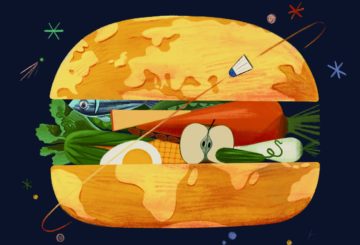 A clutch of fishing villages dot the coast near Kilifi, north of Mombasa in Kenya. The waters are home to parrot fish, octopus and other edible species. But despite living on the shores, the children in the villages rarely eat seafood. Their staple meal is ugali, maize (corn) flour mixed with water, and most of their nutrition comes from plants. Almost half the kids here have stunted growth — twice the national rate. In 2020, Lora Iannotti, a public-health researcher at Washington University in St. Louis, and her Kenyan colleagues asked people in the villages why the children weren’t eating seafood, even though all the parents fish for a living; studies show that fish and other animal-source foods can improve growth
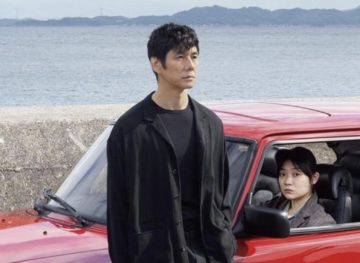 About halfway through Ryusuke Hamaguchi’s three-hour film someone asks Yūsuke Kafuku, an actor and theater director, why he didn’t cast himself as the titular character in his production of Uncle Vanya. “Chekhov is terrifying,” he replies. “When you say his lines, it drags out the real you.”
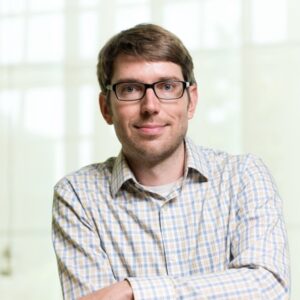 We’ve talked about the very origin of life, but certain transitions along its subsequent history were incredibly important. Perhaps none more so than the transition from unicellular to multicellular organisms, which made possible an incredible diversity of organisms and structures. Will Ratcliff studies the physics that constrains multicellular structures, examines the minute changes in certain yeast cells that allows them to become multicellular, and does long-term evolution experiments in which multicellularity spontaneously evolves and grows. We can’t yet create life from non-life, but we can reproduce critical evolutionary steps in the lab.
 When I reviewed Vitamin D, I said I was about 75% sure it didn’t work against COVID. When I reviewed ivermectin, I said I was about 90% sure.
 HOW OUR BRAIN,
 Most American newborns will arrive home from the hospital and start hitting their developmental milestones, to their parents’ delight. They will hold their heads up by about three months. They will sit up by six. And they will walk around their first birthday. But about 1 in 10,000 will not. They will feel limp in their caregivers’ arms, won’t lift their heads, and will never learn to sit on their own. When their alarmed parents seek medical help, the babies will be diagnosed with spinal muscular atrophy, or SMA, a neuromuscular disease in which certain motor neurons of the spinal cord progressively deteriorate. The disease is triggered by a genetic malfunction that boils down to the gene called SMN2 (survival motor neuron 2), which causes bits of vital proteins to assemble incorrectly, resulting in progressive muscle weakness and paralysis.
 At many points over the past decades I have managed to convince even myself that I am cured. In fact I had managed to do this for almost twenty years, until the beginning of the pandemic, when the repressed returned with a vengeance. I do not believe that I “came down with depression” at that moment, and I especially hate the French habit of speaking of “une dépression”, as if the condition were as individuable and as temporally bounded as a cold. Just as inadequate is the oft-repeated Churchillian metaphor of depression as “the black dog”. If only it were a black dog, I could just kick the fucking thing away. I do not “have” “a” depression, let alone a depression hounding me in the form of an external malevolent agent. Rather, I am depressed, and certain circumstances make this fact less easy to ignore than others. In the event, the circumstances surely had something to do with the first lockdown of March, 2020, which we endured in Brooklyn, right next to the hospital in Fort Greene where they stored the corpses outside in refrigerated trucks. My own experience of covid was mild in its symptoms, but I emerged from lockdown transformed, physically and psychologically.
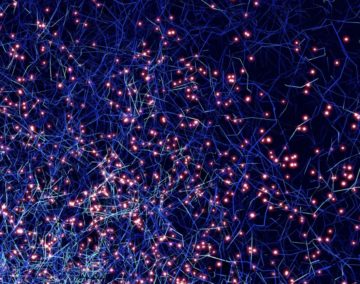 Today, the most powerful artificial intelligence systems employ a type of machine learning called deep learning. Their algorithms learn by processing massive amounts of data through hidden layers of interconnected nodes, referred to as deep neural networks. As their name suggests, deep neural networks were inspired by the real neural networks in the brain, with the nodes modeled after real neurons—or, at least, after what neuroscientists knew about neurons back in the 1950s, when an influential neuron model called the perceptron was born. Since then, our understanding of the computational complexity of single neurons has dramatically expanded, so biological neurons are known to be more complex than artificial ones. But by how much?