
Stephanos Papadopoulos in the Los Angeles Review of Books:
 On the acknowledgments page at the end of Homero Aridjis’s recently translated novel, Smyrna in Flames, the author admits:
“Almost a hundred years after the atrocities committed by Kemalist forces against Christians; before the demented pyromania of those who reduced Smyrna, the City of Tolerance, to ashes, along with its inhabitants; before the delirium of destruction that possessed the Turks during those days in September 1922, I still cannot find the words to explain, to myself or to others, the Turkish genocide of Asia Minor.”
Aridjis is not alone in this predicament, even after more than 100 pages of prose, the tragedy of the Greek Genocide (1914–’22) remains inexplicable. Few have been able to fully grasp the murderous scale of the events, paired with modern Turkey’s blanket denial, and the complete indifference of much of the rest of the world. But the facts remain: in the early century, Atatürk’s plan to unify the fractured Ottoman Empire under a modern Turkish regime resulted in the systematic extermination of its indigenous Pontic Greek, Assyrian, and Armenian citizens, whose people had lived in Asia Minor for millennia. What began as the Armenian Genocide in 1915 culminated in the forced deportations and final massacre of Pontic Greeks during the burning of Smyrna in 1922.
More here.
 Individual experiences and suffering are, of course, at the heart of the pandemic. But one way to understand what has happened is through putting those experiences together – and statistics are those personal stories writ large. And this pandemic has brought unprecedented demand to explain all the numbers that have been flying around.
 Polarization
  During her first year of college, Elaina Cosentino bought a fitness band and began walking 10,000 steps a day. Through a friendly competition with friends, she kept it up for four years. But during her first semester of graduate school, her routine changed and she fell out of the habit. Then her mother passed away between her first and second semesters, and it “truly took everything out of me to just get up and go to class,” says Cosentino, a physical therapist. “I did go for an occasional mind-clearing walk every now and then during that time, as walking was something familiar to me and I always loved the way I felt afterwards.”
  It seemed like a very promising cancer immunotherapy lead. CHO Pharma, in Taiwan, had discovered that it was possible to target solid tumours with an antibody against a cell-surface glycolipid called SSEA-4.
 Eggers is hardly a systems novelist: his literary sensibilities, like his career, tend toward the monomaniacal. His writing in the past two decades has involved a suspiciously prolific series of smug morality tales fictionalizing or nonfictionalizing real people—a heroic Sudanese refugee, a heroic Yemeni coffee importer later accused of racketeering, Donald Trump—as well as novels about loners in perilous circumstances. He has also written children’s books, left-of-center comedic op-eds, and articles for the New Yorker about human rights and how much he loves wine. But evident throughout his literary output, as in his incoherent and self-congratulatory apparatus of publishing programs, bookselling platforms, and children’s literacy programs, is an ongoing fascination with epic, world-conquering ambition. The characters in A Heartbreaking Work of Staggering Genius, I was embarrassed to reread, are “sure that we are on to something epochal . . . sure that we speak for others, that we speak for millions”; in his 2006 foreword to Infinite Jest, Eggers lingers, enviously and, I think, not un-Bezosishly, on Wallace’s all-seeing book as an example of the “human possibility [for] leaps in science and athletics and art and thought.”
 Over the Thanksgiving holiday the Financial Times columnist Janan Ganesh
 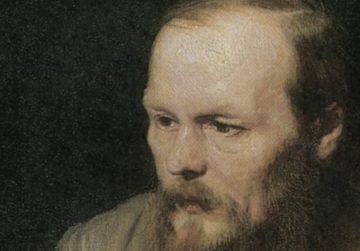 Of all writers, Fyodor Dostoyevsky is the great artist of obsession. It is not surprising, therefore, that his monumental works—Crime and Punishment, The Possessed, The Idiot, The Brothers Karamazov—are seeded in his shorter works of fiction, as if in embryo. From the wildly romantic and effusive “White Nights” (1848) to the parable-like “Dream of a Ridiculous Man” (1877), these tales explore themes taken up in minute detail in the novels, in which Dostoyevsky’s sense of the tragic predicament of humankind is given its fullest expression: that human beings recognise the good, but succumb to evil; that, though knowing that love is the highest value, they rejoice in their own wickedness, like the “ridiculous man,” a perverse saviour who corrupts the innocent:
 The
The 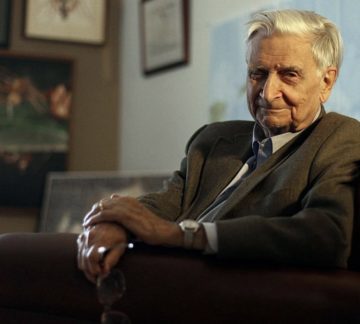 Edward O. Wilson: I think I may have been the only scientist in modern times to be physically attacked for an idea. The idea of a biological human nature was abhorrent to the demonstrators and was, in fact, too radical at the time for a lot of people—probably most social scientists and certainly many on the far-Left. They just accepted as dogma the blank-slate view of the human mind—that everything we do and think is due to contingency, rather than based upon instinct like bodily functions and the urge to keep reproducing. These people believe that everything we do is the result of historical accidents, the events of history, the development of personality through experience.
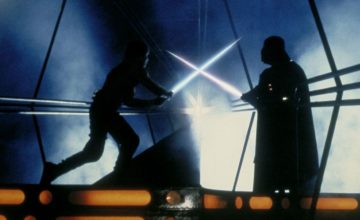 Stories are celebrated by great artists, thought leaders, and scientists as our best hope for reducing bigotry, building empathy, and ultimately encouraging us to behave more humanely. But how does this match up with the current state of the world?
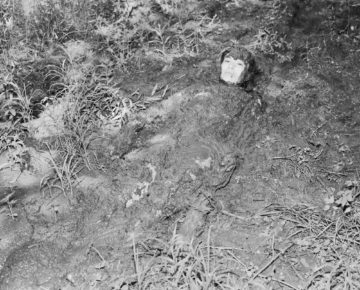 Night has the power to change things, doesn’t it? Not just appearances, but atmospheres too. The way we feel, the thickness of the air, the intensity of sounds, our imaginations. Darkness—real, enveloping darkness—is a shaping force, and even the scenes we know the most can metamorphose within its depths.
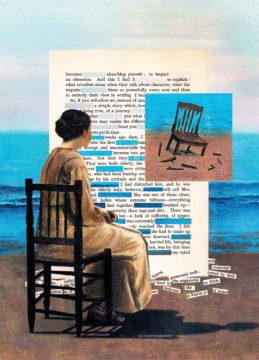 It was on a train journey, from Richmond to Waterloo, that Virginia Woolf encountered the weeping woman. A pinched little thing, with her silent tears, she had no way of knowing that she was about to be enlisted into an argument about the fate of fiction. Woolf summoned her in the 1924 essay “Mr. Bennett and Mrs. Brown,” writing that “all novels begin with an old lady in the corner opposite”—a character who awakens the imagination. Unless the English novel recalled that fact, Woolf thought, the form would be finished. Plot and originality count for crumbs if a writer cannot bring the unhappy lady to life. And here Woolf, almost helplessly, began to spin a story herself—the cottage that the old lady kept, decorated with sea urchins, her way of picking her meals off a saucer—alighting on details of odd, dark density to convey something of this woman’s essence.