
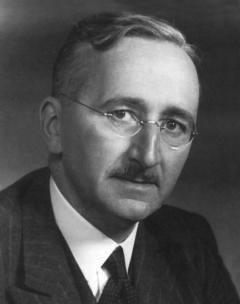
 Lisa Herzog in The Raven:
I grew up in the 1990s in a tiny Northern Bavarian town, at the border between what was then West Germany and Czechoslovakia. The hilly landscape with its quiet woodlands and baroque church steeples continued seamlessly on both sides. But on the Czechoslovakian side, all the buildings and the infrastructure appeared old and dilapidated. When my family took its first car trips after the fall of the Iron Curtain, my father would navigate around the potholes of neglected streets while I would sit in the back seat and anxiously stare at the washed-out facades of farmhouses, which the front gardens full of hollyhock and asters hardly managed to hide. The 19th-century villas in the once grandiose spa of Mariánské Lázně—where Goethe had met his last love, the 17-year-old beauty Ulrike von Levetzow—seemed sad shadows of their past glory. I saw hardly any supermarkets or other shop windows with wares; people seemed to buy food in faceless concrete buildings sitting at dimly lit crossroads.
Run-down buildings, with aging plaster peeling off, no loud billboards (though they would come very soon)—it seemed that the communist economic system that was meant to be a workers’ paradise was unable to provide them with paint for their houses. The fall of the Iron Curtain predictably generated a tidal wave of worker migration, with Czechoslovakians seizing opportunities in the capitalist West. In the rural border regions, we met Czechoslovakian music teachers (the spa orchestras from the communist era had been disbanded), construction workers, and nurses, for whom a salary in Deutsche Mark meant a fortune. Supermarkets and hardware stores from Western chains would quickly set up shops across the border. European Union projects to renovate streets and buildings followed.
The visual impressions were clear for those Europeans in the early 1990s who could witness both sides: capitalist countries were colorful, the former communist countries were grey. It was the time when political scientist Francis Fukuyama used the Hegelian phrase “the end of history” to declare that the combination of capitalism and democracy, the “Western” system, was the best of all possible systems. And at the core of this triumph was one institution that continues to fascinate friends and foes alike: the “free market.”
More here.
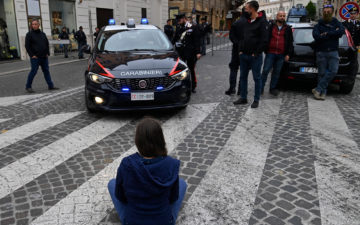 Massimo Pigliucci in Aeon:
 In 2019, the year Keegan Fong opened
  At the turn of the millennium, Reid Byers, a computer systems architect, set out to build a private library at his home in Princeton, N.J. Finding few books on library architecture that were not centuries old and in a dead or mildewed language, he took the advice of a neighbor across the street, the novelist Toni Morrison. Ms. Morrison “once famously said if there is a book you want to read and it doesn’t exist, then you must write it,” recalled Mr. Byers, 74, in a video chat from his current home, in Portland, Maine. The project stretched over a generation and culminated this year in a profusely illustrated, detail-crammed, Latin-strewn and yet remarkably unstuffy book called “
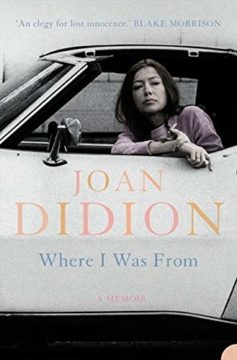 Joan Didion is not a nice person. I would almost put her in the category of Michel Houellebecq and Witold Gombrowicz. But not quite. I’m not sure what quality it is that holds her just at the cusp of “evil writer” without her falling in. Perhaps it is that she believes, though she would never put it this way, in the redemptive capacity of the act of writing.
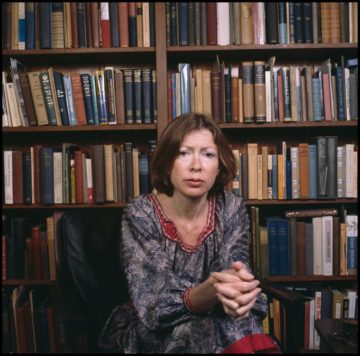 Joan Didion was 5 years old when she wrote her first story, upon the instruction of her mother, who had told her to stop whining and to write down her thoughts. She amused herself by describing a woman who imagines she is about to freeze to death, only to die burning instead.
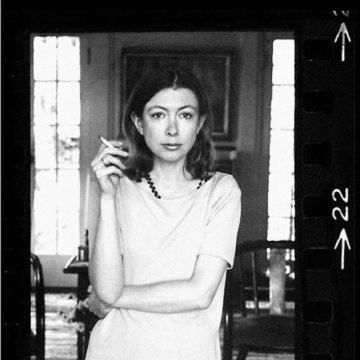 INTERVIEWER
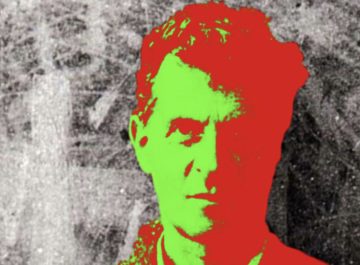 A work of philosophical genius according to some, a work of art according to others. Ludwig Wittgenstein’s Tractatus Logico Philosophicus was published 100 years ago, in 1921. It’s a book that according to its own philosophy of language, is mostly nonsense. Language, according to the strict logic of the Tractatus, is meaningful only when it functions as a picture of the world, a crystal-clear reflection of the structure of reality. It follows that most philosophical questions are meaningless and have to be condemned to silence. The Tractatus went on to influence philosophical movements like the logical positivists, but its lasting significance remains a matter for debate. Leading Wittgenstein scholars offer their views on the question of its legacy today.
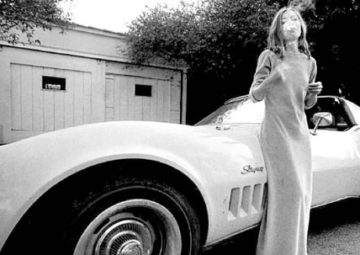 Known for her pioneering blend of the personal and the political in her journalism and essays,
 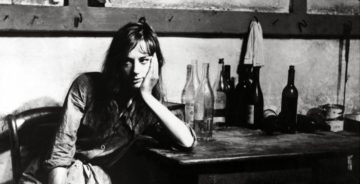 When a niche director is rescued from the dustbin of film history, it’s fair to ask: Did they end up there for good reason? The late filmmaker Nikos Papatakis is one such long-forgotten artist, his five films difficult to track down in English until they were restored in 2018 for a brief theatrical run in New York City. This year they entered the streaming market for the first time, landing on the Criterion Channel as a presumptive first stop en route to an eventual home-video release. In a featurette shot for the Criterion retrospective, Greek filmmaker Athina Rachel Tsangari recalls some foreboding advice Papatakis passed down to her at the start of her career: “Don’t try to imitate life. You’re a descendant of Euripides and Aeschylus—it’s all about creating this archetypal violence. Make the audience uncomfortable!”
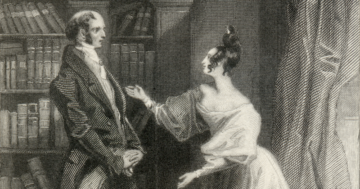 If the authentic test for a great novel is rereading, and the joys of yet further rereadings, then Pride and Prejudice can rival any novel ever written. Though Jane Austen, unlike Shakespeare, practices an art of rigorous exclusion, she seems to me finally the most Shakespearean novelist in the language. When Shakespeare wishes to, he can make all his personages, major and minor, speak in voices entirely their own, self-consistent and utterly different from one another. Austen, with the similar illusion of ease, does the same. Since voice in both writers is an image of personality and also of character, the reader of Austen encounters an astonishing variety of selves in her socially confined world. Though that world is essentially a secularized culture, the moral vision dominating it remains that of the Protestant sensibility.
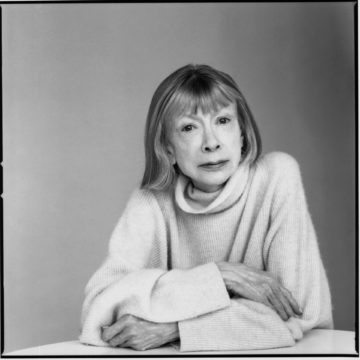 When Joan Didion died, on Thursday, at eighty-seven, she left behind sixteen books, seven films, one play, and an impulse to make sense of what remained. It was tempting to note that, like her husband, the writer John Gregory Dunne, whose passing shaped “
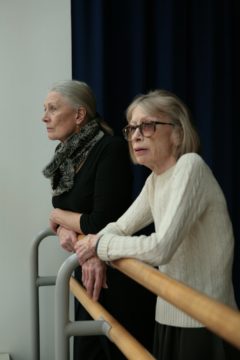 Joan Didion, whose mordant dispatches on California culture and the chaos of the 1960s established her as a leading exponent of the New Journalism, and whose novels “Play It as It Lays” and “A Book of Common Prayer” proclaimed the arrival of a tough, terse, distinctive voice in American fiction, died on Thursday at her home in Manhattan. She was 87.
 In my previous
 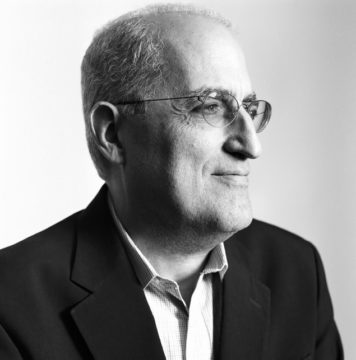 The discovery of a Standard Model-like Higgs boson was a great triumph for renormalisable field theory, and really for simplicity. By the time the LHC was operating, attempts to make the Standard Model (SM) work without an elementary Higgs field – using a dynamical mechanism instead – had become rather convoluted. It turned out that, as far as one can judge from what we have learned so far, the original idea of an elementary Higgs particle was correct. This also means that nature takes advantage of all the possible building blocks of renormalisable field theory – fields of spin 0, 1/2 and 1 – and the flexibility that that allows.
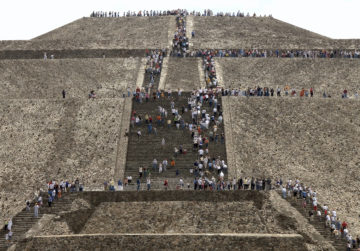 The popular narrative goes that history is governed by evolutionary forces. While there are exceptions to every rule, its broad sweep pushes in a general direction that is predictable and obvious. Before the rise of agriculture, humans lived in small egalitarian bands. It’s been downhill ever since, as our species trends increasingly toward domination and arbitrary hierarchy.