
Enjoying the content on 3QD? Help keep us going by donating now.
Category: Recommended Reading
Poet Lia Purpura on the Art of Noticing
Maria Popova at The Marginalian:
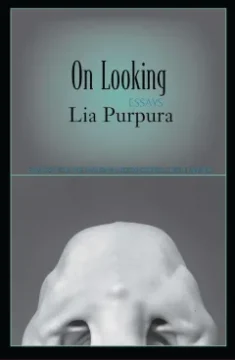 “The tree which moves some to tears of joy is in the eyes of others only a green thing which stands in the way,” William Blake wrote in his most spirited letter. “As a man is, so he sees.”
Because how we look at the world shapes the world we see, every act of noticing is an act of worlding. The Latin root of notice is to begin knowing, to have an instrument of recognition, and yet human consciousness is a prediction machine that recognizes only what it already knows, sees what it expects to see, lensed through its anticipations and past experience. “Right now, you are missing the vast majority of what is happening around you,” cognitive scientist Alexandra Horowitz wrote about the science of looking. “To see takes time, like to have a friend takes time,” Georgia O’Keeffe wrote a century earlier about the art of seeing.
It does not come easily to us, true noticing — that transmutation of looking into seeing. We must apprentice ourselves to it daily. It is our life’s work.
more here.
Enjoying the content on 3QD? Help keep us going by donating now.
How Music Criticism Lost Its Edge
Kelefa Sanneh at The New Yorker:
When I was growing up, a critic was a jerk, a crank, a spoilsport. I figured that was the whole idea. My favorite characters on “The Muppet Show” were Statler and Waldorf, the two geezers who sat in an opera box, delivering instant reviews of the action onstage. (One logically unassailable judgment, from Statler: “I wouldn’t mind this show if they just got rid of one thing . . . me!”) On television, the film critics Gene Siskel and Roger Ebert structured their show so that at any time at least one of them was likely to be exasperated, possibly with the other one. On MTV, the rock critic Kurt Loder was a deliciously subversive presence, giving brief news reports with an intonation that conveyed deadpan contempt for many of the music videos the network played. And the first music review I remember reading was in Rolling Stone, which rated albums on a scale of one to five stars, or so I thought. In 1990, the début solo album by Andrew Ridgeley, who had sung alongside George Michael in the pop duo Wham!, was awarded only half a star. The severity and precision of the rating seemed hilarious to me, though probably not to Ridgeley, who never released another record.
more here.
Enjoying the content on 3QD? Help keep us going by donating now.
A Stranger Everywhere
Nicholas Buccola in The American Scholar:
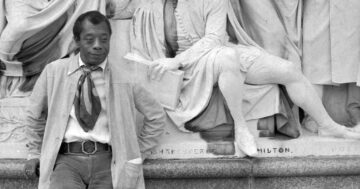 In his 2005 book, Democracy Matters, Cornel West calls James Baldwin “this black American Socrates.” I’ve always liked this description of Baldwin. He was a man, after all, who—like Socrates—implored us to “drive to the heart of every answer and expose the question that it hides.” But there are also ways in which the comparison fails. Socrates, at least as he is presented to us by Plato, seems almost superhuman. He can drink all night with his interlocutors, and when the whole lot of them are passed out or gone away, he can walk off, seemingly unfazed. When the incredibly gorgeous and hungry Alcibiades tries to seduce him, Socrates has the iron will to resist. Whatever the truth of these stories, they describe a Socrates who does not fit well with Baldwin, someone who was all too human.
More here.
Enjoying the content on 3QD? Help keep us going by donating now.
Stem Cells Age Faster in Space
Andrea Lius in The Scientist:
 According to Einstein’s theory of relativity, time passes more slowly in space. As a result, astronauts would experience a delay in aging. However, scientists found that space travel may have the opposite effect by accelerating aging in human cells, likely due to the extreme physiological stresses it imposes on the body.
“Space is the ultimate stress test for the human body,” said Catriona Jamieson, a stem cell biologist at the University of California, San Diego, in a statement. Recently, Jamieson’s team discovered that spaceflight accelerates aging in human blood-forming stem cells.1 The researchers found that stem cells that spent about a month in space had a reduced self-renewal capacity and showed signs of molecular aging. Their results, published in Cell Stem Cell, demonstrate the possible dangers of spending extended time in space.
More here.
Enjoying the content on 3QD? Help keep us going by donating now.
Friday Poem
Via Dolorosa
The sun has barely roused itself when I hear screams
over the coffee pot, but a glance out the window
thaws my dread. Just three teens raging
at the warm horizon. I know that cry—the one
my sisters and I hurled at the field in fledgling
heartbreak, our young throats yelled raw.
Yes, these girls threading through cotton
are mourning boys whose names they’ll forget
in a few harvests. Do they know to watch out
for mice and snakes? No—they imagine
out here’s a life without danger.
They imagine they race to mystery.
But it’s all science, really, learning how
the earth yields and heals itself. We step in
where we can with sweat, lost sleep, bruised thumbs.
But I’ll let them think it’s magic, that thorns
in their sweaters could somehow mend sorrow.
Sometimes I let myself believe the same.
by Whitney Rio-Ross
from Ec0 Theo Review
Enjoying the content on 3QD? Help keep us going by donating now.
Thursday, September 4, 2025
Han Kang, Sleep, And The Velvet Underground
Dashiel Carrera at the LARB:
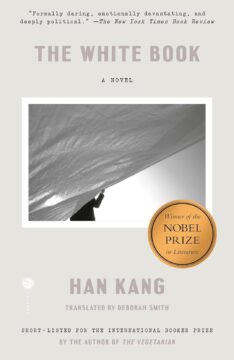 SOUTH KOREAN WRITER Han Kang is perhaps best known for her 2007 novel The Vegetarian, a violent, evocative work that led to her 2024 Nobel Prize win. But hiding in plain sight has been her 2016 masterpiece The White Book, whose English translation by Deborah Smith was recently reissued in paperback by Hogarth. An experimental, autobiographical novel, The White Book contains profound insights about the nature of grief and color that—like so many overlooked novels—are devilishly difficult to describe. But by digging into the novel’s poetic logic with an ear tuned to sound and silence, we can begin to tease it out.
The White Book opens as a meditation on color: “Swaddling bands / Newborn gown / Salt / Snow / Ice,” and so on. This list of white objects quickly becomes a sequence of chapter headings, each paired with a brief, pseudodiaristic reflection. At first glance, such a text appears akin to Maggie Nelson’s Bluets (2009)—likewise circuitous and fragmented, intertwining the philosophical with the personal to achieve a literary conception of color.
more here.
Enjoying the content on 3QD? Help keep us going by donating now.
Robert Longo On Artists and Art
Enjoying the content on 3QD? Help keep us going by donating now.
The Placeless Ambiguity Of Kyung-Ran Jo’s Fiction
Anabelle Johnston at The Baffler:
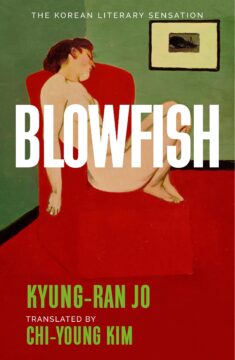 Seventy-five years after the outbreak of the Korean War, many Americans have come to recognize the country through its various cultural exports—KBBQ, K-pop, K-dramas, and K-skincare, to name a few. This association, and its contrived division between culture and politics, is no accident. In the 1990s, after decades of Japanese colonial rule followed by the ravages of American military intervention, the South Korean government established a series of initiatives to “enhance the image of Korea in the World.” As the country invested in communication and IT-based businesses to develop an internet-forward and skills-based economy, the Ministry of Culture turned to the West in a movement now known as the hallyu wave. Image supplanted reality. Decades of authoritarian rule, gender inequality, and limited economic mobility were ushered offscreen as the Wonder Girls, SHINee, Girls’ Generation, and BTS (among others) ascended the world stage. The runaway virality of Psy’s 2012 “Gangnam Style” was not a fluke but rather the fruit of years of premeditated cultural development, memorialized by a giant set of horse dance hands outside of the Starfield COEX mall in Seoul.
more here.
Enjoying the content on 3QD? Help keep us going by donating now.
Greyhound: Geography, capitalism, and America by bus
Joanna Pocock at Orion:
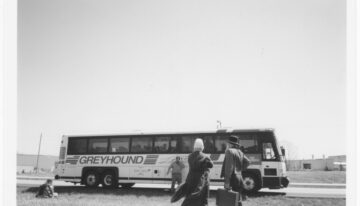 My desire to live in a city was not simply one of seeking like-minded people (other writers and artists, perhaps) and creating a smaller environmental footprint. I was also running from the lifeless suburbs of my childhood and what lay just beyond them: the dreaded sprawl.
David Cieslewicz, before becoming mayor of Madison, Wisconsin, taught university courses in urban studies. He wrote about cities as ‘the antidote to sprawl’, that they are ‘on balance, good for the environment’. And, in his book Urban Sprawl, the sociologist Gregory Squires also sees sprawl as the evil protagonist in the story of America’s increasing hunger for gas-powered vehicles. He continues Cieslewicz’s point: ‘[W]e will not solve the problems of sprawl until we resolve the contradiction and we learn to embrace city life – living in places of real, compact urban form with all of their advantages and disadvantages – as the most positive environmental choice an individual can make.’ When I left the suburbs for Toronto and then London, with brief flings with New York and Boston, was I making the ‘most positive environmental choice’ I could? I don’t think so; but I was trying to aim for some kind of harmony with the Earth and I was struggling to see how to make it a reality.
More here.
Enjoying the content on 3QD? Help keep us going by donating now.
‘World Models,’ an Old Idea in AI, Mount a Comeback
John Pavlus in Quanta:
 The latest ambition of artificial intelligence research — particularly within the labs seeking “artificial general intelligence,” or AGI — is something called a world model: a representation of the environment that an AI carries around inside itself like a computational snow globe. The AI system can use this simplified representation to evaluate predictions and decisions before applying them to its real-world tasks. The deep learning luminaries Yann LeCun (of Meta), Demis Hassabis (of Google DeepMind) and Yoshua Bengio (of Mila, the Quebec Artificial Intelligence Institute) all believe world models are essential for building AI systems that are truly smart, scientific and safe.
The fields of psychology, robotics and machine learning have each been using some version of the concept for decades. You likely have a world model running inside your skull right now — it’s how you know not to step in front of a moving train without needing to run the experiment first.
So does this mean that AI researchers have finally found a core concept whose meaning everyone can agree upon? As a famous physicist once wrote: Surely you’re joking. A world model may sound straightforward — but as usual, no one can agree on the details. What gets represented in the model, and to what level of fidelity? Is it innate or learned, or some combination of both? And how do you detect that it’s even there at all?
More here.
Enjoying the content on 3QD? Help keep us going by donating now.
The science of murder: Agatha Christie’s deadly poisons – with Kathryn Harkup
Enjoying the content on 3QD? Help keep us going by donating now.
We Ran the C.D.C.: Kennedy Is Endangering Every American’s Health
Richard Besser, Mandy K. Cohen, William Foege, Tom Frieden, Jeffrey Koplan, William Roper, David Satcher, Anne Schuchat and Rochelle P. Walensky in the New York Times:
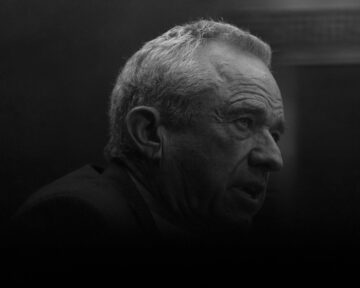 We have each had the honor and privilege of serving as director of the Centers for Disease Control and Prevention, either in a permanent or an acting capacity, dating back to 1977. Collectively, we spent more than 100 years working at the C.D.C., the world’s pre-eminent public health agency. We served under multiple Republican and Democratic administrations — every president from Jimmy Carter to Donald Trump — alongside thousands of dedicated staff members who shared our commitment to saving lives and improving health.
What the health and human services secretary, Robert F. Kennedy Jr., has done to the C.D.C. and to our nation’s public health system over the past several months — culminating in his decision to fire Susan Monarez as C.D.C. director days ago — is unlike anything we had ever seen at the agency and unlike anything our country had ever experienced.
More here.
Enjoying the content on 3QD? Help keep us going by donating now.
Bernie Sanders: Kennedy Must Resign
Bernie Sanders in The New York Times:
 Robert F. Kennedy Jr., the secretary of health and human services, is endangering the health of the American people now and into the future. He must resign. Mr. Kennedy and the rest of the Trump administration tell us, over and over, that they want to Make America Healthy Again. That’s a great slogan. I agree with it. The problem is that since coming into office President Trump and Mr. Kennedy have done exactly the opposite.
This week, Mr. Kennedy pushed out the director of the Centers for Disease Control and Prevention after less than one month on the job because she refused to act as a rubber stamp for his dangerous policies. Four leading officials at C.D.C. resigned the same week. One of those officials said Mr. Kennedy’s team asked him to “change studies that have been settled in the past” apparently to fit Mr. Kennedy’s anti-vaccine views. This is not Making America Healthy Again.
More here.
Enjoying the content on 3QD? Help keep us going by donating now.
‘Almost unimaginable’: these ants are different species but share a mother
Max Kozlov in Nature:
 A common type of ant in Europe breaks a fundamental rule in biology: its queens can produce male offspring that are a whole different species. These queen Iberian harvester ants (Messor ibericus) are sexual parasites that rely on the sperm of males of the ant species Messor structor. They use this sperm to breed an army of robust worker ants, which are hybrids of the two species. Data now show that, in the absence of nearby M. structor colonies, M. ibericus queens can clone male M. structor ants by laying eggs that contain only M. structor DNA in their nuclei. The findings were published in Nature on 3 September1. “It’s an absolutely fantastic, bizarre story of a system that allows things to happen that seem almost unimaginable,” says Jacobus Boomsma, an evolutionary biologist at the University of Copenhagen.
More here.
Enjoying the content on 3QD? Help keep us going by donating now.
Thursday Poem
Sunup Lake to Lake Byrne
…. Cloudy and foggy, with occasional breaks of sun, Sloan
mountain and Bedal mountain
……………. not to be seen
…. Leave 9:30. Trail obscure through meadows. Mistake
a pond below for “Hardtack Lake” —arrive at True Hardtack
2:30 p.m.
…………… descending to a previous pond for
…….. lunch over steep heather
pick your way through like a beast
Justine strips down and washes breasts and arms, tho all
is chill; her jeans color of the lakeside sedge and hillside
heather, hair the color of the mountain wind.
…………. [Pugh creek goes into the Whitechuck
…………….. the Whitechuck goes into the Sauk
…………. ….. the Sauk goes into the Skagit
………………….. the Skagit goes into the sound.]
Rats, lambs, men, and whales
………………………………………… all drink milk.
by Garry Snyder
from Earth House Hold
New Directions Books, 1969
….L
….
Enjoying the content on 3QD? Help keep us going by donating now.
Wednesday, September 3, 2025
Loudon Wainwright III
Enjoying the content on 3QD? Help keep us going by donating now.
Remembering Alice Notley
Nick Sturm at Poetry Magazine:
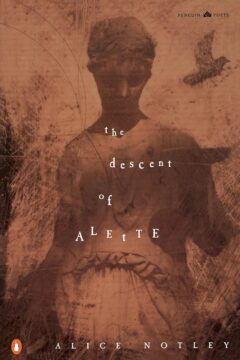 A few days before she died, I asked Alice if she would make me a list of her favorite folk songs, the ones she’d sometimes sing while we worked together in her apartment. She emailed me from her hospital bed with the subject line “probably illegible” and a photo showing her open notebook with two pages of handwritten song titles. “Careless Love,” “Wild Mountain Thyme,” “What is the Soul of a Man,” “Shady Grove.” At the bottom of the image, she arranged two figurines—a blue-eyed owl and little R2-D2—to weigh down the pages. “Baby, Please Don’t Go,” “Down in the Valley,” “Spanish Johnny,” “In the Pines.” There are no musicians, just song titles—these are folk and blues songs, after all—all written in her lush cursive. “Shenandoah,” “Black Is the Color of My True Love’s Hair,” “The Water Is Wide,” “See That My Grave Is Kept Clean.” This will be the last thing she says to me.
I adored Alice. Writing that sentence is bright pain. I adore her.
The last time I saw Alice earlier this year, I was in Paris for a week to pack her archive. Everything we had sorted through and inventoried during my previous visits we touched again, together, before placing it all in newly labeled folders and boxes.
more here.
Enjoying the content on 3QD? Help keep us going by donating now.
Zhuangzi And The Butterfly Self
Alexander Douglas at Aeon Magazine:
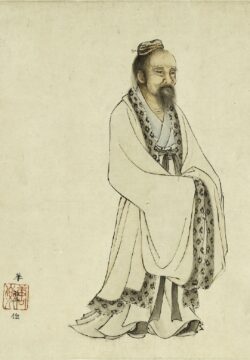 Zhuangzi’s view, as interpreted by Guo, is that when we seek a definite identity, we betray our true nature as fundamentally fluid and indeterminate. We end up pursuing some external model of definiteness. Even if the model is one of our own devising, it is external to our true indefinite nature. One story in the Zhuangzi tells of a welcoming and benevolent but faceless emperor, Hundun. Hundun has a face drilled into him by two other emperors who already have faces of their own. As a result, he dies. The story suggests that fixed identity always comes to us from the outside, from others who have already attached themselves to fixed identities and drive us to do the same, not usually by drills but rather by example. This peer-driven attachment to identity kills our fundamental nature, which is formless and fluid like Hundun (his name, 混沌, means something like ‘mixed-up chaos’, and each character contains the water radical signalling fluidity). Our true Hundun-nature is the capacity to take on many forms without being finally defined by any of them.
This encounter with a distant philosophical culture liberates us to ask questions we might not have otherwise thought to ask. Imagine if we hadn’t been conditioned to believe that our true self is something fixed and inborn.
more here.
Enjoying the content on 3QD? Help keep us going by donating now.
Sean Carroll’s Mindscape Podcast: Cass Sunstein on Liberalism
Sean Carroll at Preposterous Universe:
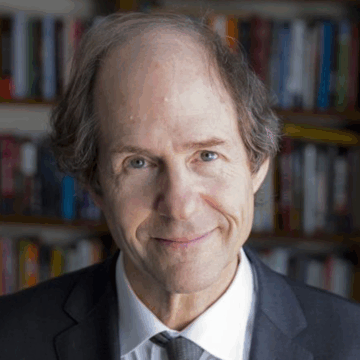 “Liberalism,” divorced from its particular connotations in this or that modern political context, refers broadly to a philosophy of individual rights, liberties, and responsibilities, coupled with respect for institutions and rule of law over personalized power. As Cass Sunstein construes the term, liberalism encompasses a broad tent, from Ronald Reagan and Margaret Thatcher to Martin Luther King and Franklin Roosevelt. But liberalism is being challenged both from the right and from the left, by those who think that individual liberties can go too far. We talk about the philosophical case for liberalism as well as the challenges to it in modern politics, as discussed in his new book On Liberalism.
More here.
Enjoying the content on 3QD? Help keep us going by donating now.