
Alexander Douglas at Aeon Magazine:
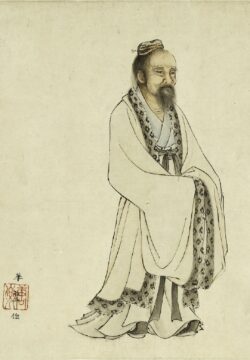 Zhuangzi’s view, as interpreted by Guo, is that when we seek a definite identity, we betray our true nature as fundamentally fluid and indeterminate. We end up pursuing some external model of definiteness. Even if the model is one of our own devising, it is external to our true indefinite nature. One story in the Zhuangzi tells of a welcoming and benevolent but faceless emperor, Hundun. Hundun has a face drilled into him by two other emperors who already have faces of their own. As a result, he dies. The story suggests that fixed identity always comes to us from the outside, from others who have already attached themselves to fixed identities and drive us to do the same, not usually by drills but rather by example. This peer-driven attachment to identity kills our fundamental nature, which is formless and fluid like Hundun (his name, 混沌, means something like ‘mixed-up chaos’, and each character contains the water radical signalling fluidity). Our true Hundun-nature is the capacity to take on many forms without being finally defined by any of them.
This encounter with a distant philosophical culture liberates us to ask questions we might not have otherwise thought to ask. Imagine if we hadn’t been conditioned to believe that our true self is something fixed and inborn.
more here.
Enjoying the content on 3QD? Help keep us going by donating now.