
Sophie Haigney at The Baffler:
 The essays in Extinct often answer two questions: What was it that has disappeared and why? And then, what was the significance of this loss? Some, like Slessor’s, are lucidly personal meditations, stuffed with anecdotes and design history; others are more technical treatises on the reason a particular technology failed to take root. The editors identify six general reasons why things become extinct and categorize each object in this way. Certain objects are deemed “failed”; they simply didn’t work. Many more, though, are “superseded” by more advanced models of similar things. Some dead objects, especially commercial products, are “defunct”—these have failed to gain widespread adoption, or couldn’t be mass-produced, or have simply gone out of style. Others are “aestivated,” meaning that they disappear but are revived in a new form. Still others are classified as “visionary,” in that they never quite came into being at all. The rest are “enforced,” basically regulated into disappearance.
more here.
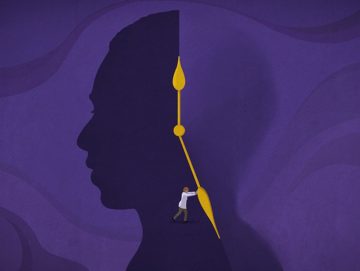 When Oscar Wilde left prison in 1897, shocked observers saw how a two-year sentence with hard labour for gross indecency had prematurely aged the Irish playwright. Shunned by London society and ostracized by his family, he died penniless in Paris three years later, aged 46. Had the scientific field of human ageing
  F
F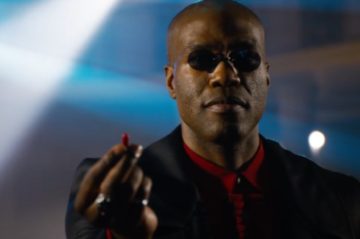 Ars Technica: You make frequent references not just to The Matrix but to other classic works in science fiction in your book. What is it about such works that resonate so strongly with philosophers?
 When I was a journalist for The Times (London) in Moscow in December 1992, I saw a print-out of a speech by the then Russian foreign minister, Andrei Kozyrev, warning that if the West continued to attack vital Russian interests and ignore Russian protests, there would one day be a dangerous backlash. A British journalist had scrawled on it a note to an American colleague, “Here are more of Kozyrev’s ravings.”
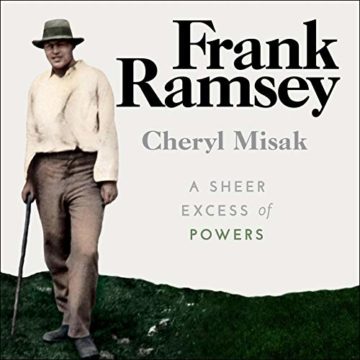 Cheryl Misak’s new book is the first intellectual biography of Frank Plumpton Ramsey, a brilliant but tragically short-lived scholar who illuminated Cambridge in the 1920s. The biography has been eagerly awaited by many of us, in several fields, who’ve built chunks of our own careers from fragments of Ramsey’s astonishing meteorite.
 When you wake up in the morning, how do you know who you are? You might say something like: ‘Because I remember.’ A perfectly good answer, and one with a venerable history. The English philosopher John Locke, for example, considered memory to be the foundation of identity. ‘Consciousness always accompanies thinking,’ he wrote in 1694. ‘And as far as this consciousness can be extended backwards to any past Action or Thought, so far reaches the Identity of that Person.’
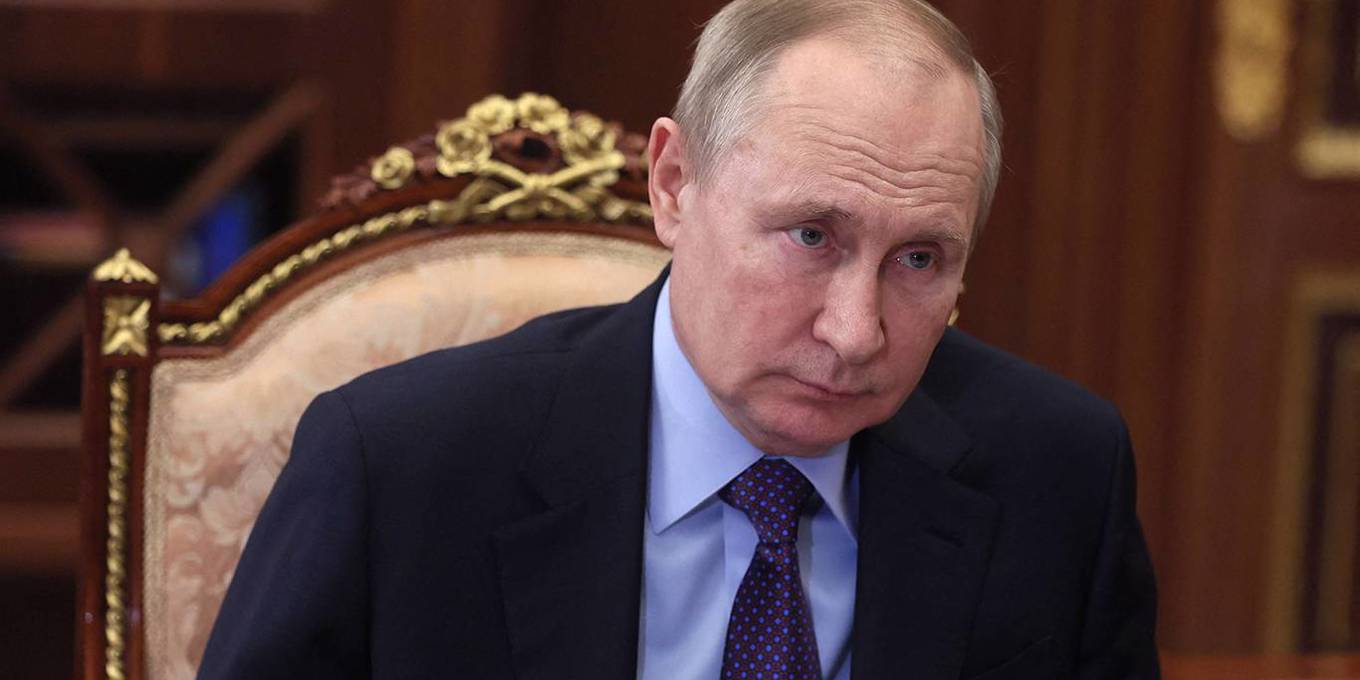 The Cold War ended 30 years ago. But since the 2007-08 financial crisis, it has not only returned but mutated into a hybrid lukewarm war. And with the United States and its European allies now struggling to manage the threat of a Russian attack on Ukraine, the specter of a hot war is looming. The 1938
 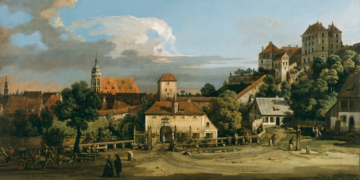 Olga Tokarczuk’s twelfth book, the novel The Books of Jacob, first published in Poland in 2014 to great acclaim and considerable controversy, kicks off in 1752 in Rohatyn, in what is now western Ukraine, and winds up in a cave near Korolówka, now eastern Poland, where a family of local Jews has hidden from the Holocaust. Between mid-18th-century Rohatyn and mid-20th-century Korolówka, Olga traverses the Habsburg and Ottoman Empires and the Polish-Lithuanian Commonwealth in search of the manifold secrets of Jacob Frank, a highly charismatic real historical figure, beloved and despised by his contemporaries, the leader of a wildly heretical Jewish sect that converted in different moments to both Catholicism and Islam.
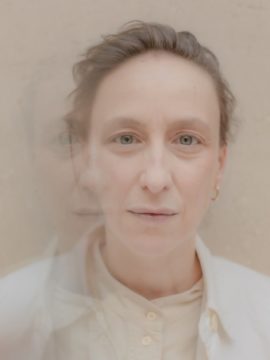 For most of November, 2020, the director Céline Sciamma didn’t have any lamps in her apartment. They were all on the set of her fifth film, “Petite Maman.” Each day, she got ready before sunrise, leaving her Paris apartment in the dark. One morning when she was running late, she rushed into her room and hit something with her foot. It hurt, a lot, but she put on her shoes and hurried to the set, where she sat around for three hours, waiting for everyone else to be ready. Suddenly, she heard a familiar, uneven step behind her: that of her maternal grandmother, Marie-Paule Chiron, who walked with a limp and who had been dead for six years. Sciamma jumped from her chair, remembering too late her injured foot. Instinctively, she reached for the closest support: a silver-topped walking stick that had belonged to Marie-Paule.
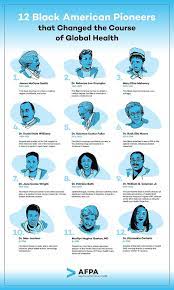 February is Black History Month in the US, a month dedicated to paying tribute to Black American history. It is also a month dedicated to raising awareness about the deeply inequitable treatment that Black communities have endured in the US, as well as the incredible contributions Black individuals and communities have made to the wellbeing of all people, despite the disadvantages that exist to this day. This article names twelve of the many Black Americans in history who have had, and continue to have, a profound impact on the health and wellness of people in the US and worldwide.
 The historian Marcus Rediker opens “
 RS: The book kind of ambushed me. Although I’d known the essay where he described planting those roses well, I’d never thought about what it meant that our great prophet of totalitarianism, the man famous for facing unpleasant facts, was planting roses. It let me talk about all these things that I wanted to talk about—essentially about the left, about how we lead our lives, about what it looks like to lead a sustainable life.
 How can a vaccine treat cancers or chronic infectious diseases?