
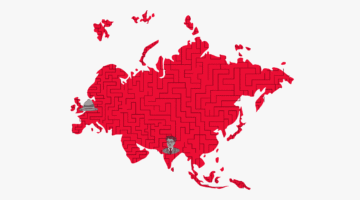
 Gautam Pemmaraju in Fiftytwo.
The danger comes from the east, coloured red. Having brought down the tsar in Russia, the Soviet communists are now looking outwards with a grand plan. Vladimir Lenin has already discarded the Anglo-Russian Convention of 1907 and is calling on the Asian people to overthrow their colonial oppressors. Just two years earlier, he’d announced: “England is our greatest enemy. It is in India we must strike them hardest.”
The Bolsheviks now have operations in India to “penetrate the existing nationalist movement.” Meanwhile, the British already have a lot to contend with. Indian nationalists are clamouring for swaraj. The country is convulsed by workers’ strikes. There are periodic violent attacks on British officials. India’s Muslims are seething over the dismemberment of Ottoman Turkey. Bombay is a tinderbox, waiting to be sparked.
At the centre of Lenin’s plans is one man: Manabendra Nath Roy.
On that day in 1922, officers of the Foreign Branch of the Criminal Investigation Department are on alert for any and all suspicious characters. An agent of M.N. Roy could try to slip through with banned books, manifestos and money. The man himself might show up to direct the revolutionary movement from within.
To the British, the ‘red peril’ is nothing less than terrorism. The Great Game of the empires for strategic control over Central Asia has mutated and Moscow is plotting to foment global revolutions, to violently overthrow capitalists and imperialists. Any intervention has the potential to strengthen nationalist and anti-colonial movements across the realm. And losing India, everyone knows, would be the beginning of the end for the Empire.
More here.
 Paul Romer over at his his website:
 This week’s reading list is curated by PEN America’s World Voices Festival team and features a mix of classic and contemporary novels, essay collections, and poetry collections. It includes the searing prose of James Baldwin’s 1963 bestseller The Fire Next Time, in which he tells his nephew how to navigate the injustices he will face as Black man in America. We also highlight Nic Stone’s Dear Martin, published more than 50 years later but which exposes the same threats of racial violence that still plague our country and threaten young Black men.
 In the middle of the 19th century, as the United States was ensnared in a bloody
  Patrick Blanchfield in Late-Lite:
 Mona Ali in Phenomenal World:
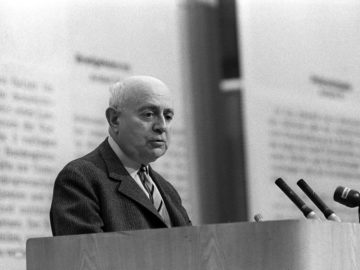 Peter E. Gordon in The New Statesman:
 Chances are, if you haven’t been living under a pandemic-shaped rock of ascetic withdrawal from the real world, you will have heard of S Hareesh. His debut novel, Meesha, translated from the Malayalam into English as Moustache, won the JCB Prize for Literature in 2020. India’s 2020 official entry to the Academy Awards, Jallikattu, was based on one of Hareesh’s short stories from the collection
  The case of Elizabeth Hardwick is vexing in these ways and more. She was one of the supreme women of letters in postwar America. The scope of her achievement, much of it accomplished in occasional writings undertaken across six decades, has only begun to come into view with the appearance in 2017 of her Collected Essays. (A volume of Uncollected Essays is to follow this spring.) She chronicled the transformations of American life and culture across seven decades, traced the progress of American literature from its beginnings here and in Europe, connected those roots and parallel strands to the present in essays of idiosyncratic synthesis, and realized those ideas in her own fictions. She was a singular stylist and an essential writer of her time.
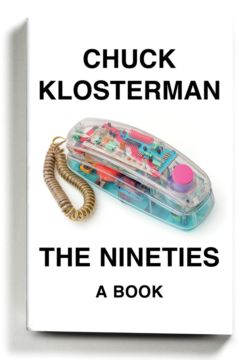 The era has lately been a source of curiosity, its aesthetic mined by
 The BLM movement was founded on the 13th July 2013, by Alicia Garza; Patrisse Cullors and Opal Tometi. The movement was made to promote anti-racism and advocacy, it is often interpreted in the incorrect way by people who do not recognise how Black people are often victims of demonisation as well as criminalisation. This often results in people making ignorant comments that make it clear that the purpose of the movement was taken out of context: ‘ ALL LIVES MATTER ‘ they incessantly yell; ‘ Why is it always about race? Can’t you just get over it??’ they say way too passive-aggressively not knowing the true meaning of what we’re fighting for. We are fighting for the lives that were taken for reasons that only remain superficial, we are fighting for the next generation of people who go looked just like George Floyd, Breonna Taylor, Atatiana Jefferson, Stephon Clark, Michelle Cusseaux and the others that have died. They were killed for reasons that will only remain skin deep, and this time, it will not be in vain or go unnoticed.
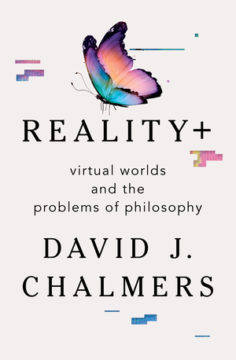 But, of course, there is no reason for believing any of this; and it seems far more likely that the process of replacing one’s neurons with computer chips would be little more than a very slow process of suicide, producing not the same behaviors as would a living mind, but only progressive derangement and stupefaction, culminating in an inert mass of diffusely galvanized circuitry. After all, any sober phenomenology of the full range of mental acts discloses a host of necessarily unified features that are almost by definition irreducible to a mere integration of diverse mechanical parts and discrete functions, and that no process of computation could reproduce: subjectivity as an indissoluble privacy; the unified and simultaneous field of apprehension belonging to that subjectivity; qualitative consciousness; intentionality and its intrinsic teleology; the indeterminate openness of the mind to novelty and even to fundamental revisions of its conceptual paradigms, which no computational algorithm could simulate; the immediate physical sense of self; the psychological sense of identity; judgments of value, such as “good” or “true” or “beautiful”; the prior and constant disposition of the mind toward these values, which seems to be the necessary motive of all movements of intellect and will toward the world; creative violations of rules that nevertheless make “sense” to us; and so on.