
“When I Grow Up I Want to Be a Martyr”
is surely a peculiar answer for any teacher to receive when
asking a kindergartner, but on second take, what word best
describes me, crossbreed of butterfly and Super Fly aesthetics,
other than peculiar? I suppose calling me a keen kid would
also suffice in explaining my avidity for the kind of death that
progresses the narrative of a gentling history, because that’s
the only frame for greatness I seem to find for boys my shade
and age to aspire to, short of having the height and hops to
touch the rim, or the bulk and burst to break through the
defensive line like a bullet.
……………………………… And, no, I haven’t given up
on the prospect of Bulls starting shooting guard yet, but
the God-fearer impressed upon me begs the mythology of
goodness delivered to the multitudes like loaves and fish;
……… how King is talked about in black Christian tradition still
……… in mourning over his lost rays of light, the way mentioning
……… the name of Malcolm makes mice of shady white men some
thirty years after the shotgun and he’s sung of as a prince:
I want to evoke that level of pride in American democracy’s
dark downtrodden because I know what it evokes in me,
young and impressionable, watching Denzel’s mimicry
for the one millionth time in my abbreviated existence—
drawing an X on my undeveloped chest, pushing it out
into the unknown-ahead hoping a Mecca for melanin rises
from the man-shaped hole I’d left in my loved one’s lives.
……… I bet my parents would be so proud of me.
I bet post offices would close on my birthday.
I bet God would dap me up
……… when I got up there and Jesus —
……………… dying on a cross to meet me.
by Cortney Lamar Charleston
from Poetry Journal, Vol.211, No. 2 (Nov. 2017
The Poetry Foundayion
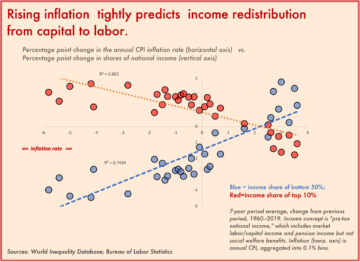 Seth Ackerman over at his substack:
 Faith Hillis in The Atlantic:
 Years ago, a prominent Black psychologist told me that
  “The freedom to write”: PEN America’s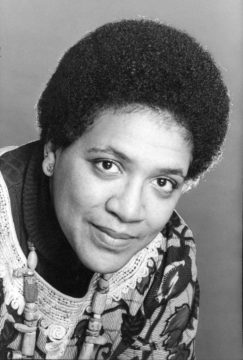
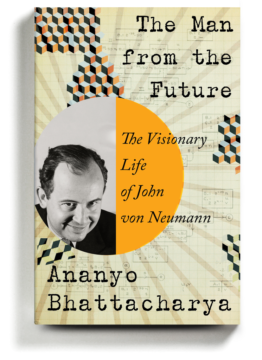 When von Neumann was alive, before the full import of his influence could be gauged, his brilliance marked him not as a time traveler but as an alien — one of the so-called Martians, the nickname for the Hungarian-Jewish emigrés, including Edward Teller, who worked on the secret atom bomb project at Los Alamos. Naturally, the intellectually omnivorous von Neumann came up with his own theories about the “Hungarian phenomenon” (the shorthand term for the scientific accomplishments of von Neumann and his countrymen), deciding that it had something to do with the Austro-Hungarian mixture of liberalism and feudalism that allowed Jews some avenues for success while keeping them away from the true levers of power. This provoked “a feeling of extreme insecurity,” von Neumann said, making him and his fellow Martians believe that they needed “to produce the unusual or face extinction.”
 A
A On at least a few occasions in my adult life, I have conducted myself with what may have looked to an outside observer like courage. I have for example put myself between a raving junkie, with a broken bottle in his hand, and the girlfriend he intended to slash with it, thus interrupting my routine evening stroll across the Place de Stalingrad. Such scenes of violence are not uncommon there, as if there were something about Stalingrads in general, and I confess I have let many similar scenes continue without my intervention.
 How are so many animals catching the coronavirus? And what does this mean for human and animal health?
 A great river encircles the world. It rises in the heartland of the United States and carries more water than the Mississippi and Yangtze rivers combined. One branch, its oldest, streams over the Atlantic, heading for Europe and the Middle East. Another crosses the Pacific, flowing towards China. Countless tributaries join along the way, draining the plains and forests of Latin America, Europe and Asia.
 M
M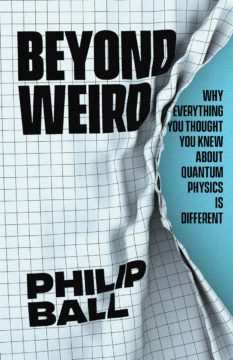 If you’ve read any of Ball’s remarkable books, you might have noticed something I found extraordinary, which led to the question that began our conversation. Ball has written books on subjects as diverse as the history of China (The Water Kingdom), physics, chemistry, biology, music (The Music Instinct) and Chartres Cathedral (Universe of Stone). In all of his books, he brings the highest quality scientific and scholarly research, often from vastly different fields, into a coherent, intellectually original, and exciting story. Besides writing popular books, he actively publishes peer-reviewed research, and his written scientific articles in fields as diverse as astrobiology, physics, chemistry, and biology. It is a remarkable and uncommon combination of breadth and depth, even among the many brilliant writers in the world of science.
 T
T