
Amy Maxmen in Nature:
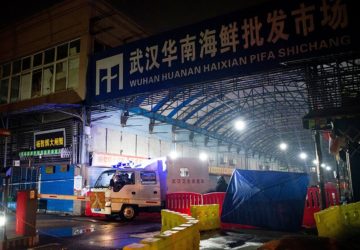 Scientists have released three studies that reveal intriguing new clues about how the COVID-19 pandemic started. Two of the reports trace the outbreak back to a massive market that sold live animals, among other goods, in Wuhan, China1,2, and a third suggests that the coronavirus SARS-CoV-2 spilled over from animals — possibly those sold at the market — to humans at least twice in November or December 20193. Posted on 25 and 26 February, all three are preprints, and so have not been published in a peer-reviewed journal.
These analyses add weight to original suspicions that the pandemic began at the Huanan Seafood Wholesale Market, which many of the people who were infected earliest with SARS-CoV-2 had visited. The preprints contain genetic analyses of coronavirus samples collected from the market and from people infected in December 2019 and January 2020, as well as geolocation analyses connecting many of the samples to a section of the market where live animals were sold. Taken together, these lines of evidence point towards the market as the source of the outbreak — a situation akin to that seen in the epidemic of severe acute respiratory syndrome (SARS) in 2002–04, for which animal markets were found to be ground zero — says Kristian Andersen, a virologist at the Scripps Research Institute in La Jolla, California, and an author on two of the reports. “This is extremely strong evidence,” he says.
More here.
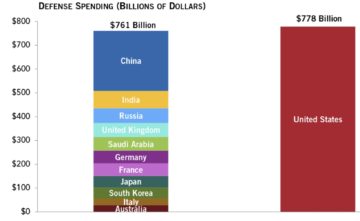 The state of U.S. defense spending is often boiled down to eye-catching but incomplete statistics. On one side, the U.S. spends more than the next
 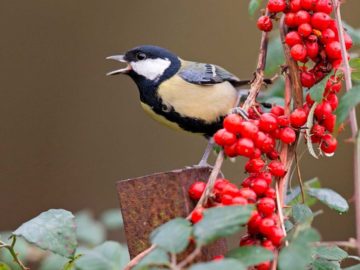 In our quest to find what makes humans unique, we often compare ourselves with our closest relatives: the great apes. But when it comes to understanding the quintessentially human capacity for language, scientists are finding that the most tantalizing clues lay farther afield.
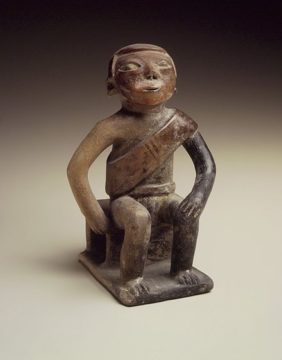 “Cocaine is an alkaloid found in the leaves of the coca plant, Erythroxylum coca, which is native to South America. For centuries, the leaves have been chewed by South American people as a mild stimulant and appetite suppressant. Coca was brought back to Europe by the Spanish in the 16th century. Cocaine itself was first isolated by Friedrich Gaedcke in 1855, and an improved purification process was developed by Albert Niemann in 1860. Later, it came to be incorporated into tonic drinks, such as Coca-Cola in 1866, and was available over the counter at Harrods in London until as late as 1916.
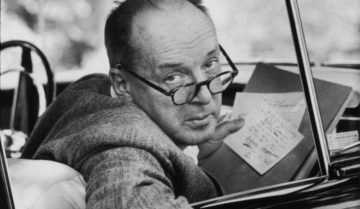 In 1999, Nina Khrushcheva met William F. Buckley at the offices of National Review. Then a fellow at the New School’s World Policy Institute (and now a professor of international affairs at the university) Khrushcheva had much to discuss with Buckley, whom she’d first met a few months earlier at an event commemorating the tenth anniversary of the fall of the Berlin Wall. Buckley had been a panelist along with her uncle Sergey, son of the Cold War-era Soviet premier Nikita Khrushchev, one of Buckley’s sworn enemies in his, and the conservative movement’s, ferocious fight against Communism.
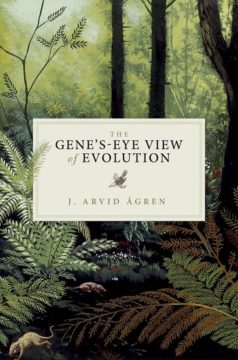 An Oxford undergraduate once wrote a brilliant answer to an exam question about the logic of natural selection, ending with the statement: “And here I rely heavily on the words of Richard Dawkins.” When the exam marker, one Marian Stamp Dawkins, noticed this, she wrote in the margin of the paper: “Yes. Don’t we all?”
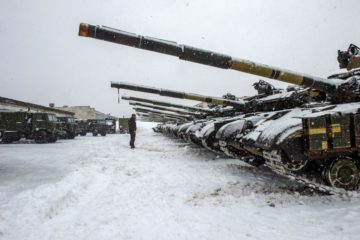 So much is being written about the Russian invasion of Ukraine that more on the situation on the ground is unnecessary. Certainly, it is premature for a post-mortem on causes and responsibilities of a conflict that came on so quickly and unexpectedly. But it is not a bad time to think about medium- and long-term consequences of Putin’s dramatic action, and how the West can recover its equilibrium and face up to a new global challenge.
 A
A 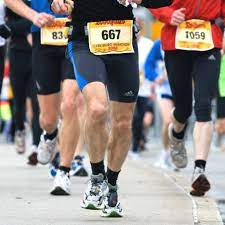 It’s not just their ability to run 42 kilometres that separates marathon runners from the rest of us. They’ve got a secret energy source hidden deep inside: a special bacteria in their gut turns a painful waste material into energy. No doping scandal required!
 “Perhaps there would be a birth of a whole new era of the sciences and arts,” German romantic thinker Friedrich Schlegel hoped, “if symphilosophy and sympoetry became so universal and heartful that it would no longer be extraordinary for several complementary minds to create communal works of art. One is often struck by the idea that two minds really belong together … to realize their full potential only when joined … an art of amalgamating individuals.”
 The consequences of Farage’s ubiquity have been seismic, reshaping the UK and the wider political landscape. He sought a referendum on Britain’s membership of the EU and then a hard Brexit, and ultimately got everything he wanted. The Conservative Party’s embrace of a form of English nationalism was partly a response to the threat that Farage posed. The near-silence of the Labour leader, Keir Starmer, on the subject of Brexit is a form of vindication for him. Starmer knows that Brexit is having calamitous consequences but does not dare to say so. No wonder Michael Crick concludes that ‘it’s hard to think of any other politician in the last 150 years who has had so much impact on British history without being a senior member of one of the major parties at the time’.
 Jessica Swoboda: What are the biggest challenges of academic writing?
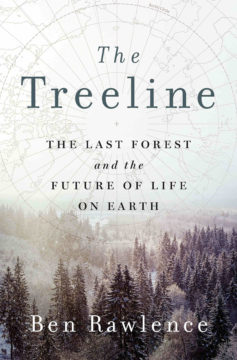 Although the speed
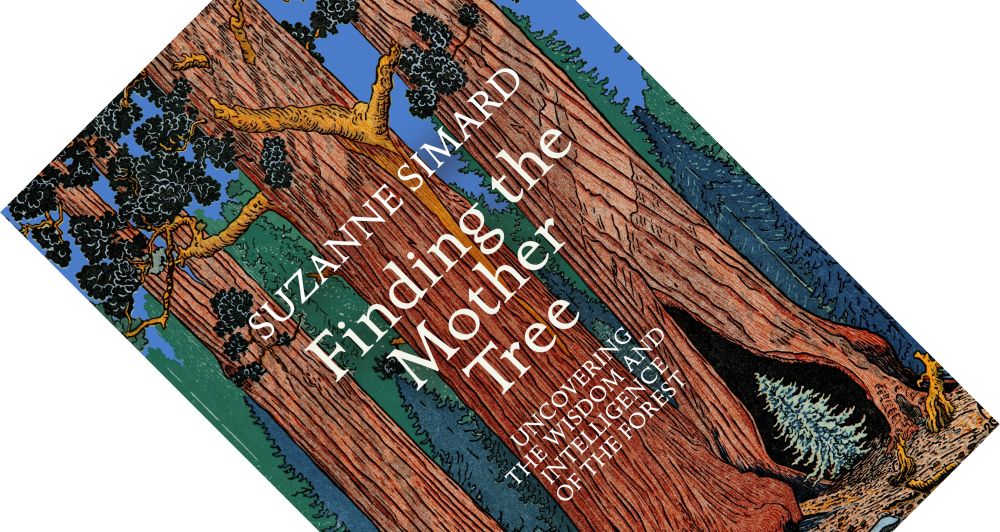 The idea that trees communicate and exchange nutrients with each other via underground networks of fungi has captured the popular imagination, helped along by the incredibly catchy metaphor of a “wood-wide web”. Suzanne Simard, a Professor of Forest Ecology at the University of British Columbia, has developed this idea more than anyone else and happily talks of mother trees nurturing their offspring. This idea has not been without controversy in scientific circles, if only for its anthropomorphic language. I was both sceptical and curious about her ideas. High time, therefore, to give her scientific memoir Finding the Mother Tree a close reading.
 I was in Eastern Europe in 1989, reporting on the revolutions that overthrew the ossified communist dictatorships that led to the collapse of the Soviet Union. It was a time of hope. NATO, with the breakup of the Soviet empire, became obsolete. President Mikhail Gorbachev reached out to Washington and Europe to build a new security pact that would include Russia. Secretary of State James Baker in the Reagan administration, along with the West German Foreign Minister Hans-Dietrich Genscher, assured the Soviet leader that if Germany was unified NATO would not be extended beyond the new borders. The commitment not to expand NATO, also made by Great Britain and France, appeared to herald a new global order. We saw the peace dividend dangled before us, the promise that the massive expenditures on weapons that characterized the Cold War would be converted into expenditures on social programs and infrastructures that had long been neglected to feed the insatiable appetite of the military.