
Enjoying the content on 3QD? Help keep us going by donating now.
Category: Recommended Reading
‘I saw the backlash coming’: civil rights activist Kimberlé Crenshaw on America and race
Emma Loffhagen in The Guardian:
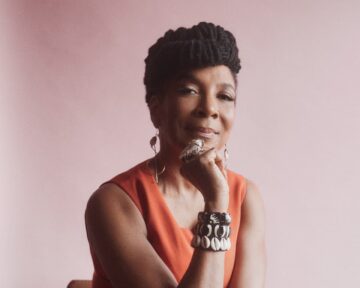 When Donald Trump returned to office in January last year, one of his first acts was to sign an executive order intended to cut federal funding for any school teaching what the administration defined as “critical race theory”. A raft of other orders mandated the termination of DEI (diversity, equity and inclusion) personnel, offices and training across the federal government. Federal agencies began flagging hundreds of words to avoid or eliminate, including “intersectional” and “intersectionality”. All of which has amounted to 40 years of Kimberlé Crenshaw’s work being literally and deliberately erased.
For decades, the 66-year-old legal scholar has been naming things that powerful people would prefer remain unnamed. In 1989, she coined the term intersectionality to describe the way race and gender overlap to shape lived experience, often in ways the law fails to recognise. Around the same time, she was one of a group of African American scholars who created the framework that came to be known as “critical race theory”, which sought to examine how racism is embedded in legal systems rather than simply enacted through individual prejudice. Now, Crenshaw’s ideas are being contested like never before.
More here.
Enjoying the content on 3QD? Help keep us going by donating now.
New routes to healthy brain ageing
From Nature:
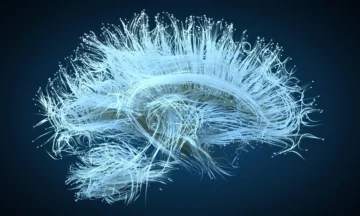 At the cellular level, the brain relies on repair mechanisms to remain healthy. Key processes — autophagy and mitophagy — help protect against neurodegeneration. Autophagy is the process by which cells break down and recycle damaged proteins and organelles. As we age, autophagy slows down, and harmful proteins such as amyloid-beta and tau can accumulate in the brain, contributing to the development of Alzheimer’s disease.
Mitophagy refers to a specific kind of autophagy, when cells remove damaged mitochondria — neurons need healthy mitochondria for energy, and problems with mitophagy can lead to physiological stress and poor cellular function. These processes present potential targets for treating Alzheimer’s disease. New findings reported during a conference keynote address revealed that one form of autophagy — chaperone-mediated autophagy (CMA) — might be the basis for a future therapy. How CMA operates varies depending on the time of day, the organ it is occurring in and the gender of the individual, according to Ana Maria Cuervo, co-director of the Institute for Aging Research at the Albert Einstein College of Medicine in New York City, United States1.
In 2021, Cuervo and her team demonstrated that pharmacologically boosting CMA resulted in improvements in both memory-related performance and brain pathology in mouse models of Alzheimer’s disease2.
More here.
Enjoying the content on 3QD? Help keep us going by donating now.
Michael Ondaatje’s Poems
Ben Libman at Poetry Magazine:
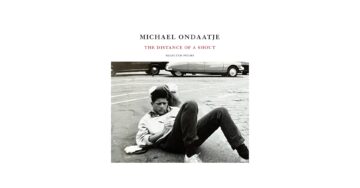 Years ago in the Sri Lankan highlands, Michael Ondaatje’s Aunt Christie, only 25 years old, volunteered to have “a total stranger in the circus profession” shoot an apple off her head. “That night,” Ondaatje writes in his sometimes fictionalized memoir Running in the Family (1982), a man named “T. W. Roberts was bitten in the leg by a dog while he danced with her. Later the dog was discovered to be rabid, but as T.W. had left for England nobody bothered to tell him. Most assume he survived.”
This complex little anecdote is a perfect Ondaatjeism, a distillation of a narrative style and variety of drama that permeates his writing: a memory made into lore, an eccentric relative made into a character, an incident with a wild animal, a stranger who flits in and out of contact as if he only ever existed for that moment, a vital message never sent, and two non sequitur scenes that are nevertheless jammed together. His works have often reveled in one or another of these modes or interests, but rarely are they brought together so pithily as here. Only when his six-decade career is collapsed into a single volume can the totality to which they point emerge clearly.
more here.
Enjoying the content on 3QD? Help keep us going by donating now.
A Sunflower Forest On The Eastern Front
Lawrence Weschler quoting Curzio Malaparte at Wondercabinet:
 One night I spent in a sunflower field. It was really a sunflower forest — a real forest. Bending on their tall hairy stalks, their large, round black eyes with long yellow lashes misty with sleep, the sunflowers slept with drooping heads. It was a clear night, the sky steeped in stars shone with blue and green reflections, like the hollow of a huge seashell. I slept hard and I was awakened at dawn by a gentle soft crackling. It sounded like the rustle of people walking barefoot through grass. I listened holding my breath. The faint couching of motors came to me from the near-by encampment — faint voices calling to one another in the wood by the brook. A dog was barking in the distance. Down on the skyline the sun was breaking through the black shell of the night, rising warm and red over the plain glistening with dew. That rustle spread and became louder every minute. It was by now like the crackling of a brushwood fire. Now it was like the subdued creaking of a vast ground, I held my breath, watching the sunflowers slowly raising their yellow eyelids and gradually opening their eyes.
more here.
Enjoying the content on 3QD? Help keep us going by donating now.
Sunday, April 26, 2026
Nathalie Baye (1948 – 2026) French Film and Stage Actor
Enjoying the content on 3QD? Help keep us going by donating now.
A Conversation with Debin Ma on East Asian History
Pranab Bardhan talks to Debin Ma over at his substack:
Pranab Bardhan (PB): 1. First, please give our readers a general idea of your unifying framework for understanding East Asian (particularly Chinese and Japanese) history of development over the last two centuries, and also the contrasts in the pattern.
Debin Ma (DM): In my early work and in two recent papers with my co-authors (Jared Rubin and Weiwen Yin), we seek to provide a unified framework for interpreting the gradual yet decisive two centuries of profound transformation in East Asia—what may be termed the Sinic language-group countries or regions (defined by the shared use of ideogrammatic Chinese characters). We examine this transformation through the contrasting patterns of modernization in Meiji Japan—which made a decisive turn toward the West—and Qing China—which remained comparatively lethargic in the face of Western challenges—in the second half of the nineteenth century.
This unified framework highlights three key features. First, given that traditional East Asian economies were far behind the global technological frontier by the mid-nineteenth century, modern economic theory would predict that economic transformation could be achieved through the importation of advanced institutions and technologies from the post–Industrial Revolution West. Indeed, on the eve of Western imperial encroachment, all Sinic-language regions shared canonical Confucian texts and worldviews; upheld Confucian or Neo-Confucian doctrines of governance; practiced intensive small-scale (primarily rice-based) family farming characterized by abundant labor and scarce capital; and were often (rightly or wrongly) described as embodying a predominantly community-based or collectivist culture.
More here. Part II can be found here.
Enjoying the content on 3QD? Help keep us going by donating now.
Guitar Hero
Leonard Benardo interviews Marc Ribot in The Ideas Letter:
Marc Ribot has spent more than four decades moving fluidly across the boundaries that ordinarily organize musical life: between downtown experiment and popular song, between sideman and bandleader, between art as formal inquiry and art as political intervention. But what makes his work so compelling is not simply its range. Again and again, Ribot has returned to larger questions about music’s social consequences: what it means for sound to carry political force, how genre can function as both resource and constraint, and what artistic freedom looks like under the economic pressures of the contemporary music industry.
Leonard Benardo: To get things going, allow me to ask an initial broad question, and we will narrow as we go along. I wonder how you understand and grapple with the relation between music and politics. There are those who claim that music is a sphere wholly outside politics and that to introduce the political into it would unnecessarily sully the art. Others view music and politics as inextricably linked, arguing that separating the two can only be a fool’s errand. Where do you come down? Is all music political? What does music require for it to be political? Is it a question of content? Is it expressed in the sounds themselves irrespective of “content”? How to understand?
Marc Ribot: If it’s OK, I’ll respond aphoristically.
“Politics,” Wikipedia tells us, “is about making agreements between people so that they can live together in groups.”
You say that “There are those who claim that music is a sphere wholly outside politics and that to introduce the political into it would unnecessarily sully the art.” I agree that introducing politics into music sullies it. But I would challenge the belief that this is unnecessary. In fact, being “sullied” is exactly what I need from art.
Composer, pianist, and bon vivant Anthony Coleman likes to describe his favorite part of both cuisine and music as “the filth”—that undefinable goo between the objects you can identify that actually makes it great. I share this aesthetic. I guess “we got da funk.”
More here.
Enjoying the content on 3QD? Help keep us going by donating now.
Electric World Order | The geopolitics of the energy and technology transition
Over at the Polycrisis podcast this season:
This first season of The Polycrisis podcast tells the story of the clash between new and old energy regimes.
Just like other energy transitions before it, this is a geopolitical story – not a climate one. Developing countries are leapfrogging their wealthy counterparts by rapidly deploying cheap solar panels, batteries and electric vehicles imported from China. This gives them a low-cost supply that’s immune to wars and other disruptions.
This energy transition is deeply connected to shifts taking place in the world, especially since the US-Israel attacks on Iran: the reconfiguration of world power, US-China rivalry and the deterioration of US hegemony.
More here.
Enjoying the content on 3QD? Help keep us going by donating now.
Aldwyth (1935 – 2026) Artist
Enjoying the content on 3QD? Help keep us going by donating now.
William Shatner at the 2026 Saturn Awards
Enjoying the content on 3QD? Help keep us going by donating now.
Trump, Iran’s Newest Hostage
Maureen Dowd in The New York Times:
 “It looked like a good thing: but wait till I tell you.”
That’s the opening of the classic O. Henry short story “The Ransom of Red Chief.” The tale, written in 1907, is the ultimate parable about the perils of trying to seize and control a hellion so devious, so maniacal, so awful that the captors become the captives.
The story is about two small-time crooks who think they can make some easy money by kidnapping a 10-year-old boy, the son of an affluent landowner in a sleepy Alabama town. They underestimate badly. When they go to abduct the red-haired, freckle-faced boy, he is throwing rocks at a kitten and hurls a brick at one of his kidnappers. “Red Chief, the terror of the plains,” as the boy calls himself, runs his captors ragged. He relishes tormenting the men and doesn’t want to go home. In the end, they have to drop their demand for a $2,000 ransom, pay the boy’s father $250 to take the demonic child off their hands and run for the hills.
President Trump went along with Bibi Netanyahu’s Panglossian case for slamming Iran. It looked like a good thing: but wait till I tell you.
More here.
Enjoying the content on 3QD? Help keep us going by donating now.
Sunday Poem
I’m doing a little straightening up and find this in an old notebook.
(I tidy it up a bit instead of the room.) —Nils
Time No Longer Marches
Small Morning Poem
Sweet to lie in bed
with a notebook of good paper
and a pen which writes without
skip or complaint.
A new small dog lies
like a gray puddle by my side,
its fur that of a Persian lamb coat
worn by a 1950’s starlet on the cover
of Life magazine.
The old dog, sleeping more each day,
flops on a rug before a glass door
through which the sun makes
an easy morning entrance.
Day ahead filled with too much,
but now I lie among a clutch
of poems watching the pen make its way
to the bottom of the page.
At the end of the notebook, this is what I find:
My small dog Willa, when told she was being freed
to run in the stars with Orion said she’ll rather
hang about the hearth with Hestia.
by Nils Peterson
—in a time before this
Enjoying the content on 3QD? Help keep us going by donating now.
Michael Harrison (1958 – 2026) Contemporary Classical Composer
Enjoying the content on 3QD? Help keep us going by donating now.
Friday, April 24, 2026
The Isle of the Dead: I am not against stupid painters
Morgan Meis at Close Reading:
 I’ve never actually seen Arnold Böcklin’s famous but now not really all that famous, let’s say once-famous and now fairly obscure painting known as Die Toteninsel, or The Isle of the Dead. I haven’t seen it in person. There is a version of the painting, I guess Böcklin painted a number of versions of the painting since they kept getting destroyed by wars and other annoying events, but there is a version of the painting at the art museum in Leipzig and I kick myself that I was in Leipzig not that long ago, a couple of years ago and completely and utterly failed to go see the painting. I wasn’t just in Leipzig, I was in Leipzig partly to see a big exhibit of Caspar David Friedrich paintings and could easily just have walked over and seen the Böcklin.
In retrospect, I suppose I didn’t even bother to find out what other important paintings and works of visual art were in Leipzig because I didn’t want to know. I only ever have a fairly small amount of looking in my system, I guess you could say, and I wanted, rather zealously and also somewhat self-protectively, I wanted to reserve all my looking-energy for the Friedrich paintings. This was probably a good idea, in retrospect.
More here.
Enjoying the content on 3QD? Help keep us going by donating now.
Sign of the future: GPT 5.5
Ethan Mollick at One Useful Thing:
 I had early access to GPT-5.51, and I think it is a big deal. It is a big deal because it indicates that we are not done with the rapid improvement in AI. It is also a big deal because it is just plain good. And it is a big deal because even with all of this, the frontier of AI ability remains jagged.
It is increasingly hard to quickly demonstrate each generational change as AI has gotten better, since a lot of the old things AI was bad at, like math or counting letters in words, are now trivial for AI to do. So, I will give you the complicated details, but first, a simple example that I think is a good illustration. What AI models are best at is coding, so I gave a coding challenge to AIs ranging from OpenAI’s first reasoning model, o3 (released a year and a week ago!) to the current best open weights model (Kimi K2.6) to the new GPT-5.5 Pro…
More here.
Enjoying the content on 3QD? Help keep us going by donating now.
Song by Ravi Shavi: “Moneyback”
Enjoying the content on 3QD? Help keep us going by donating now.
How to Save the Planet Without Screwing Over Poor People
Quico Toro at Persuasion:
 I’m a climate activist, but I don’t think climate is the most important thing. Not really.
I care about climate because I care about human flourishing, and an out-of-control climate makes human flourishing very hard. A stable climate is a really important means, but it’s not in itself an end.
That seems like a pretty milquetoast position, but it’s weirdly divisive in climate circles. Much of the climate left seems to want to prioritize climate stability even at the cost of human flourishing. The recently departed Paul Ehrlich (who infamously predicted that the world was facing a “population bomb”) was probably the paradigmatic example of this brand of anti-humanist environmentalism. Anytime you hear people worry about the climate impacts of having children, you’re face to face with this strand of thinking.
That makes no sense to me. I’m for people first, climate stability second.
If your first concern is for human flourishing, the thing to worry about is poverty.
More here.
Enjoying the content on 3QD? Help keep us going by donating now.
What I Learned from Teaching Darwin
C. Brandon Ogbunu in Undark Magazine:
 During the fall semester of 2025, I taught a graduate seminar entitled “Darwinian Thought and Society.” While teaching should always derive from generosity and a desire to share knowledge, my motivations were partly selfish. The course was an opportunity for me to re-engage with Darwin’s foundational ideas in the company of some of the brightest junior scientists that I’ve ever come across.
The conversations around the first book we read, Darwin’s 1859 “On the Origin of Species,” were mostly familiar ones. We often discussed his use of evidence and his voluminous knowledge of natural history. But other features stood out. For example, the manner in which the book delivered its theoretical argument is unlike what scientific opuses do today. The book contains no equations and only a single figure, a diagram often described as the world’s first phylogenetic tree. It contains no detailed experimental design. There are no statistical methods, or power calculations. Yet the ideas in it are among the most radical and dangerous in the Western canon. In 2026, science has been forced into a deep reflection phase with regard to its present and its future. Revisiting Darwin offers useful lessons for the terrain we now occupy.
More here.
Enjoying the content on 3QD? Help keep us going by donating now.
How your heartbeat could keep cancer at bay
Rachel Fieldhouse in Nature:
 The beating of the heart stops cancers from growing in this organ in mice, reports a study published today in Science1. This could explain why tumours affecting the heart are so rare in mammals, including in people.
Almost all organs and tissues in the body can develop tumours, but cancers that affect the heart are seldom observed. In people, primary cardiac tumours have been identified in fewer than 1% of autopsies, while secondary cancers, in which the primary tumour occurs in a different part of the body, have been found in up to 18% of autopsies. Until now, there has not been a satisfactory explanation for why cardiac tumours are so uncommon, says James Chong, a cardiologist and researcher at the University of Sydney, Australia. This latest study puts forward a compelling case that mechanical strain on the heart could be an explanation, he says.
Serena Zacchigna, a clinician-scientist at the University of Trieste, Italy, and her team transplanted hearts onto the necks of genetically modified mice. These external hearts did not beat but did still receive a blood supply and were functional. The team then injected cancer cells into the transplanted hearts on the necks of mice and into the ‘native’ hearts in the animals. Within two weeks, the cancer cells multiplied and replaced most of the healthy cells in the transplanted hearts. By contrast, about 20% of tissue in the native hearts was cancerous.
More here.
Enjoying the content on 3QD? Help keep us going by donating now.