
Justin E. H. Smith in his Substack newsletter, The Hinternet:
 Today’s ‘stack will principally involve “housekeeping”. I said explicitly a week ago that the war in Ukraine has left me literally speechless, and I meant it. I was able to squeeze out some speech a week ago nonetheless, mostly by soldering together various fragments already written, by descending into mean-spiritedness in a vain effort to be funny, by “just saying whatever”. I can’t rely on the strategy of gonzo bricolage week to week, and so today I can only confess the stubborn silence of my “inner voice”, the homunculus who lives inside me and, when things are going right, dictates what I have to say.
This silence may come as a surprise, as I generally both teach and practice insouciance in the face of global crisis — I believe there is a moral imperative to do so: maintaining good spirits both for the sake of one’s own survival and the survival of good spirits themselves, so that the world, when any given crisis has passed, should still know what good spirits are. Although maintained with a solemn air of duty, this insouciance is sometimes received by others as a sign of my simply not caring, and if you receive it in that way you will likely wish to criticize me, now, for finally caring when it comes to the citizens of Kyiv or Mariupol, but not of, say, Syria, Iraq, or Yemen.
More here.
 In a foundational
 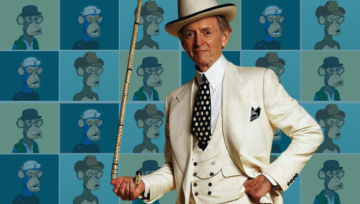 We are approaching the first anniversary of a landmark event in the art world. Although it seemed shockingly new last year, it represents the culmination of a trajectory described by Wolfe half a century ago: the de-materialization of art. On March 11th, 2021, a momentous auction was held by Christie’s. It was a dramatic departure from precedent, partly because
 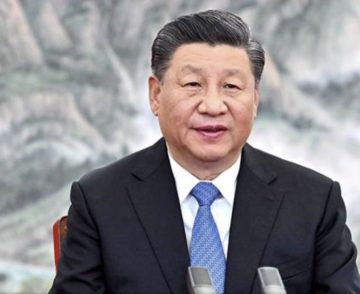 China can take the initiative in three key areas. For starters, Chinese President Xi Jinping should call for an emergency summit of G20 leaders, focused on achieving an immediate and unconditional ceasefire in this conflict and developing an agenda for a negotiated peace. The G20 is now the recognized forum for global action in the midst of crisis, having galvanized support among the world’s leading economies in
 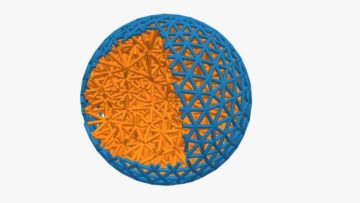 Physicists have discovered a new way to coat soft robots in materials that allow them to move and function in a more purposeful way. The research, led by the UK’s University of Bath, is described today in Science Advances. Authors of the study believe their breakthrough modeling on ‘active matter’ could mark a turning point in the design of robots. With further development of the concept, it may be possible to determine the shape, movement and behavior of a soft solid not by its natural elasticity but by human-controlled activity on its
 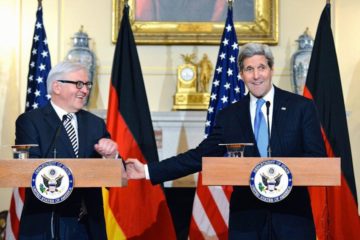 Nobody is talking about the blame that must be shouldered by the German government for the crisis and humanitarian disaster in Ukraine.
 Esfandyar Batmanghelidj in War on the Rocks:
 Ron Ivey in American Affairs Journal:
 I
I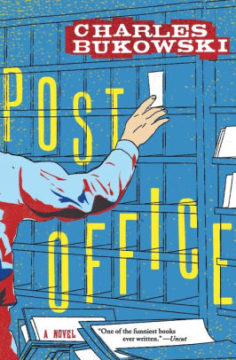 HALF A CENTURY AFTER the publication of Post Office (1971), how should we understand Charles Bukowski’s literary achievement? His publisher predicted that Bukowski would never reach a mainstream audience. And yet his books, including his poetry, have sold millions of copies in more than a dozen languages. Writing for The New Yorker in 2005, Adam Kirsch
  “Living in America during the Reagan years had the same disorientation as a texture dream,” writes David Wojnarowicz in
  One summer afternoon when I was 23 — this was in 1987 — I was twiddling the dial on the radio in the apartment I was subletting on 114th St. when I stumbled on a station that was unlike anything that I had ever heard before. They were in the middle of a story about the Appalachian Trail, profiling some of the people who were hiking its two thousand miles that year. The reporting was calm, patient, intelligent, allowing the subject to find its own shape, unfolding slowly, minute after minute, like the trail itself.
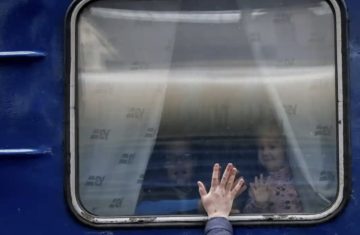 Here we are, in our ringside seats at a bloody circus, watching on TV and Twitter, trapped between infinite pity and rational self-interest. The tension between two opposing forces is unbearable. Pulling from one side, our horror at a senseless invasion, our wonder at the Ukrainian resistance, the unarmed villagers mobbing a Russian tank or feeding a