
Benjamin Ivry at Salmagundi:
 Although Autumntide may seem ornately literary today, when it was first published, some historians criticized its racy readability. Otto Oppermann, a German-Dutch medievalist who taught at Utrecht, referred to the book as “Huizinga’s crime novel,” implying that it was all too vivid an experience.
What appeared inappropriate to some academics a century ago has bolstered the book’s enduring charm. The historian William J. Bouwsma pointed out in the winter 1974 issue of Daedalus that Autumntide may be “enjoyed as a work of high art, full of color and life, as in its marvelous opening chapter with its bells and processions, its public executions and public tears…[Huizinga] had a singularly original and stimulating mind, provocative even when it seems most limited and perverse.”
more here.
 This sort of loss, with its confluence of profligacy and jackassery, is a common feature of architectural history. Any speculator who demolishes Geller I to build a tennis court is assuredly some sort of villain, but the villainy is also of a system within which such actions can seem rational and normal. Even after the housing bubble and Great Recession, sometimes fantastical speculation in the material value of private houses and their half-acres of land remains the seeming consolation for the compounding economic injustices of our new Gilded Age—especially for the middle classes, for whom their dwelling place is their main financial asset. I’m reminded of Walt Whitman’s father—also a Long Island house-flipper and land speculator—remembered in There was a Child Went Forth as a master of “the blow . . . the tight bargain, the crafty lure.” The transactionality of those encounters colonized the consciousness of the poet inseparably from “the streets themselves, and the façades of the houses. . . . the goods in the windows.”
 The month is May 1916. In southern Galicia, now Ukraine, on the Eastern Front of World War I, a twenty-seven-year-old Austrian volunteers for duty in an observation post exposed to enemy gunfire. He keeps a notebook of his hopes and fears, written in a simple cipher from his childhood—the letter “z” stands for “a,” “y” for “b,” and so on—with philosophical remarks, uncoded, on the facing pages. The latter concern the nature of logic and are peppered with logical symbols. From April 15: “Every simple proposition can be brought into the form ɸx.”
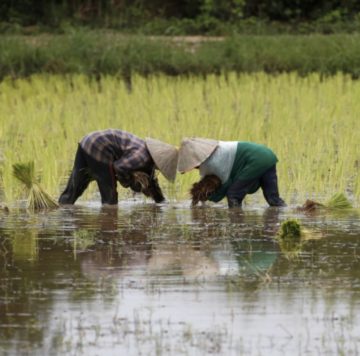 In wealthier countries, rodenticides like bromadiolone that prevent blood from clotting are used to combat plagues of rats and mice. But they also poison non-target species, soil, water and sometimes the farmers who apply them, and can be prohibitively expensive.
 We are international
 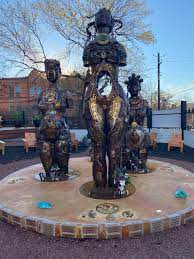 Birth professionals from around the country gathered in Montgomery, Ala., to heal, to learn and to honor the lives and sacrifices of three women: Anarcha, Lucy, and Betsey, the Mothers of Gynecology. These towering mothers built of scrap metal were the cornerstone of a two-day conference in late February centered on Black maternal health inside Old Ship A.M.E Zion Church.
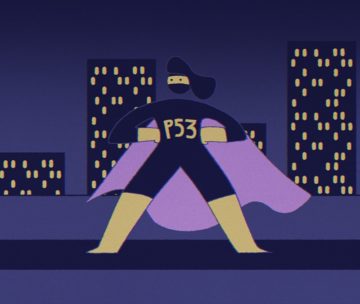 When scientists first came across p53 in 1979, it was an intriguing but not Earth-shattering discovery. Six groups independently discovered a cellular protein with a molecular weight of roughly 53 kilodaltons — hence the name. It seemed that p53 was interacting with a tumour-inducing virus called simian virus 40, and researchers soon showed that healthy cells forced to express this newly cloned gene encoding p53 quickly became cancerous
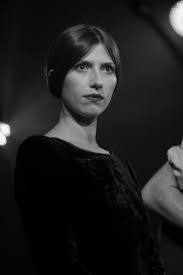 Across three albums between 2014 and 2019, Harding, who lived for a time in Cardiff, but is now based in a small town back in New Zealand, has released a collection of songs that could most easily be considered contemporary folk. She sings and plays guitar, there are drums and keys, the arrangements are typically sparse, and the songs are melody-focused. More interesting is her vocal elasticity – the way her tone shifts on the 2017 track “
 I said last week that Putin has “taken the world hostage” by threatening to use nuclear weapons in order to defend the territorial sovereignty of Russia, and I certainly count my own mind and faculty of attention among the captives. Some of you might be tired of this subject by now, which now enters its fourth week as my exclusive focus in this space. I expect I’ll get back to regular programming soon, as, God willing, the font size of the New York Times’ front-page headlines begins at long last to shrink back to something closer to normal. You might be particularly tired of hearing from me on the subject, as plainly what you are seeing here is not expert analysis, such as you might expect from, say, Timothy Snyder or Anne Applebaum, but rather the essayistic laying bare of unstable convictions, fleeting worries, and divinations from long-ago memories of formative experiences in Russia.
 Herd immunity was always our greatest asset for protecting vulnerable people, but public health failed to use it wisely.
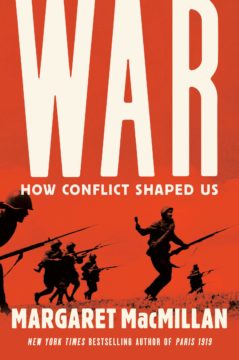 War is a not a word that communicates much. It wants to, but quickly the gruff sound deteriorates into an abstraction and nothing more. War. War. Like love, truth, or beauty, we say the word but cannot see it. The gut does not believe. To title a book War as Margaret MacMillan, the distinguished historian, has done, is to attempt to assert control over the very term itself. As a result, even before the prose begins, War: How Conflict Shaped Us promises to be a revelation: here, war will be understood at last. Such authoritativeness is a noble pursuit, and MacMillan joins others in recent years such as Sebastian Junger and Jeremy Black in a frantic effort to articulate a unified field theory of war before it is too late.¹ “We face the prospect of the end of humanity itself,” MacMillan concludes, if we fail to demystify war in our current moment. (289) That is the project, and given the book’s critical and popular praise from notable figures such as war journalist Dexter Filkins, former National Security Director H.R. McMaster, and former Secretary of State George Schultz, readers might feel it has done its work. I am not so sure, which is not a criticism of MacMillan’s book so much as it is a lament about the relentless inscrutability of war both as an object of academic study and as a lived experience that resists expression.
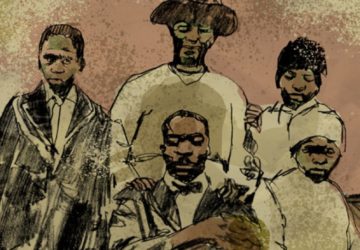 They were in lines extending as far as the eye could see, stretching across the horizon and toward the Promised Land. Dutifully, though with growing impatience and anxiety, they were waiting their turn to enter the fabled American Dreamland, where all who worked hard would be assured well-paid jobs and comfortable homes where well-adjusted children would flourish, and smile their winning smiles.