
Leanne Ogasawara in Electrum Magazine:
 A glance at Hobson-Jobson, the historical dictionary of Anglo-Indian words in use during the British rule in India, will show that the word “loot” comes into English from Hindi, ultimately deriving from Sanskrit. It entered the English language around the time of the Opium Wars, when the British were not just in India but also in China. This was when the 8th Earl of Elgin, James Bruce, was present at the sacking of the Summer Palace in Beijing. He was, incidentally, the son of the 7th Lord Elgin who removed the marbles from the Parthenon. James Bruce had this to say about loot:
There is a word called loot, which gives unfortunately a venial character to what would in common English be styled robbery.
Robbery or loot? Isn’t it all the same?
This winter, I took a postgraduate class at Stanford called Plundered Art: The History and Ethics of Art Collection. From Nebuchadnezzar, Nero and Napoleon to the Nazis and the present, we examined specific historic cases of art plundering and considered the ethics of such collections in museums to the present day as well as collecting in itself.
More here.
 Languages change continually and in wide variety of ways. New words and phrases appear, while others fall into disuse. Words subtly, or less subtly, shift their meanings or develop new meanings, while speech sounds and intonation change continually. Yet perhaps the most fundamental shift in language change is gradual conventionalization: patterns of communication are initially flexible, but over time they slowly become increasingly stable, conventionalized, and, in many cases, obligatory. This is spontaneous order in action: from an initial jumble increasingly specific patterns emerge over time.
 Antonio Gramsci’s near-feral Sardinian childhood set him apart from most other leading communist revolutionaries of the interwar years, who tended to originate in cities. His father was imprisoned for petty embezzling as a state functionary in the Kingdom of Italy; his mother scraped by a living mending clothes. When Gramsci was four, a boil on his back began hemorrhaging, and he nearly bled to death. His mother bought a shroud and a small coffin, which stood in a corner of the house for the rest of his youth.
 My friend Professor Tahira Naqvi wrote in her condolence note: “I don’t think there is a book cover that has ever made a place in popular consciousness as that of Meatless Days. I can’t remember a book from my early days here that had as much of an impact as that brilliantly written memoir.”
 Why do people at the top of their careers snap and make wildly self-destructive moves that rip apart everything they have been working to build? In a blink, Will Smith went from Mr. Nice Guy on the verge of winning an Oscar to a crazed assailant in Satan’s grip. “At your highest moment, be careful. That’s when the devil comes for you,” Smith said in his acceptance speech, quoting what Denzel Washington told him minutes earlier to calm him down.
 In the spring of 1947, nothing about the future of India, its identity as a nation or the kind of country it would be, was certain. India would soon be free from British colonial rule, but it could not fulfill the basic needs — let alone the hopes and ambitions — of most of its people. That would require new institutions, new ideas, and men and women who were willing to take a chance on building them.
 J
J Roth’s most securely canonical work is
  T
T The vacuum where consequences should be is the setting of Aamina Ahmad’s quietly stunning debut novel, “The Return of Faraz Ali” — stunning not only on account of the writer’s talent, of which there is clearly plenty, but also in its humanity, in how a book this unflinching in its depiction of class and institutional injustice can still feel so tender.
 I’m almost fifty, and over the course of my adult life, the evolution has already been amazing. I grew up in a world where feminists were just a few strange women, always mad, and not to be trusted. Feminism was so unpopular. Now, it’s extraordinary the way young women behave—they don’t want to please men at all costs—and I admire that very much. I was raised to please men and be an “acceptable” woman, to not be angry, or too demanding. I see how young women push that, and push men to evolve and understand things about them. This social blackmail—that if you’re not a “nice” girl, you’ll never be loved—today, they don’t care! My hope is that men will be forced to evolve and be interested in women’s experiences. But it’s a big struggle. In France, I’m really struck by the violent reaction against this. Many men are resisting this evolution with all their strength, because they’ve been living in a world that is so comfortable. It’s really about including your experience of the other in your vision of the world. And many men are not willing to do that.
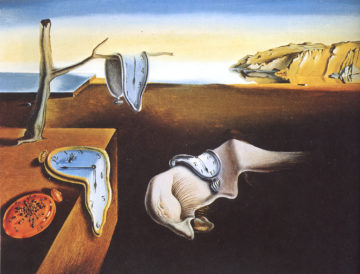 Despite some intriguing speculation, scientists haven’t yet come up with a clear, satisfying answer to the question of why we dream. Part of the reason is doubtless because, as any time spent studying neuroscience will show you, our knowledge of the brain is in its infancy. And part of it is due to the special limitations of dream research. Animal studies—sometimes referred to as the gold standard of neuroscientific research (think of the things one can do to rat brains that one can’t do to humans)—are of no help here. Like many pet owners, I believe that my dog dreams. But when I see her lying on the couch, muttering and growling with her eyes moving behind closed lids, I can’t wake her and ask her what she saw. When I spoke about the state of the field with the dream researcher Erin Wamsley, she described a kind of disappointment, a sense that the breakthrough insights into the nature of dreaming that seemed imminent a decade or two ago haven’t materialized.