
Tim Greiving at The Current:
 Lynch’s adoration of musicians has been a constant, and he’s often blurred the line between musical and on-screen performance. In Blue Velvet (a film named after a 1950 ballad), Frank Booth is almost driven mad by the beauty of Roy Orbison’s 1963 song “In Dreams,” as lip-synced by Dean Stockwell’s character. Composer Angelo Badalamenti has played an outsized emotional role in every Lynch project since Blue Velvet, where he also appears in-world as Dorothy’s pianist. Lynch loved “Mysteries of Love” singer Julee Cruise so much that, after making an entire album with her, he planted her among the residents of Twin Peaks as a performer at the Roadhouse. Twin Peaks’ James Hurley (James Marshall) is a would-be Chris Isaak, a sentimental singer with a guitar, a motorcycle, and a heart of gold. Lynch also frequently uses musicians as actors, as he did with Sting in Dune, Henry Rollins in Lost Highway, Chrysta Bell in Twin Peaks: The Return—and David Bowie, who appears alongside Isaak in Fire Walk with Me. “Musicians are very close to actors,” Lynch told me, simply. “They go in front of people on a stage, and they have really no problem being in public, just like being in front of a camera. And they perform.”
more here.
 Notwithstanding their sometimes tendentious selection of evidence, conservative critics are right about one thing: progressives do like to tell people what to call things. The well-rehearsed rhetorical drama over this kind of conceptual terminology is only one of the ways in which arguments over definitions and usage have risen to prominence and in some cases become almost synonymous with the desire for social change in recent years. On one hand, progressives push to substitute centuries-old terms with wide public currency like “hunger” and “homelessness” with recondite neologisms like “food insecurity” and “unhoused persons.” At the same time, they insist that familiar—if familiarly contested—terms like “racism,” “white supremacy” and “violence” be expanded to cover huge new swaths of attitudes, institutional arrangements and beliefs, including many (such as “freedom of speech,” or the prospect of a “color-blind” society) that the majority of Americans still think of as signaling positively virtuous commitments. That many of these efforts meet with mockery, resistance and recrimination only seems to reinforce confidence on all sides that the battle is a crucial one.
 At the centre of her debut album, Little Earthquakes, released 30 years ago, is “Me and a Gun”, an a cappella song about a rape so brutal that were Amos emerging now, the experience would define her entire public identity. In a few of her earliest interviews, her rape is edited out, passed over as “a frightful event”, though she had clearly spent part of the interview talking about it. Who knows whether it scared the male-dominated music press of the 1990s; whether it contributed to the way Tori Amos was seen – as someone both away with the fairies and too raw and physical to be comfortable with. An NME review of Little Earthquakes described it as “a sprawling, confusing journey through the gunk of a woman’s soul”. Her brand of sexuality was a challenge for straight men, as she humped her piano, or suckled a pig in images for her third album, Boys For Pele. She was no Kate Bush after all. Asked once who would play her in a film, she replied: Tonya Harding.
 It is hard to imagine humans spending their lives in virtual reality when the experience amounts to waving your arms about in the middle of the lounge with a device the size of a house brick strapped to your face.
 Gravity might be an early subject in introductory physics classes, but that doesn’t mean scientists aren’t still trying to measure it with ever-increasing precision. Now, a group of physicists has done it using the effects of
 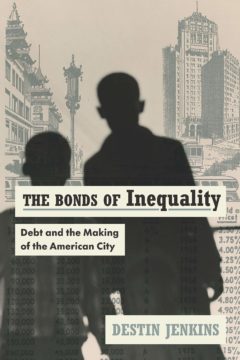 If debt ensures stability and solvency for some, the economic growth it propels fuels dependency and inequality for others, not only between creditor and debtor but also further down the line, as the borrower passes on the costs of debt to those with less power to control the terms of the deal. This devil’s bargain is particularly true when it comes to municipal debt, argues the Stanford University historian Destin Jenkins in The Bonds of Inequality, his new book on the power the bond market has leveraged over San Francisco and other US cities. The debt-financed spending that cities have long used to spur growth, Jenkins contends, has also underwritten the racial and income inequality of the post–World War II metropolis, while funneling profits to bankers and reinforcing city dependency on finance capitalism.
 In the late 19th century, a Sunday school leader in New York, Charles C. Overton, called for the
 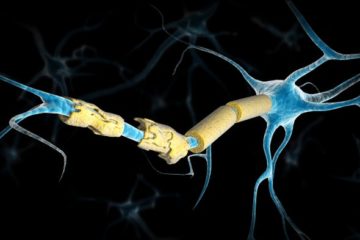 A connection between the human herpesvirus Epstein-Barr and multiple sclerosis (MS) has long been suspected but has been difficult to prove. Epstein-Barr virus (EBV) is the primary cause of mononucleosis and is so common that 95 percent of adults carry it. Unlike Epstein-Barr, MS, a devastating demyelinating disease of the central nervous system, is relatively rare. It affects 2.8 million people worldwide. But people who contract infectious mononucleosis are at slightly increased risk of developing MS. In the disease, inflammation damages the myelin sheath that insulates nerve cells, ultimately disrupting signals to and from the brain and causing a variety of symptoms, from numbness and pain to paralysis.
 Nobody wants to hear anyone else’s dreams, and nobody wants to see anyone else’s photo albums. A rare few good souls might express interest at first, but will almost certainly find their attention flagging long before the sharer is finished.
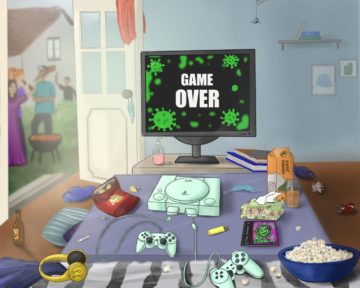 After the Omicron wave, we’ll be in a world where most people will have some sort of immunity, either through natural infections, vaccines, or both. We now know how to get vaccines fast (we should approve them faster for new variants), and we have treatments too. The value of time for learning has dropped: we know most of what we need to know about it. So the benefits of social measures to stop COVID are much lower.
 I
I With apologies to Tolstoy, all perfect rhymes are alike, each imperfect rhyme imperfect in its own way. Perfect rhyme tells us about a relationship between words that never changes; that scoring with boring is a rhyme you can find in a dictionary is useful but also, not to put too fine a point on it, boring. But rhyming family with body—that’s interesting. How does she do it? Why does she do it? Imperfect rhyme—slant rhyme, off-rhyme, near-rhyme, half-rhyme, lazy rhyme, deferred rhyme, overzealous compound rhyme, corrugated rhyme, what have you—illuminates something about the person creating it, about their ear and their mind and what they’re willing to bend for the sake of sound. It tells us what they believe they can get away with through sheer force of will, like how Fabolous rhymes Beamer Benz or Bentley with team be spending centuries and penis evidently just because he knows he can.
 Israel is often seen as a place of intractable divisions. But author Ethan Michaeli, the son of Israelis who moved to the United States, grew weary of hearing the same old narratives. So he set out on a journey to paint a more nuanced portrait. In “Twelve Tribes: Promise and Peril in the New Israel,” he brings readers along for the ride, introducing them to the complexities – and humanity – of life in modern Israel. A deeper understanding won’t fix everything, he says, but it may help uplift the debate. He spoke recently with the Monitor.