
Category: Recommended Reading
The Story Of A Stare Down
Penelope Rowlands at The American Scholar:
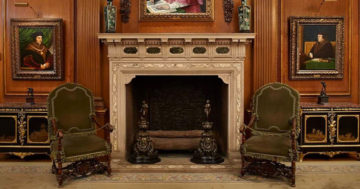 “It seems as though Cromwell has More right where he wants him,” the social scientist Todd Oakley writes in his essay, “Do Pictures Stare?” Many art-loving New Yorkers will immediately get the reference. At the Frick Collection on Fifth Avenue, two portraits by the German artist Hans Holbein the Younger—one of Sir Thomas More, the other of Thomas Cromwell—faced off against each other for years from either side of a majestic fireplace in the hallowed, oak-paneled room known as the Living Hall.
Other visitors to the Frick have doubtless shared Oakley’s impression. It’s fun to imagine that Cromwell glares at More, daggers drawn, at least telepathically. For his part, More—a study in tranquility—stares thoughtfully in Cromwell’s direction. He’s looking into the distance toward his left, at something we can’t see. His expression is pensive, calm, direct.
more here.
Exploring The Midwest’s Forgotten Utopian Communes
Evan Malmgren at The Baffler:
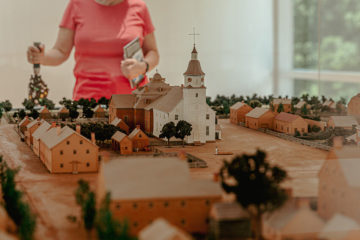 This story is fairly typical. Inland America is pocked with the unmarked graves of communitarian utopias—primitive socialist and communist experiments—that tried to rebuild the world on what was assumed to be virgin soil. Ephrata, Pennsylvania; Germantown, Tennessee; Utopia, Ohio; Brentwood, New York; Iowa’s Amana Colonies: these and many other towns were originally settled by communalists with lofty visions of abolishing private property, quashing material inequity, and transcending divisive individualism.
It makes sense that those seeking the fringe of a New World might be driven by powerful ideological convictions. But while European settlers dreamed of abolishing old hierarchies in the map’s blank spots, these blanks were always a fantasy. The allure of self-directed freedom in unsullied lands largely folded back into a vanguard of dispossession and genocide, with naïve radicals paving the way for the extension of the very structures they had hoped to escape.
more here.
Sunday, April 17, 2022
An Interview with Parul Sehgal
Zachary Fine in The Oxonian Review:
 Part of the pleasure of reading Parul Sehgal’s book reviews when she served as a critic for The New York Times was the impression that her prose had slipped past the censors. Some of her sentences had the crispness of newspaper copy but others were much more blurred and atmospheric. You could watch her trialing an idea, circling it with adjectives, letting it rise with the sound of the words.
Here I sit, having just completed a novel that lines up these pieties and threatens to dispatch them with calm and ruthless efficiency . . . it is most thoroughly and exuberantly about the hunched, clammy, lightly paranoid, entirely demented feeling of being ‘very online’—the relentlessness of performance required, the abdication of all inwardness, subtlety and good sense.
This in The New York Times? And not an anomaly but every week, give or take, for four years. Her pieces were elliptical, slightly wry, unafraid to double back on themselves. One could sense that she was thrilling to the limits of the form and not simply meeting a deadline. ‘Book reviewing’, she said, ‘can get a bad rap as glorified book reports, when it really is this amazing instrument, this vocabulary of pleasure.’
More here.
Life With Longer Genetic Codes Seems Possible — but Less Likely
Yasemin Saplakoglu in Quanta:
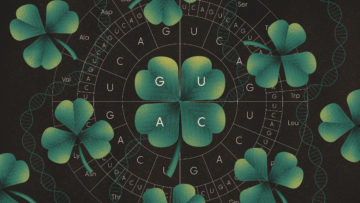 As wildly diverse as life on Earth is — whether it’s a jaguar hunting down a deer in the Amazon, an orchid vine spiraling around a tree in Congo, primitive cells growing in boiling hot springs in Canada, or a stockbroker sipping coffee on Wall Street — at the genetic level, it all plays by the same rules. Four chemical letters, or nucleotide bases, spell out 64 three-letter “words” called codons, each of which stands for one of 20 amino acids. When amino acids are strung together in keeping with these encoded instructions, they form the proteins characteristic of each species. With only a few obscure exceptions, all genomes encode information identically.
Yet, in a new study published last month in eLife, a group of researchers at the Massachusetts Institute of Technology and Yale University showed that it’s possible to tweak one of these time-honored rules and create a more expansive, entirely new genetic code built around longer codon words.
More here.
There’s More to Authoritarianism Than Cults of Personality
Krithika Varagur in The New Republic:
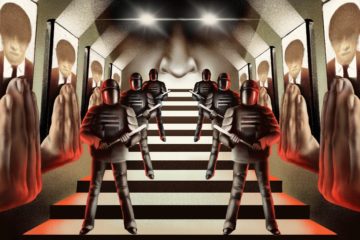 It’s remarkable: For more than a year, it’s been impossible to describe any world leader as a version of the sitting U.S. president. Run this thought experiment yourself: Who might be the “Joe Biden of South America”? Or “Central Europe’s Biden”? You draw a blank. What a contrast from the four years in which the world contained Hungary’s Trump, Brazil’s Trump, India’s Trump, Turkey’s Trump, the Philippines’ Trump, and so many more. The parallels between these leaders and Trump were chilling, but they were also a boon for the geopolitical commentariat: the sundry experts, analysts, specialists, and columnists who used them to give an intelligible shape to troubling developments in places far from the United States. The stakes were uncontestably high, and the conditions for analogy, the Swiss Army knife of such professions, had never been so ripe.
The Age of the Strongman: How the Cult of the Leader Threatens Democracy Around the World by Gideon Rachman, chief foreign affairs columnist for the Financial Times, is one of several new books that attempt to explain today’s authoritarians as a single phenomenon by slotting their rise and their “playbooks”—a favorite term of these analyses—into a unifying framework.
More here.
Mankind can solve all problems, argues British physicist David Deutsch
Rafaela von Bredow and Johann Grolle in Der Speigel:
DER SPIEGEL: Professor Deutsch, you believe that mankind, after billions and billions of years of absolute monotony in the universe, will now reshape it to their liking, that a new cosmological era is coming. Are you serious?
 Deutsch: I am not the first to propose this idea. The Italian geologist Antonio Stoppani wrote in the 19th century that he had no hesitation in declaring man to be a new power in the universe, equivalent to the power of gravitation.
DER SPIEGEL: And fly to distant planets? Tap energy from black holes? Conquer entire galaxies?
Deutsch: I am not saying that we will necessarily do all this. I am only saying that, in principle, there is nothing to stop us. Only the laws of physics could prevent us. And we do not know a law of physics that forbids us, for example, from traveling to distant stars.
More here.
How Homeownership Changes You
Joe Pinsker in The Atlantic:
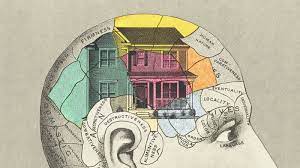 Growing up, Erin Nelson used to make fun of their dad for spending so much time looking out the window at what the neighbors were up to. “Now I’m that person,” Nelson, a 31-year-old who bought their first house a year ago in Portland, Oregon, told me. “I’m always peeking out the window … That’s like my new TV.” Nelson, who uses they/them pronouns, has realized that as a homeowner, their life is bound up with the people next door in a way it never has been before.
Buying a first house is, for those who can afford it, among the largest financial decisions someone makes in their life, and lately, the process has only gotten more stressful: During the pandemic, home prices have shot up, and shopping for a house has become intimidatingly competitive in many places. But even some winners of the competition have buyer’s remorse. In a recent survey from the real-estate site Zillow, roughly one-third of respondents reported regretting how much work or maintenance their home required, and roughly one-fifth concluded that they had paid too much.
Perhaps forgotten amid the bidding wars and the rush to lock in a mortgage as interest rates rise is the fact that this transaction has a way of changing people as well. In addition to buying an assemblage of wood, glass, and other materials and committing to a host of unfamiliar chores, homeowners are also buying a psychological grab bag of new stressors, time sucks, comforts, perks, and trivial fixations—such as the neighbors’ comings and goings. Homeownership can change your mental time horizon, your conception of your community, and your stakes in a physical place.
More here.
A Genius on the Wrong Side of History: Tolstoy’s Conflicts and Contradictions
Maria Rubin in The NY Review of Books:
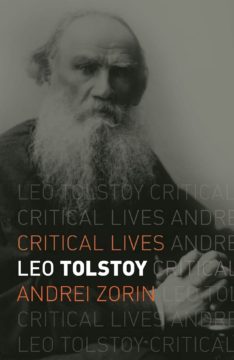 IT IS DAUNTING to write a biography of Tolstoy. Hundreds or even thousands of books have already put each detail of his life and work under a microscope, and the archives contain no more hidden treasures. Yet, new interpretations of Tolstoy’s life continue to pour in, with more expected in the run-up to the writer’s 200th birthday in 2028. One of the most immediately obvious advantages of Andrei Zorin’s Leo Tolstoy is its brevity. And I don’t mean this as a backhanded compliment. While other biographies tend to compete with the author’s greatest novels in length, this medium-format book of roughly 200 pages will be welcomed by those who want to learn more about the legendary Russian writer without a major time commitment.
Zorin’s book achieves the ultimate expectation set by the biography genre — he creates a consistent representation of Tolstoy’s integral personality. To begin with, he does not revisit the familiar dichotomy of Tolstoy the artist versus Tolstoy the thinker. According to this narrative, the writer turned to excessive moralizing after completing War and Peace and Anna Karenina, gradually suffocating his artistic genius. In the colorful words of Tatyana Tolstaya, the writer’s distant descendent and a popular author in her own right, once he turned to preaching the “quill fell out of his hand.” Tolstoy himself was very much aware of this inner conflict and in later life “resolved” it by condemning much of European art and literature, his own fiction included. Whereas many scholars have been all too eager to assimilate this binary paradigm, Zorin writes his biography against that trend. He presents Tolstoy as a sum total of all of his various activities — fiction, nonfiction, correspondence, oral teachings, religious writings, direct action, and even family squabbles — seamlessly integrated into the text of his life. While Tolstoy’s path seems full of unexpected shifts from one extreme to the other (from a dissolute lifestyle to near-chastity, from hunting to vegetarianism, from fiction to preaching, from luxury to asceticism), Zorin’s book shows that every juncture was just another manifestation of the inner logic of his existence. In this light, the spiritual crisis of 1878, when Tolstoy appeared to have rejected nearly all of his former values, was nothing sudden: this “conversion” became a culmination of a lifelong quest for the meaning of life and death, deep self-reflection and religious skepticism.
More here.
Jordan Mooney (1955 – 2022) Punk Avatar
Gilbert Gottfried (1955 – 2022) Comedian
John Zaritsky (1943 – 2022) Documentary Filmmaker
https://www.youtube.com/watch?v=svk9VWnSfgA&ab_channel=Moconomy
Saturday, April 16, 2022
Beyond Eurocentrism
 Ingrid Harvold Kvangraven in Aeon:
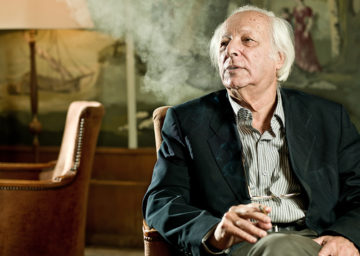
With the publication of Orientalism in 1978, Edward Said would become one of the most influential scholars of our era. The book transformed the study of the history of the modern world, as it offered insights into how racist discourses created and maintained European empires. As much for his political activities, Said and his work attracted a number of Right-wing critics, most notably perhaps Bernard Lewis. Less well known in the West is Samir Amin, the Egyptian economist who coined the term ‘Eurocentrism’. The term comes from Amin’s book Eurocentrism (1988), which criticised Said’s view of empire from the Left and offered an alternative view, one based not on culture or discourse, but on a materialist understanding of capitalism and imperialism.
Said spent most of his career in the Global North, in New York City, while Amin spent his mostly in Africa, attempting to build African academic and political institutions to challenge the dependencies created through imperialism. When I met Amin for an interview back in 2016, he was 85 and still vigorously involved in building alternative institutions and challenging Eurocentric social theory. Although he died in 2018, his legacy remains acutely relevant.
More here.
The Long Now
 Ajay Singh Chaudhary in Late Light:
On April 30, 2018, the temperature reached 122.4⁰ Fahrenheit (50.2⁰ Celsius) in Nawabshah, Pakistan, a city of 1.1 million people a mere 127 miles from Karachi, the capital city with approximately 15 million residents. Although Pakistan is a large and varied country geographically speaking, it is the fifth most populous country in the world, with just under 230 million residents. This was not only the hottest April day ever in Nawabshah; it was the hottest April day ever in recorded human history.
Many climate scientists who work on “dangerous heat”—in some ways the most straightforward social impact of global warming—talk about “wet-bulb” temperatures, a combination of heat and humidity measures. And for good reason. Wet-bulb thresholds are much lower (around 32-35⁰C) and are already being crossed all over the world. But even a “dry-bulb” threshold (around 35⁰C) without the compounding issues is “dangerous.” For a few days, maybe even a few hours, 50.2⁰C is deadly.
There is so much to think through with an example like this: from the obvious—climate change, rising temperatures, and its systemic causes—to the less-so: even with mitigation, these are millions of people who can and will move. But what I wish to focus on for the moment are the temporal aspects such blunt empirical realities pose. Horizons seem to fade, a fog descends, the past is churning geologically in the present while if there is a “future,” it is already here.
More here.
Austerity and Renewables
 Lee Harris in Phenomenal World:
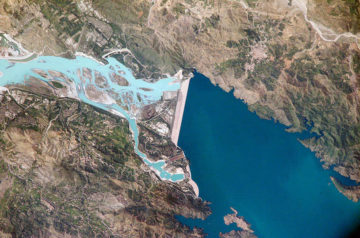
After weeks of rising domestic pressure, a spiraling economic crisis, and the swift loss of crucial military support, Pakistan’s Prime Minister Imran Khan was removed from office last weekend following a vote of no confidence. The political turmoil is the latest in a worrisome series of events in the country—the price of food has risen sharply in recent months, along with gas and other essentials. And Pakistan’s rupee plummeted against the dollar, raising concern that higher bills for basic imports may deplete its dollar reserves.
Khan’s erratic style went from being seen as an asset—bucking pressures from Western lenders—to a liability, as the government reversed course on key policies and contributed to heightened economic instability. In a speech following his election, Khan’s successor, interim Prime Minister Shehbaz Sharif, said the former cricket player and socialite had run a government that was “corrupt, incompetent and laid-back.”
His dismissal comes as the war in Ukraine and rate hikes by the US Federal Reserve pose immense challenges for heavily dollar-indebted developing countries. A late January poll found that two-thirds of Pakistanis considered double-digit inflation to be the biggest problem facing the country. But tens of thousands protested across the streets of major cities on Sunday night, showing their support of Khan and echoing his unsubstantiated claim that the ouster was a result of US meddling.
More here.
How Religion Evolved
Matthew Reisz at The Guardian:
 Robin Dunbar sets out to offer nothing less than “an overarching theory for why and how humans are religious”. Unlike most writers on such themes, he is largely uninterested in the truth or otherwise of religious claims and has little to say about the damage caused by religions, although he does touch on their “militant violence” and the predatory promiscuity we find among the charismatic leaders of small cults. But he is intrigued by the “seeming universality” of religions and their constant tendency to fragment. His stimulating and hugely ambitious book, therefore, uses a variety of different approaches to throw light on three really big questions: “the functions that religion has served”, “the psychological and neurobiological mechanisms that make this possible” and “the timing of the origins of religion”.
At the emotional heart of religion, as Dunbar sees it, is something he calls “the mystical stance”, which includes “a susceptibility to enter trance-like states”, “belief in a transcendental (or spirit) world” and “a belief that we can call on hidden power(s) to help us”.
more here.
On Roberto Calasso’s “The Book of All Books”
Dan Turello at the LARB:
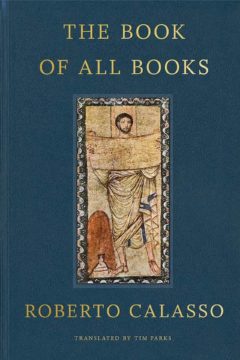 Instead of following the well-worn path of thinking about Abraham as the father of a nation, we are presented with a traveling herder about whom we know nothing other than that he had a beautiful wife. Calasso points out that among “the many causes of bafflement scholars come up against in the Bible one of the most glaring is the fact that there are three occasions in Genesis when a man tries to pass off his wife as his sister.” Recalling these episodes alongside the accounts of fathers willing to send out their daughters to be raped by mobs casts these men in rather unflattering light. But more importantly, it raises the question of how the books of the Bible were assembled, how and why stories were included or deleted. The “main author of the Bible,” writes Calasso, “could be thought of as the unknown Final Redactor, who thus becomes responsible for all the innumerable occasions of perplexity that the Bible is bound to provoke in anyone.” This seems to be the interpretative crux. The Bible continues to inspire our cultural and religious imaginary. The question is not whether to read it — it is how we read it.
more here.
Romanticism – In Search of a Definition (Isaiah Berlin 1965)
Saturday Poem
He Thanks His Woodpile
The wood of the madrone burns with a flame at once
lavender and mossy green, a color you sometimes see in a sari.
Oak burns with a peppery smell.
For a really hot fire, use bark.
You can crack your stove with bark.
All winter long I make wood stews:
Poem to stove to woodpile to stove to
typewriter. Woodpile. Stove.
and can’t stop peeking at it!
can’t stop opening up the door!
can’t stop giggling at it
“Shack Simple”
crazy as Han Shan as
Wittgenstein in his German hut, as
all the others ever were and are
………………. Ancient Order of the Fire Gigglers
who walked away from it, finally,
kicked the habit, finally, of Self, of
man-hooked Man
………………. ( which is not, at last, estrangement )
by Lew Welch
from Ring of Bone
Grey Fox Press, 1960
A Lake in Florida Suing to Protect Itself
Elizabeth Kolbert in The New Yorker:
 Lake Mary Jane is shallow—twelve feet deep at most—but she’s well connected. She makes her home in central Florida, in an area that was once given over to wetlands. To the north, she is linked to a marsh, and to the west a canal ties her to Lake Hart. To the south, through more canals, Mary Jane feeds into a chain of lakes that run into Lake Kissimmee, which feeds into Lake Okeechobee. Were Lake Okeechobee not encircled by dikes, the water that flows through Mary Jane would keep pouring south until it glided across the Everglades and out to sea.
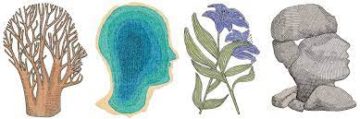
Mary Jane has an irregular shape that, on a map, looks a bit like a woman’s head in profile. Where the back of the woman’s head would be, there’s a park fitted out with a playground and picnic tables. Where the face would be, there are scattered houses, with long docks that teeter over the water. People who live along Mary Jane like to go boating and swimming and watch the wildlife. Toward the park side of the lake sits an islet, known as Bird Island, that’s favored by nesting egrets and wood storks. Like most of the rest of central Florida, Mary Jane is under pressure from development. Orange County, which encompasses the lake, the city of Orlando, and much of Disney World, is one of the fastest-growing counties in Florida, and Florida is one of the fastest-growing states in the nation. A development planned for a site just north of Mary Jane would convert nineteen hundred acres of wetlands, pine flatlands, and cypress forest into homes, lawns, and office buildings.
In an effort to protect herself, Mary Jane is suing.
More here.