
Enjoying the content on 3QD? Help keep us going by donating now.
Category: Recommended Reading
The Collaboration that Built Modern AI: Geoff Hinton & Jeff Dean in Conversation with Jordan Jacobs
Enjoying the content on 3QD? Help keep us going by donating now.
What is it Like to Be an Addict?
Kevin J. Harrelson at Notre Dame Philosophical Reviews:
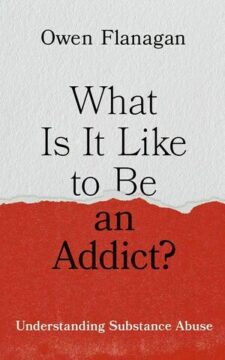 It is a rare book that combines rigorous argument, scientific fluency, and broad accessibility, but Owen Flanagan has managed that trifecta in his new monograph on the philosophy and science of addictions. What is it Like to Be an Addict? should serve as a standard reference-point for philosophers interested in the health sciences moving forward, as it clarifies and refines many of the basic questions in these fields. It is also a book that may be read with profit by anyone with even a passing interest in the science or ethics of addiction.
Flanagan aims “to explain what substance addictions are” as well as “to offer a humane and sensible ethics and politics of addiction” (ix). The plural in the first phrase is important, and readers will be discouraged from seeking reductive answers to many of the standard questions. Is addiction a disease? Is it a brain disease? Are people ever cured of addictions? Is addiction an individual or a social phenomenon? Much of the extant literature focuses narrowly on such binary questions, and Flanagan’s interventions are sweeping but inclusive: there is indeed a pathology and a neurology of addictions, but every disciplinary approach will be partial.
more here.
Enjoying the content on 3QD? Help keep us going by donating now.
Our Political Parties Have Trapped Us: Here’s one change that will break their hold
Danielle Allen at Persuasion:
 One side fears the shredding of safety nets, federal programs, and commitments to inclusion and honest history. The other side fears the destruction of traditional family mores, religion, and parental control.
Every two years, Americans spend an average of $15 billion on campaign advertising trying to fend off the wolves attacking them. But we just end up changing which wolves are briefly ascendant.
Maybe we could fend off those wolves once and for all—if we could just get our foot out of that dang trap.
But what’s the trap?
The trap is an electoral system that has been captured by party processes gone wrong.
More here.
Enjoying the content on 3QD? Help keep us going by donating now.
Missing History
Bill Cheng at VQR:
Melon Floyd was born out in the Salts, 1881, in the border country between Winnemucca and Susanville—before they recorded Black voices on acetate, before his knife-throwing contest with Charlie Long, before “Laughing Man Blues.” His father was Terry Floyd, a freed slave and smuggler who hid out in the Salts for thirty-six years before the Reno law flushed him from the mountain crags. His mother was Anne Smith, who died while in labor.
Floyd was a sickly boy, an asthmatic. When he was four, his father sent him to Susanville, a flat country where the air wasn’t so thin, to live with his grandmother. He was schooled out of a single history book, sang in the church choir. By Floyd’s sixth birthday, his grandmother had saved enough to send away for a pine guitar from Sears-Roebuck.
When he was thirteen, he left home.
more here.
Enjoying the content on 3QD? Help keep us going by donating now.
Thursday Poem
The Haw Lantern
The wintry haw is burning out of season,
crab of the thorn, a small light for small people,
wanting no more from them but that they keep
the wick of self-respect from dying out,
not having to blind them with illumination.
But sometime when your breath plumes in the frost
it takes the roaming shape of Diogenes
with his lantern, seeking one just man;
so you end up scrutinized from behind the haw
he holds up at eye-level on its twig,
and you flinch beyond its bonded pith and stone,
its blood-prick that you wish would test and clear you,
its pecked-at ripeness that scans you, then moves on.
by Seamus Heaney
from The Haw Lantern
The Noonday Press—Farrar Straus Giroux
Haw: -symbol of scrutiny and conscience
testing, judgment, the inner strength
required to withstand examination.
Enjoying the content on 3QD? Help keep us going by donating now.
Gertrude Stein’s Preparations for the Afterlife
Evan Kindley in The New Republic:
 Gertrude Stein had no doubt that she was a genius. “I have been the creative literary mind of the century,” she once boasted. “Think of the Bible and Homer think of Shakespeare and think of me.” Some years earlier, she informed a baffled magazine editor who had rejected her writing that she was producing “the only important literature that has come out of America since Henry James.” She knew her work was unconventional—repetitive, hermetic, its apparent crudeness belying immense psychological and literary sophistication—but was supremely confident that, in time, it would be recognized as something of enduring cultural value. “For a very long time everybody refuses and then almost without a pause everybody accepts,” she observed in 1926 about the reception of avant-garde art. There was no question in her mind that her own contribution would eventually be accepted: She simply had to wait.
More here.
Enjoying the content on 3QD? Help keep us going by donating now.
We don’t have a hundred biases, we have the wrong model
Jason Collins in Work in Progress:
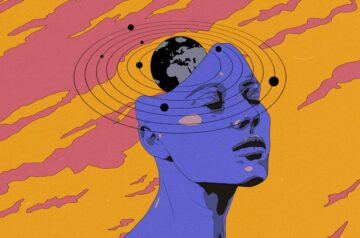 From the time of Aristotle through to the 1500s, the dominant model of the universe had the sun, planets, and stars orbiting around the Earth. This simple model, however, did not match what could be seen in the skies. Venus appears in the evening or morning. It never crosses the night sky as we would expect if it were orbiting the Earth. Jupiter moves across the night sky but will abruptly turn around and go back the other way.
To deal with these ‘anomalies’, Greek astronomers developed a model with planets orbiting around two spheres. A large sphere called the deferent is centered on the Earth, providing the classic geocentric orbit. The smaller spheres, called epicycles, are centered on the rim of the larger sphere. The planets orbit those epicycles on the rim. This combination of two orbits allowed planets to shift back and forth across the sky.
More here.
Enjoying the content on 3QD? Help keep us going by donating now.
Wednesday, December 17, 2025
‘Murder Hornets’ Might Strike Terror in Humans, but These Frogs Can Eat Them for Lunch
Mary Randolph in Smithsonian Magazine:
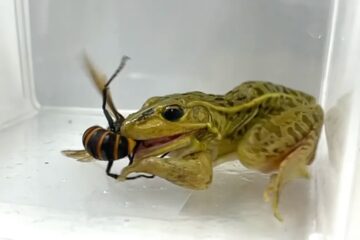 For a mouse several times its size, a sting from the “murder hornet” is deadly. For a colony of honeybees, the insects are catastrophic. The hornet even ignited fear in humans several years ago, when it arrived in North America as an invasive species. But for the black-spotted pond frog, the largest hornet in the world is nothing but a harmless snack.
A new study, published December 3 in Ecosphere, tested the ability of the frog, native to Japan, to consume hornets and withstand their stings. The paper details pond frogs devouring murder hornets, among other species.
“While a mouse of similar size can die from a single sting, the frogs showed no noticeable harm, even after being stung repeatedly,” says Shinji Sugiura, the sole author of the study and an ecologist at Kobe University in Japan, in a statement. “This extraordinary level of resistance to powerful venom makes the discovery both unique and exciting.”
More here.
Enjoying the content on 3QD? Help keep us going by donating now.
China Is Going Big in the Race to Harness Fusion Energy
Raymond Zhong, Chris Buckley, Keith Bradsher, and Harry Stevens in the New York Times:
 On a leafy campus in eastern China, crews are working day and night to finish a mammoth round structure with two sweeping arms the length of aircraft carriers.
On former rice fields in the country’s southwest, a hulking, X-shaped building is being built with equal urgency under great secrecy. That facility’s existence wasn’t widely known until researchers spotted it in satellite images a year or so ago.
Together, the colossal projects are China’s most ambitious efforts yet to harness an energy source that could transform civilization: fusion.
Fusion, the melding together of atoms to release extraordinary energy, uses fuels that are plentiful, carries no risk of meltdowns and leaves no long-lived radioactive waste. It promises near-limitless energy that might not only satisfy the surging demand for electricity to power artificial intelligence but also end reliance on the fossil fuels that are perilously overheating the planet.
More here.
Enjoying the content on 3QD? Help keep us going by donating now.
Mathematicians discover a strange new infinity
Enjoying the content on 3QD? Help keep us going by donating now.
US health insurance premiums rose nearly 3x the rate of worker earnings over the past 25 years
Vivian Ho and Salpy Kanimian in The Conversation:
 Some of the premium increases can be attributed to an increase in hospital outpatient visits and coverage of GLP-1 drugs. But research, including our own, suggests that premiums have rapidly escalated mostly because health system consolidation – when hospitals and other health care entities merge – has led hospitals to raise prices well above their costs.
Hospitals are aggressively raising their prices because hospital CEOs have incentives to do so.
One study found that for nonprofit health systems, the greatest pay increases between 2012 and 2019 went to hospital CEOs who grew the profits and size of their organizations the most. However, the financial reward of delivering above-average quality of care declined.
More here.
Enjoying the content on 3QD? Help keep us going by donating now.
How an antiviral defense mechanism may lead to Alzheimer’s
From Phys.Org:
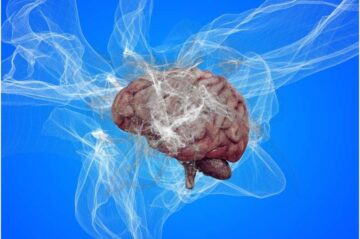 One of the main proteins that contributes to Alzheimer’s disease is called phospho-tau (p-tau). When p-tau gets too many phosphate groups attached to it (a process called hyperphosphorylation), it starts to stick together and form clumps called “tangles” inside of brain nerve cells. A new study by Mass General Brigham investigators shows that tau hyperphosphorylation may be a consequence of an antiviral response that protects the brain from infection. Results are published in Nature Neuroscience.
“As a geneticist, I always wondered why humans had evolved gene mutations predisposing to Alzheimer’s disease,” said senior author Rudolph Tanzi, Ph.D., Director of the McCance Center for Brain Health and Genetics and Aging Research Unit in the Mass General Brigham Department of Neurology. “Our work indicates that many of the features of Alzheimer’s disease that we think of as only a pathological form may once have been protective.”
More here.
Enjoying the content on 3QD? Help keep us going by donating now.
Notes on American Fascism: Harold Brodkey’s prophecy
Colin Marshall in The Point:
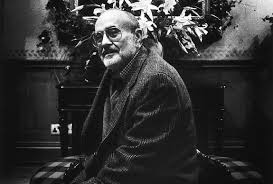 Topical though its title may sound, Harold Brodkey’s 1992 essay “Notes on American Fascism” probably couldn’t be published today. Reading it, one can almost hear the inevitable editorial demands that its argument be “sharpened” (premised upon the assumption that an argument, rather than notes, is what it offers), or at least that the words of a geopolitical expert or two be shoehorned in to gin up a bit of academic-journalistic gravitas. Not that the essay seems to have been publishable even when Brodkey first wrote it, given that it only appeared several years later in his collection Sea Battles on Dry Land, published a few years after his death from AIDS in 1996. Nevertheless, when revisited more than three decades on, its torrent of portentous observation and speculation about the decline of the kind of liberalism Brodkey calls “the primary American tradition” now seems considerably less disposable than the many anxious prophesies of a fascist United States published more recently, during the reign of Donald Trump.
More here.
Enjoying the content on 3QD? Help keep us going by donating now.
Wednesday Poem
Foreign Heart
The redneck bartender
yells out “Like the singer
guy in Spanish?” This
intercepts all eyes
from the Army-Navy Game.
So what am I doing there,
Upstate, besides the beer.
“Laundry across the street.”
Country smiles all around.
Linda would say, “Maybe
you’re just mistaking.”
Maybe. Hate mysteries.
Beyond these rites,
the Hudson River Valley.
Next spring I will be
Forty years a foreigner.
by Julio Marzán
from El Coro
University of Massachusetts Press 1997
Enjoying the content on 3QD? Help keep us going by donating now.
Tuesday, December 16, 2025
What Happens When Gen Z Encounters Catullus’s Filthiest Poem?
Rachel DeWoskin at Literary Hub:
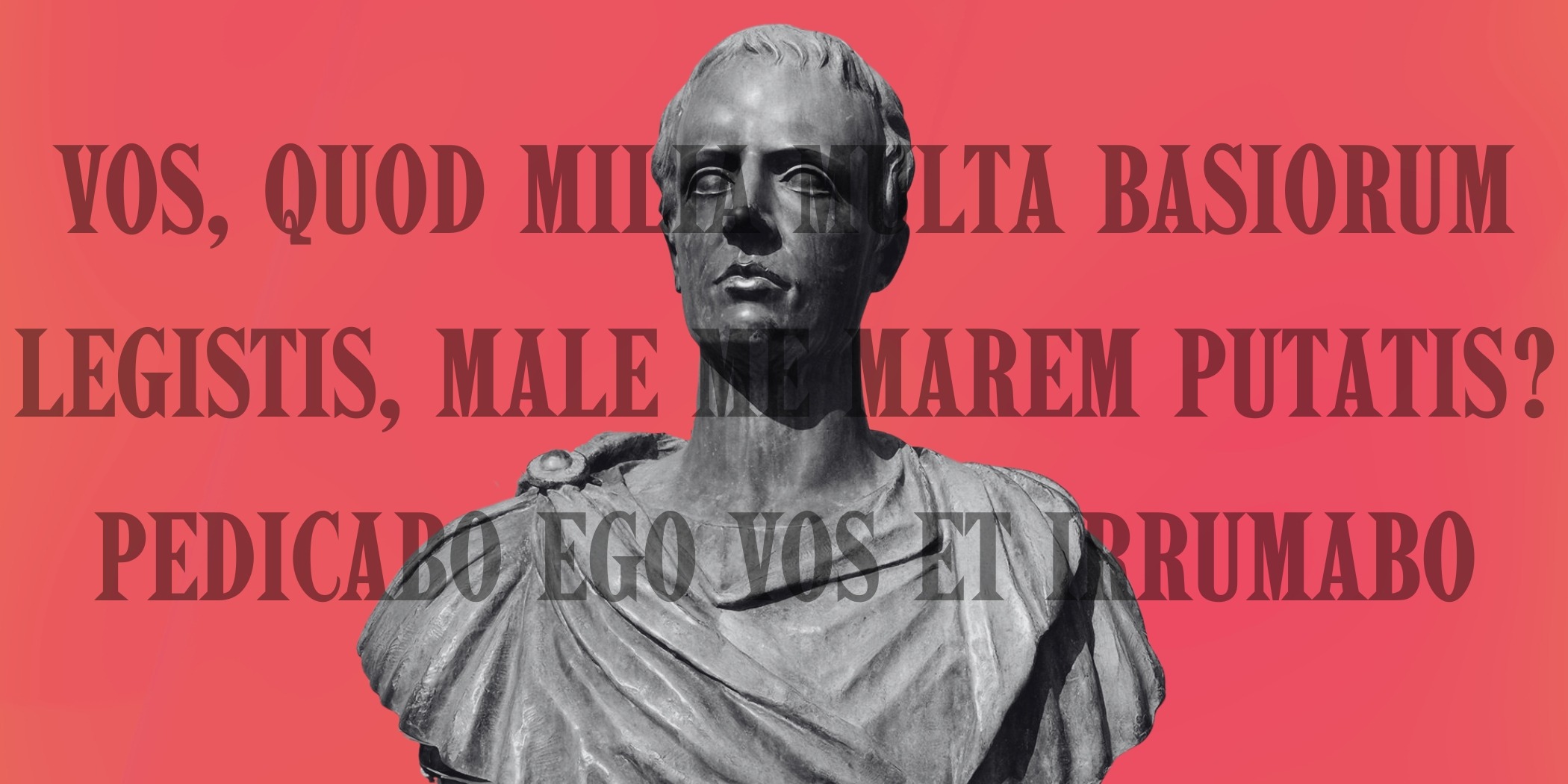 In this moment of especially rabid book banning, my high school senior has been translating Catullus in her Advanced Track (AT) Latin class. Catullus’s poems disappeared from the Western canon for centuries (likely because medieval Christian scribes avoided copying lurid pagan texts) yet were rediscovered and reprinted in the Renaissance, and are still alive millennia later, when would-be censors are long forgotten.
Catullus’s work shows us ourselves, in all our three-dimensional goodness and terribleness, and sometimes this vision, in 2025, comes as a fun vindication. Take Catullus’ bullying and yet vulnerable poem number 15, in which he admits, “I fear you, Aurelius, and your penis.” Jealous of and threatened by Aurelius, Catullus first euphemizes, entrusting Aurelius with the care of “my boy,” then morphing into the half plea/half threat that anthropomorphizes Aurelius’s penis (imagine the joy in the classroom) should it take advantage: “Because you let it go where it pleases, as it pleases, as much as you wish. When it is out, you are ready.”
My daughter, the lucky student called upon to translate these lines aloud, chatted openly with me after school about whether it would have been too colloquial to describe Aurelius’s penis as “at the ready.”
More here.
Enjoying the content on 3QD? Help keep us going by donating now.
New Discoveries in the Archaeology of the Ancient Americas
Enjoying the content on 3QD? Help keep us going by donating now.
Why Is Ice Slippery? A New Hypothesis
Paulina Rowińska at Quanta:
 The reason we can gracefully glide on an ice-skating rink or clumsily slip on an icy sidewalk is that the surface of ice is coated by a thin watery layer. Scientists generally agree that this lubricating, liquidlike layer is what makes ice slippery. They disagree, though, about why the layer forms.
Three main theories about the phenomenon have been debated over the past two centuries. Earlier this year, researchers in Germany put forward a fourth hypothesis(opens a new tab) that they say solves the puzzle.
But does it? A consensus feels nearer but has yet to be reached. For now, the slippery problem remains open.
More here.
Enjoying the content on 3QD? Help keep us going by donating now.
Google DeepMind robotics lab tour with Hannah Fry
Enjoying the content on 3QD? Help keep us going by donating now.
Lessons of the Masters
Lyndall Gordon at The Hudson Review:
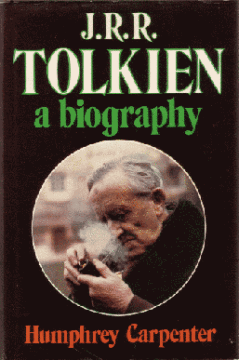 If you’re eccentric, you’re all right.” This is how Humphrey Carpenter, biographer of W. H. Auden, Ezra Pound and Benjamin Britten, explained the British character to me as an expatriate South African. It was 1993, and we were sitting at the table in my Oxford kitchen with a microphone between us. My role, as a fellow biographer, was to ask Humphrey questions, and his answers, he hoped, would provide material for an essay. Along with other speakers at a biography conference, he’d agreed to contribute a piece to The Art of Literary Biography (due to be delivered to Oxford University Press), but Humphrey had a problem. His confiding after-dinner talk had brought up the issue of fraught relations with a subject’s family.
The talk, entitled “What Discretion Forbids,” had been about his involvement with the Tolkien family, who had authorized a biography back in the seventies. This book, a bestseller, was not the one Humphrey wrote initially. A protective family had refused to accept his version of Tolkien’s life.
more here.
Enjoying the content on 3QD? Help keep us going by donating now.