
Dan Falk at Aeon:
 In Galileo’s Dialogue Concerning the Two Chief World Systems (1632), three Italian gentlemen – one philosopher and two laymen – debate the structure of the Universe. The philosopher, Salviati, argues in support of the Copernican theory, even though it requires a moving Earth – something that strikes his interlocutors as problematic, if not absurd. After all, we don’t feel the ground moving beneath our feet; clouds and birds are not swept backwards as the planet whooshes through space; a ball dropped from a tower does not land far away from the base of that tower.
But Salviati, standing in for Galileo, asks his companions, Sagredo and Simplicio, to reconsider their intuitions. Suppose one were to drop an object from the mast of a tall ship. Does it make any difference if the ship is moving? No, Salviati insists; it lands at the base of the mast regardless, and therefore one cannot conclude anything at all about the ship’s motion from such an experiment. If the ship can be in motion, then why not the whole planet? Simplicio objects: Salviati has not actually carried out this shipboard experiment, so how can he be sure of the result?
More here.
 The European Space Agency (ESA) has
 In Arthur W. Frank’s foundational text for narrative medicine, The Wounded Storyteller: Body, Illness, and Ethics (1995), the ill, Frank suggests, need “to tell their stories, in order to construct new maps and new perceptions of their relationships to the world.” Frank posits three common narrative structures for the experience of illness: restitution, chaos, and quest. In restitution narratives, the healthy person becomes sick and then they become healthy again, a quick, clean plot that reifies health in ways too naïve to be meaningful. This, of course, is the arc popular culture prefers.
 In 1763, the young James Boswell finished his “London Journal,” one of the frankest accounts of high and low life in the eighteenth century. The following year, he embarked on a Grand Tour. In a Berlin tavern, he encountered a certain Neuhaus. This voluble personage of thirty-nine, unusually tall, with a dark complexion and affected manners, was an Italian who “wanted to shine as a great philosopher,” Boswell wrote, “and accordingly doubted of his own existence and everything else. I thought him a blockhead.”
 We’ll start with a pair of shoes. In 1944, a young Italian woman named Emilia “Ilia” Terzulli marries an older English soldier named Esmond Warner. They’re an unlikely couple. Nicknamed “La Giraffa,” Ilia is tall, poor, gorgeous, and untraveled. Esmond is balding, bespectacled, and worldly. She’s not just Italian but southern Italian; he’s not just English but English English, his family’s wealth faded but not their lordly idiosyncrasies. (His mum goes by Mother Rat; his father, a former professional cricketer, by Plum; his childhood pet rat by Scoot.) And so, to make his Bari-born wife feel at home in South Kensington, Esmond buys Ilia a pair of shoes. More specifically, he buys her “bespoke brogues”: sturdy, plain-ish, yet expensive shoes that mark Ilia’s “formal enrolment in the world of the squirearchy, hunting, going to the point-to-point, the harriers, the beagles, the open-gardens scheme, the charity fête.”
 One hundred and seventy-six years ago today, on the evening of Monday, June 22, 1846, the painter Benjamin Robert Haydon—sixty years old and facing imminent financial ruin—locked himself in his studio in his house on Burwood Place, just off London’s Edgware Road. The month had been the hottest anyone could remember: that day, thermometers in the city stood at ninety degrees in the shade. Despite the heat, that morning Haydon had walked to a gunmaker’s on nearby Oxford Street and purchased a pistol. He spent the rest of the day at home, composing letters and writing a comprehensive, nineteen-clause will.
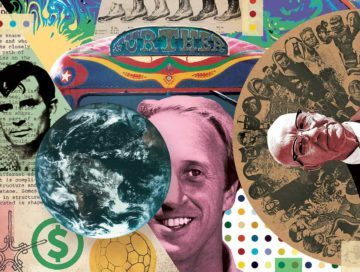 Stewart Brand is not a scientist. He’s not an artist, an engineer, or a programmer. Nor is he much of a writer or editor, though as the creator of the Whole Earth Catalog, that’s what he’s best known for. Brand, 83, is a huckster—one of the great hucksters in a time and place full of them. Over the course of his long life, Brand’s salesmanship has been so outstanding that scholars of the American 20th century have secured his place as a historical figure, picking out the blond son of Stanford from among his peers and seating him with inventors, activists, and politicians at the table of men to be remembered. But remembered for what, exactly?
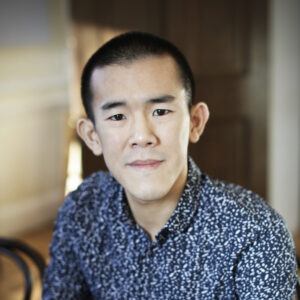 All of us construct models of the world, and update them on the basis of evidence brought to us by our senses. Scientists try to be more rigorous about it, but we all do it. It’s natural that this process will depend on what form that sensory input takes. We know that animals, for example, are typically better or worse than humans at sight, hearing, and so on. And as Ed Yong points out in his new book, it goes far beyond that, as many animals use completely different sensory modalities, from echolocation to direct sensing of electric fields. We talk about what those different capabilities might mean for the animal’s-eye (and -ear, etc.) view of the world.
 Near the end of his brilliant memoir
 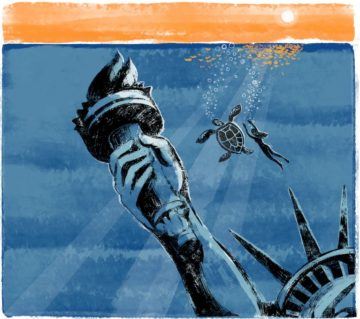 Lidia Yuknavitch’s extraordinary new novel is the weirdest, most mind-blowing book about America I’ve ever inhaled. Part history, part prophecy, all fever dream, “
 Can artificial intelligence come alive?
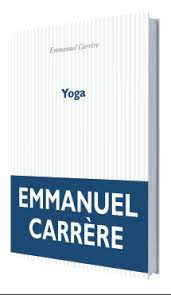 Y
Y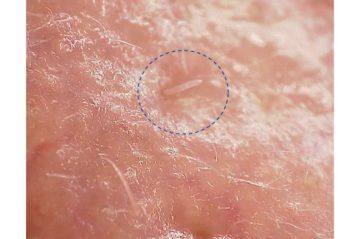 Microscopic mites that live in human pores and mate on our faces at night are becoming such simplified organisms, due to their unusual lifestyles, that they may soon become one with humans, new research has found.