
Max Kozlov in Nature:
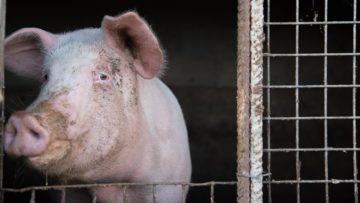 Researchers have restored1 circulation and cellular activity in the vital organs of pigs, such as the heart and brain, one hour after the animals died. The research challenges the idea that cardiac death — which occurs when blood circulation and oxygenation stops — is irreversible, and raises ethical questions about the definition of death. The work follows 2019 experiments2 by the same scientists in which they revived the disembodied brains of pigs four hours after the animals died, calling into question the idea that brain death is final. The latest experiments are “stunning”, says Nita Farahany, a neuroethicist at Duke University in Durham, North Carolina. Although this study is preliminary, she says it suggests that some perceived limitations of the human body might be overcome in time.
In the work, published on 3 August in Nature1, researchers connected pigs that had been dead for one hour to a system called OrganEx that pumped a blood substitute throughout the animals’ bodies. The solution — containing the animals’ blood and 13 compounds such as anticoagulants — slowed the decomposition of the bodies and quickly restored some organ function, such as heart contraction and activity in the liver and kidney. Although OrganEx helped to preserve the integrity of some brain tissue, researchers did not observe any coordinated brain activity that would indicate the animals had regained any consciousness or sentience.
More here.


 INTELLECTUAL HISTORIES OF recent American public life typically foreground disintegration in order to capture the mood of a country on the brink. These moments are not only about the United States’s ongoing culture wars or its “
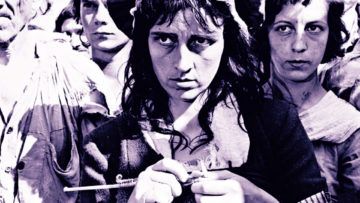 The craft of knitting is such a prominent literary act that a subgenre of literature—called “knit-lit”—has formed. Within this subgenre, there are several motifs, including what is colloquially referred to as “the sweater curse”: the idea that when someone knits a garment for their love interest, the act will seal the demise of their relationship. Knitting a garment by hand is a deeply intimate act, which perhaps explains why authors are attracted to its symbolic potential. Knitting also has an unassuming quality. The act evokes peace and domestic tranquility, and it is often employed to convey these sentiments. A knitter can become a vehicle for change, too, propelling a story forward through their handicraft. A character may weave intricate narrative webs, sometimes suggesting warmth or safety, and other times disguising the places where heartbreak, deceit, and evil may lie. If you look for them, you’ll find them—somebody in the corner, knitting a hat or a scarf, quite possibly something containing the depths of their affections or, just as probable, the names of the people they wish dead.
 Wait for tea to cool before drinking it, avoid all alcohol, crowds, reading, writing letters, wear warm clothes in the evening, eat rhubarb from time to time, have a napkin at breakfast, remember notebook.” These memoranda, as recorded in Lesley Chamberlain’s Nietzsche in Turin, capture the regime Friedrich Nietzsche followed in that city, in the last of his many lodgings during his wanderings across Europe. He loved long walks, but any interruption of routine was as toxic for him as bad food, so he avoided fashionable cafés and promenades. Even a bookshop was off-limits for fear of bumping into an acquaintance who might want to talk about Hegel. He needed, above all, a quiet life.
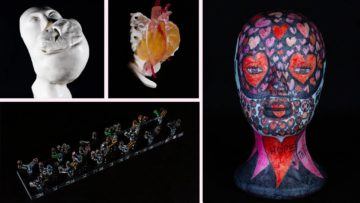 With so many lives affected by cancer — in the United States alone, about
  The ripple effects that come from the removal or diminished size of a predator’s population:
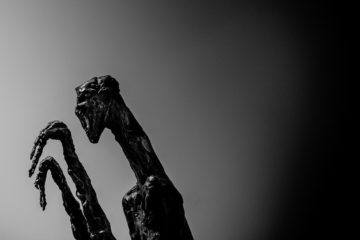 Scene: Scandinavia, late summer, a cloudless night. The Dark Ages. Seemingly from nowhere, a quasihuman monster, descended from Cain, hears the sounds of warriors reveling in their Great Hall and decides to silence them. Creeping out of the unstructured darkness of his usual stomping grounds, this monster sneaks into the Great Hall and slaughters the warriors in their sleep. The monster develops a taste for blood, so these murders become habitual. For years.
 Wading into current gender debates is not for the faint of heart, but that has not discouraged Dutch-born primatologist Frans de Waal from treading where others might not wish to go. In Different, he draws on his
 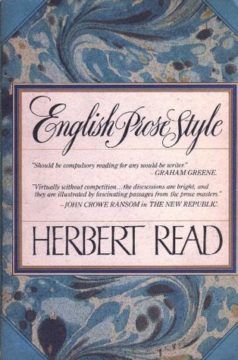 What is a paragraph? Consult a writing guide, and you will receive an answer like this: “A paragraph is a group of sentences that develops one central idea.” However solid such a definition appears on the page, it quickly melts in the heat of live instruction, as any writing teacher will tell you. Faced with the task of assembling their own paragraphs, students find nearly every word in the formula problematic. How many sentences belong in the “group?” Somewhere along the way, many were taught that five or six will do. But then out there in the world, they have seen (or heard rumors of) bulkier and slimmer specimens, some spilling over pages, some consisting of a single sentence. And how does one go about “developing” a central idea? Is there a magic number of subpoints or citations? Most problematic of all is the notion of the main “idea” itself. What qualifies? Facts? Propositions? Your ideas? Someone else’s?
 AT THE BEGINNING OF
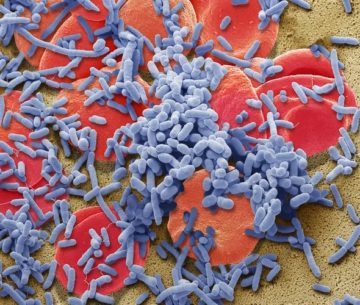 Hospital patients are at risk of a number of life-threatening complications, especially sepsis—a condition that can kill within hours and contributes to one out of three