
Via Dolorosa
The sun has barely roused itself when I hear screams
over the coffee pot, but a glance out the window
thaws my dread. Just three teens raging
at the warm horizon. I know that cry—the one
my sisters and I hurled at the field in fledgling
heartbreak, our young throats yelled raw.
Yes, these girls threading through cotton
are mourning boys whose names they’ll forget
in a few harvests. Do they know to watch out
for mice and snakes? No—they imagine
out here’s a life without danger.
They imagine they race to mystery.
But it’s all science, really, learning how
the earth yields and heals itself. We step in
where we can with sweat, lost sleep, bruised thumbs.
But I’ll let them think it’s magic, that thorns
in their sweaters could somehow mend sorrow.
Sometimes I let myself believe the same.
By Whitney Rio-Ross
From EcoTheo Review
Enjoying the content on 3QD? Help keep us going by donating now.
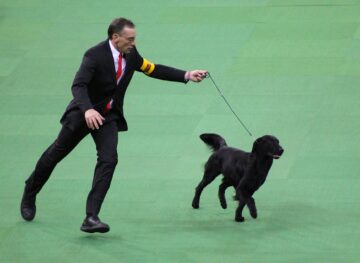 At the blow of a whistle, each dog, one at a time, was let out onto the grounds and on its doggy way, snuffling the grooves and crevices of the obstacle course in the hunt for a swab doused in an herbal essential oil. The dogs moved evenly, steady as magnetic north, until they appealed to their handlers with glances that functioned like code. This dogsperanto—a language of punctuation marks, canine body cues in expressions of “?” or “!”—met human encouragement in a surrealist covenant between trainer and trainee. Woof begat nod, nod begat pursuit. The lagotto came to a halt at a traffic cone.
 T
T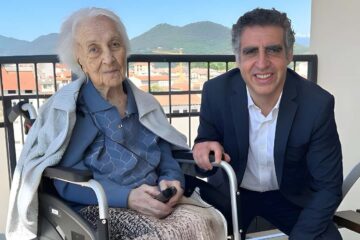 Between 17 January 2023 and 19 August 2024, María Branyas Morera, of Spain, was officially the
 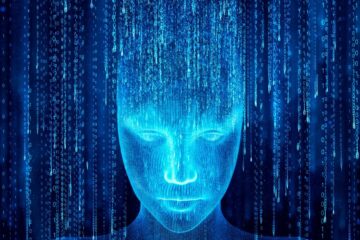 AI holds immense potential to advance human wellbeing, yet its current trajectory presents unprecedented dangers. AI could soon far surpass human capabilities and escalate risks such as engineered pandemics, widespread disinformation, large-scale manipulation of individuals including children, national and international security concerns, mass unemployment, and systematic human rights violations.
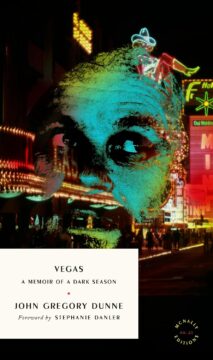 In a 1996 interview with The Paris Review, the reporter and novelist John Gregory Dunne was asked why he chose to classify his 1974 book, Vegas: A Memoir of a Dark Season, as fiction as opposed to journalism. The book recounts six months Dunne spent alone in Vegas, taking a break from his marriage. Dunne, the narrator and protagonist of the book, spends most of it in a severe depression contemplating the possibility of divorce, eating junk food in his rental, and hanging out with a bunch of Vegas archetypes: the sex worker, the private investigator, the failed comic. Dunne tells the interviewer that although he was contracted at the time to write a nonfiction book, he opted to call the finished product a novel “since I made most of it up.” He offers as an example a scene in which he meets the sex worker, Artha, at a casino at five in the morning. He’s not there to gamble money; his brand of gambling takes the form of talking to strangers while in the grip of insomnia. During his conversation with Artha, he discovers some obviously bad poetry she has written on the back of a keno ticket, which he reproduces for the reader. It’s true, Dunne tells the interviewer, that while in Vegas he met a sex worker who wrote poetry. But the poems that appear in the book were written as a joke by his wife, Joan Didion.
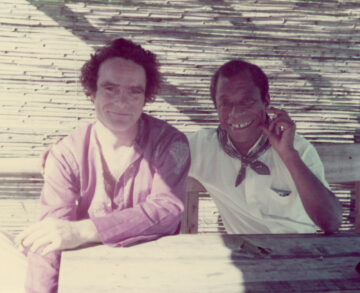 This week on the podcast, Donovan Hohn speaks with biographer Nicholas Boggs about Baldwin: A Love Story, a book three decades in the making. The episode follows James Baldwin on his transatlantic commutes, introducing listeners to four formative—and transformative—friendships with “crazy outsiders” that sustained Baldwin and that organize this new biography. We meet painter Beauford Delaney, the “spiritual father” and artistic mentor Baldwin found in Greenwich Village. In post-war Paris, we meet Lucien Happersberger, the Swiss émigré who would become Baldwin’s lover, muse, and lifelong friend. We meet Engin Cezzar, the “blood brother” who created for Baldwin a home in Istanbul. Finally, Boggs introduces us to Yoran Cazac, the French painter with whom Baldwin collaborated on his “child’s story for adults,” Little Man, Little Man, which Boggs helped bring back into print. Along the way, Boggs and Hohn dwell on the meaning of love in Baldwin’s life and work, and on his yearning for a home “by the side of the mountain, on the edge of the sea.” Hohn and Boggs also spend time with Otto Friedrich, who befriended Baldwin during his Paris years and would become Lewis Lapham’s editor and mentor. The episode concludes with a selection of entries about Baldwin from the journal Friedrich kept in 1949.
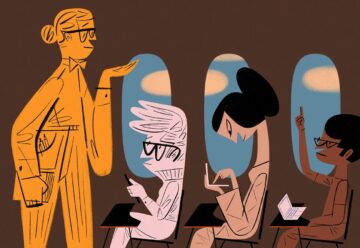 If the 264 million students enrolled in higher education around the globe were a country, it would be the fifth most populous in the world. Some 53% of its citizens would identify as women and most would be located in Asia. Residents would speak and study in hundreds of languages, but English would dominate. This nation of learners would also be one of the fastest growing. Since 2000, the number of university students around the world has more than doubled, and the number that cross borders to learn has roughly tripled, to almost seven million. Aided by the Internet, conferences, shared curricula and collaborations, the world of higher education has become more tightly linked.
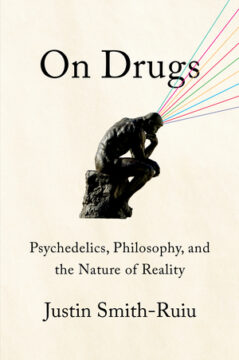
 When it comes to caffeine, we often speak about ‘needing our fix’ but I’ve yet to hear of an intervention staged for the friend who drinks three double espressos before noon. In fact, when it comes to caffeine, we rarely worry about things like tolerance, dosage or long-term effects in the same way we do for other substances. We don’t speak in terms of use, misuse and psychoactivity. But caffeine, like other drugs, directly
 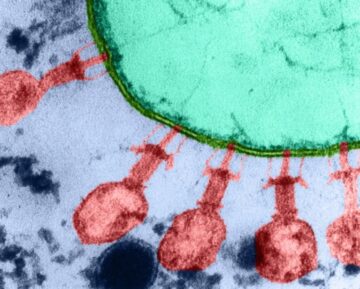 AI models have already been used to generate DNA sequences,
 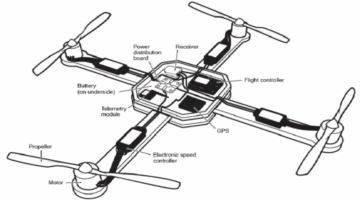 The other day I gave a talk at
 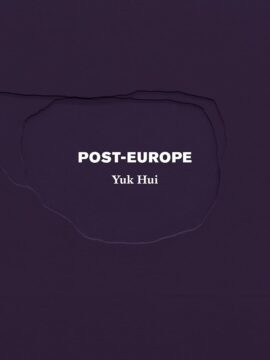 DANIEL BIRNBAUM: Many people I know are reading your recent book Post-Europe [2024] right now. It challenges us to participate in the creation of a new, globally conscious mode of thinking—an approach that is responsive to the complexities of our interconnected world. You draw upon a rich tapestry of philosophical influences, including thinkers like Gilbert Simondon, Bernard Stiegler, and Jan Patočka as well as Kitarō Nishida, to support a vision of a post-European philosophical landscape.