
Under the Bo Tree
I bring you, Gautama, my empty hand,
which would have been full of figs
from a house that has never known death—
had there been one.
But there isn’t
so my palm is empty.
So I bring you, Gautama, my empty palm,
full of the days of my father’s house—
childhood books, summers staining the clothes green,
anxious to get out into that greater world
(convinced I would do better).
And then, later, the Fridays at Oaxaca Kitchen—
good beer, superb fajitas, the young
passing by, friends hilarious, everyone getting drunk,
my days full of useless work at a job,
the exhaustion found at my dusks,
the sweet ease of my sleep, my love of my bed,
blessed unconsciousness.
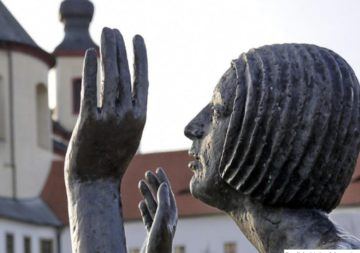
I bring you, Gautama, my open palm—
drop a blessing in it
so that I can touch the head of a bull
and ease its rage,
pat the head of a drunken monkey and say,
“I was where you are, my friend,”
or collect raindrops, my hand a bowl,
as we sit under the Bo tree,
just sitting, saying to the dissolving drops,
“You are my mind.”
An open palm to grab the days ahead,
take hold of what’s next,
open to sleep and a long work day
and the cycle of that worker’s life.
I bring you, Gautama, two hands, one heart,
one overused and, perhaps, useless mind—
human being, and human being only—
awaiting what’s next in a human being,
ready for more of what a human being is.
by Mark Fitzpatrick
from Rattle #76, Summer 2022
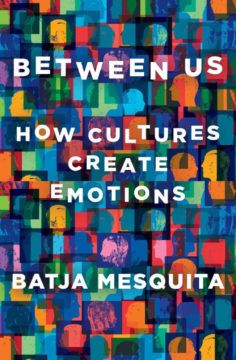 For many years, psychologists and other scientists believed that deep down, all of humankind experienced the same set of evolutionarily hard-wired emotions. Under this schema, anger, for example, was a concrete, immutable experience that happens deep inside all human beings, the same for a White American sipping coffee in Manhattan as for native Siberian herding reindeer. When Batja Mesquita, a key figure in the development of the field of cultural psychology, started researching emotion more than 30 years ago, she was confident that this model was correct. But Mesquita, who is today a distinguished professor at the University of Leuven in Belgium, has come to view emotions through a completely different lens. In her new book, “
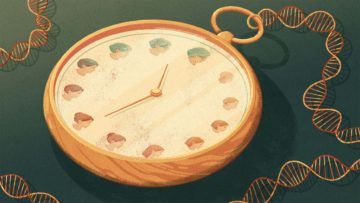 This time a year ago,
 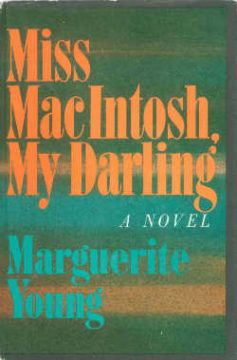 MARGUERITE YOUNG SPENT EIGHTEEN YEARS
 I am against August. When I try to explain this position, some people instinctively want to argue. These people seem to love the beach beyond all reason, to have never suffered a yellowed pit stain on a favorite white T-shirt in their life, and to eagerly welcome all thirty-one days of August as though they are a reward for a year well-lived rather than a final trial before the beginning of another. These are people who vacation with peace of mind. To them, I say: Go away. To the people who agree with me, I say: Go on.
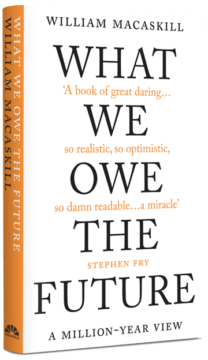 If the point of publishing a book is to have a public relations campaign, Will MacAskill is the greatest English writer since Shakespeare. He and his book
  On a sweltering day in July, Yoshii Aya, still reeling from her bitter election defeat a few months prior, arrived in Kyoto with a stack of leftover business cards tailored for that bygone race. During a three-day political training camp for women trying to break into Japan’s male-dominated politics, she coyly passed them out as a “memento of my candidacy.” Had she won the April election, Ms. Yoshii would have become one of two women sitting on the 20-member city council in Miyoshi, Japan. Instead, she spent her summer reflecting on the loss, and learning campaign financing and social media strategy along with 15 other training camp participants. Ms. Yoshii says she felt empowered by connecting with like-minded women at the camp, which was organized by Tokyo’s Academy for Gender Parity.
 A 6-year-old boy began hearing voices coming from the walls and the school intercom telling him to hurt himself and others. He saw ghosts, aliens in trees, and colored footprints. Joseph Gonzalez-Heydrich, MD, a psychiatrist at Boston Children’s Hospital, put him on antipsychotic medications and the frightening hallucinations stopped. Another child, at age 4, had hallucinations with monsters, a big black wolf, spiders, and a man with blood on his face.
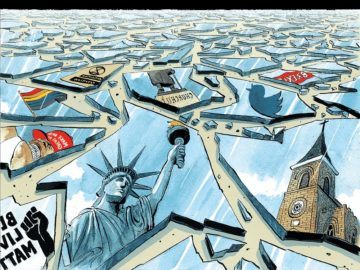
 Does anyone still need advice on how not to think like a liberal? Amid widespread doubts on both left and right about the legitimacy of liberal institutions and economic arrangements, it might appear that the new book by Raymond Geuss, an American-born Cambridge University professor of philosophy, has come to tell us how not to do what we have already ceased doing. Yet as Geuss observes, “Some form of liberalism”—with its characteristic emphasis on uncoerced consent and open discussion among notionally free individuals—“is…still the basic framework which structures political, economic, and social thought in the English-speaking world.” So deeply embedded are liberal ideas in our institutions and discourse, he writes, that even when the conditions that gave rise to them have altered, “it can be difficult for someone who does not have a slightly deviant social position or education to get an appropriate cognitive distance from them, and thus to see some of their deficiencies for what they are.” Not Thinking Like a Liberal tells how its author came to acquire such deviancy.
 The Covid-19 pandemic has killed an estimated fifteen million people around the world, ravaged health systems, and destroyed economies. It has also exposed destabilizing divisions at home and abroad, and revealed domestic and global weaknesses in biodefense. The United States alone has seen a million lives lost to the virus and an estimated
  What usually happens is this: some academic or other thinker or creative type is cheerfully chugging along in their career, living and working in progressive spaces. Maybe he is a professor, maybe he is a TV writer. Then, he commits some offence, or is perceived as having done so, and suddenly faces an onslaught of censure. Sometimes the opprobrium is wildly disproportionate to the offence. And there’s a very real walls-closing-in feeling, because the hate is coming from people he viewed as members of his ‘tribe,’ sometimes friends or close colleagues.
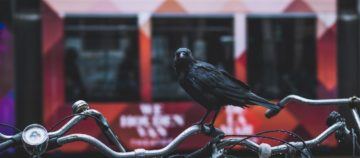 Cities are, indeed, the opposite of natural ecosystems. Net sinks of energy and materials, they are hot, noisy, poisonous and dangerous. They are constantly changing, often for frivolous or even wasteful reasons. Very few non-human species can cope with such chaos and stay away. Some species, however, see opportunities where others find only disturbance and stress. Cities offer countless productive chances for those willing and able to adapt. Those that take up this challenge share several crucial characteristics, including: already being abundant in the neighbouring landscape (10), having a generalised diet (with granivores being at a great advantage given the ubiquity of feeders)(11), demonstrating innovative foraging capacity and often belonging to groups with proportionally larger brains (12). Clearly, the latter two features go hand in hand.
 S
S I
I Manish Vira, a urologist at Northwell Health in New York performs prostate biopsy procedures three to five times a week. He inserts 12 needles into specific locations on the prostate gland, identified by MRI images that reveal malignant or suspicious lesions. The samples then go to a pathologist who determines whether cancer is present and how aggressive it is. “It’s a standard protocol,” explains Vira, who is also