
Forbidden
Let me go back to my father
in the body of my mother the day he told her
having black children won’t save you when the revolution comes.
Let me do more than laugh,
like she did.
Let me go back to my mother and do more
than roll my eyes when she tells me,
I think deep down, in a past life, I was a black blues singer.
My mother remembers the convent
where she worked after I was born;
the nuns who played with me while she cleaned.
My father remembers the bedroom window
of their first apartment; his tired body
climbing through. It was best,
they agreed, if she signed the lease alone.
Scholars conclude:
the myths of violence that surround the black male
body protect the white female body
from harm. I conclude:
race was not not a factor in my parents’ attraction.
I am the product of their curiosity, their vengeance, their need.
They rescued each other from stories scripted
onto their bodies. They tasted forbidden and devoured each other
whole.
Let me build a house
where their memories diverge.
by Jamaica Baldwin
from the Smith College Poetry Center, 2008
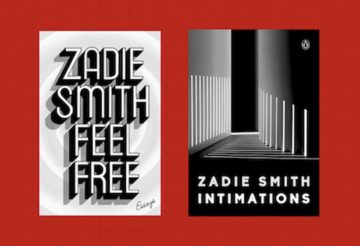 Compassion might describe Smith’s basic approach as a writer. What motivated her to write? “Above all,” she says in
  Generally, the unequal or unjust distribution of resources and opportunities in a society is studied in just one dimension, such as through income or education, says Maralani. Yet inequalities in income, wealth, education, health and access to technology are inter-related and differ by gender, race , ethnicity and geographical location in important ways. The root causes are multidimensional and dynamic. Some of the most influential work of the past decade — notably French economist Thomas Piketty’s 2013 book Capital in the Twenty-First Century — demonstrated
 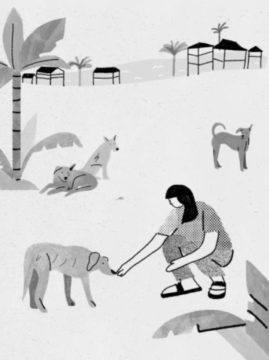 When thinkers and naturalists do talk about complex animal behaviours, their approach is usually constrained by the principle that when we imagine we see human-like motives, impulses and feelings in other animals, we must assume we’re only projecting our humanity onto them, the way we see human faces in the clouds.
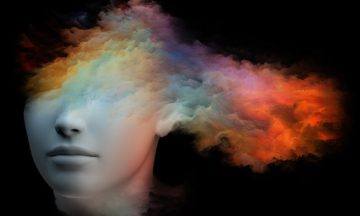 So far, scientists have learned that, generally speaking, anesthetic drugs render people unconscious by altering how parts of the brain communicate. But they still don’t fully understand why. Although anesthesia works primarily on the brain, anesthesiologists do not regularly monitor the brain when they put patients under. And it is only in the past decade that neuroscientists interested in altered states of consciousness have begun taking advantage of anesthesia as a research tool. “It’s the central irony,” of anesthesiology, says George Mashour, a University of Michigan neuroanesthesiologist, whose work entails keeping patients unconscious during neurosurgery and providing appropriate pain management.
 Three new books spotlight the power of the written word to foster creative responses to confinement and oppression — and to inspire deep change within us.
 Before June 2022 was the month of the possible start of the Second American Civil War, it was the month of
  I was privileged to be part of various email exchanges about those same questions with Steven Pinker, Ernest Davis, Gary Marcus, Douglas Hofstadter, and Scott Alexander. It’s fair to say that, overall, Pinker, Davis, Marcus, and Hofstadter were more impressed by GPT-3’s blunders, while we Scotts were more impressed by its abilities. (On the other hand, Hofstadter, more so than Pinker, Davis, or Marcus, said that he’s terrified about how powerful GPT-like systems will become in the future.)
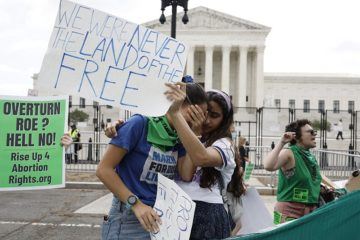 The constitutional right to an abortion has been struck down in the United States. The US Supreme Court
  I grew up in Qatar, a tiny peninsula off the eastern coast of Saudi Arabia. Less than a century ago, before the boom, it was a desolate corner of the world, home to Bedouin tribes, shepherds, fishermen, and pearl divers. Today it is, by virtue of its massive oil and gas deposits, the richest country on Earth.
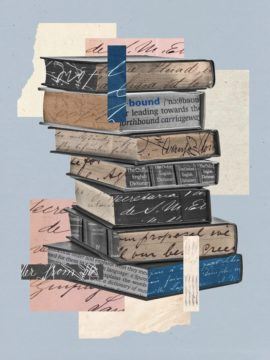 The team at the Oxford English Dictionary felt some nervousness about writing the definition for “Terf”, an acronym for trans-exclusionary radical feminist, which this month has been added to its pages. “To a certain extent, it is like any other word,” says Fiona McPherson, a 50-year-old lexicographer from Grangemouth, Stirlingshire, who has worked at the dictionary since 1997. “But it would be disingenuous to say that it is exactly the same. There seems more at stake. You want to be accurate, you want to be neutral. But it’s a lot easier to be neutral about a word that isn’t controversial.”
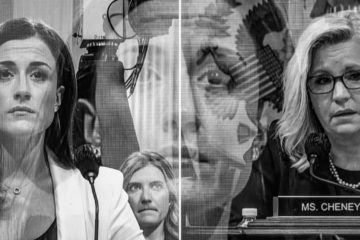 In this age of political cowardice and self-dealing, it can be easy to forget that public service is supposed to be a noble calling — one that at times requires people to step up and do hard, scary things. On Tuesday, a former
 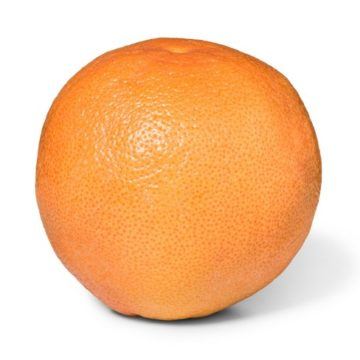 I have never liked grapefruit. They are hard to peel. A friend of mine once used them to practice tattooing: the leathery skin can stand up to the action of the gun, it turns out, plus it holds ink well enough and provides a sizable canvas. I suppose any fruit that can mimic human skin has the right to resist my fingers as they try to reach its flesh. A large knife would do the trick, but I don’t believe fruit should require butchery. I am an American born in the nineteen-eighties; I was raised in a place and time that had subordinated all other values to blithe consumption. I expect any fruit to denude itself in my hands at the slightest effort, like an eager lover or an EZ-peel clementine.
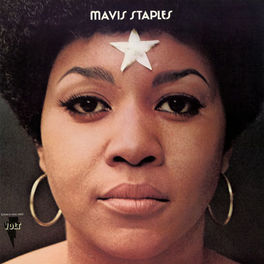 Mavis Staples has been a gospel singer longer than Elizabeth II has worn the crown. During concerts, sometimes, she might take a seat and rest while someone in her band bangs out a solo for a chorus or two. No one minds. Her stage presence is so unfailingly joyful—her nickname is Bubbles—that you never take your eyes off her. Staples sings from her depths, with low moans and ragged, seductive growls that cut through even the most pious lyric. She is sanctified, not sanctimonious. In her voice, “Help Me Jesus” is as suggestive as “Let’s Do It Again.” When she was a girl, singing with her family ensemble, the Staple Singers, churchgoers across the South Side of Chicago would wonder how a contralto so smoky and profound could issue from somebody so young.
 As a fiction writer who teaches, I often speak about what I love in fiction, what to me makes it powerful and engaging. This is a version of a talk I have been giving for years to students and other interested parties; it is a talk I’ve become — what is the right word? — uncertain about in the last five years, not because I don’t believe what I’m saying or that I care about it less but because I’m not sure that people can find it meaningful anymore.
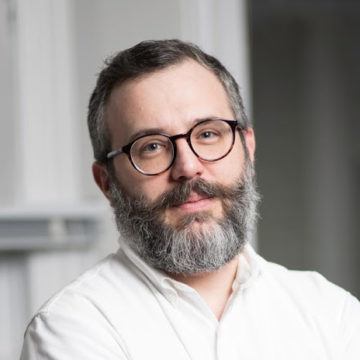 The United States is suffering from an epidemic of tragic gun violence. While a political debate rages around the topic of gun control, it remains important to understand the causes and possible remedies for gun violence within the current system. Andrew Papachristos is a sociologist who uses applied network science to study patterns of street violence in urban areas. His research shows that such violence is highly non-random; knowing something about the social networks of perpetrators and victims can help identify who might be at heightened risk of gun violence. It’s an interesting example of applying ideas from mathematics and computer science to real-world social situations.