
Alberto Polimeni in the Boston Review:
 For some, late 2020 brought with it an air of optimism regarding the fate of right-wing populism. In the United Kingdom, Nigel Farage’s Brexit Party faded into obscurity, and the populist right’s GB News experiment foundered. In Brazil, Jair Bolsonaro’s disastrous response to COVID-19 seemed to hemorrhage his support and threaten his reelection chances. Greece’s fascist Golden Dawn party was legally disbanded, Germany’s AfD started slowly losing popularity and parliamentary seats, and Donald Trump lost to Joe Biden.
The picture looks different today. Trump continues to claim election fraud, Bolsonaro may win reelection later this month, and far-right parties have advanced in Sweden and Italy. But with the apparent respite came a flurry of political analysis seeking to draw key lessons from it—about strategies used to defeat the populist right and structural reforms that could codify these victories.
One of the most prominent voices on these trends has been Princeton political theorist and historian of political thought Jan-Werner Müller.
More here.
 “
“ Friday’s
  Liza Batkin in the New York Review of Books:
 Alberto Toscano in Sidecar:
 Nubar Hovsepian and
 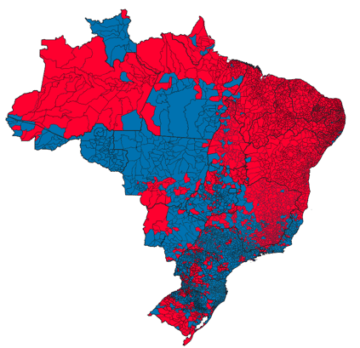 Pedro Mendes Loureiro in Phenomenal World:
 It’s barely Halloween. The ball won’t drop in Times Square for another two full months, and more good books will surely appear before the year ends. But I already know: My favorite novel of 2022 is Barbara Kingsolver’s “
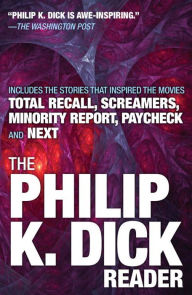 The K stands for “Kindred.” It was a family name, but if there’s anyone who can forgive a fanciful imputation of significance, it is Philip K. Dick. How lovely that a poet of alienation would come into existence bearing that word.
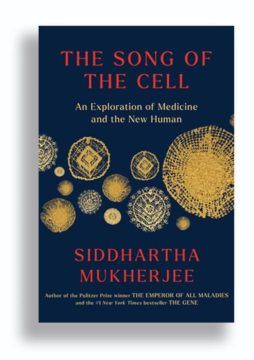 In his new book, “The Song of the Cell,” Siddhartha Mukherjee has taken on a subject that is enormous and minuscule at once. Even though cells are typically so tiny that you need a microscope to see them, they also happen to be implicated in almost anything to do with medicine — and therefore almost anything to do with life. Guided by Mukherjee’s granular narration (“As you keep swimming through the cell’s protoplasm …”), I was repeatedly dazzled by his pointillist scenes, the enthusiasm of his explanations, the immediacy of his metaphors. But I also found myself wondering where we were going. What kind of organism might these smaller units add up to? What was the shape of the story he set out to tell?
 Now comes news of a maniac breaking into a house in the middle of the night, bludgeoning an 82-year-old man in the head with a hammer while demanding to know where his famous wife was. Perfect Halloween movie fare. Except it actually happened. One of the most macabre stories to come out of the Jan. 6 attack on the Capitol and democracy, ginned up by Donald Trump, was when the mob roamed the halls, pounding the speaker’s door with bloodcurdling taunts of “Where’s Nancy?” Speaker Pelosi was not there, thank God. She was huddling with other top officials in a secure bunker, placing call after call for help that was slow to arrive.
 Imagine taking in an orphaned baby bird, giving it food and shelter so that it could grow, and then one day it swoops down and attacks the family hamster.
 An international team of astrophysicists has made a puzzling discovery while analyzing certain star clusters. The finding challenges Newton’s laws of gravity, the researchers write in their publication. Instead, the observations are consistent with the predictions of an alternative theory of gravity. However, this is controversial among experts. The results have now been published in the Monthly Notices of the Royal Astronomical Society.
 Homo sapiens have existed on the planet for