
Robert Bryce in Quillette:
 Last year, according to data from the BP Statistical Review of World Energy, in both the US, and the world as a whole, the growth in hydrocarbons—oil, natural gas, and coal—far exceeded the growth of wind and solar by huge margins.
Renewable energy’s inability to displace hydrocarbons isn’t due to a lack of money. According to Statista, between 2004 and 2019, spending on renewables in the US was some $577 billion. Meanwhile, over that same time frame, the rest of the world spent another $1.5 trillion on renewables. But the BP numbers show that despite all that spending, wind and solar are not making a significant dent in our insatiable thirst for oil, gas, and coal. The reasons for that are many, including the gargantuan scale of global energy use, and the limits on the availability of neodymium, steel, aluminum, copper, and myriad other commodities that will be needed by the gigaton to make any large-scale move away from hydrocarbons.
More here.
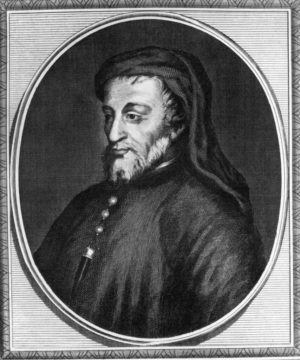 For nearly 150 years, a cloud has hung over the reputation of Geoffrey Chaucer, the author of “The Canterbury Tales,” long seen as the founder of the English literary canon.
 I
I Kate Aronoff in The New Republic (Image: Ahmed Shurau/ Getty Images):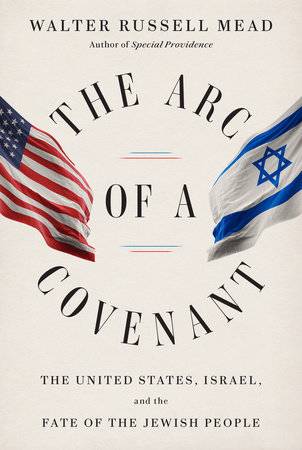
 Tobias Hübinette in Boston Review:
 F
F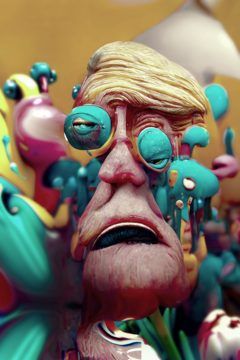 It’s an anti-Trumper’s nightmare, but it could happen: 47 percent of Republicans and Republican-leaning independents want Trump to be the nominee in 2024, according to a recent Washington Post-ABC News
 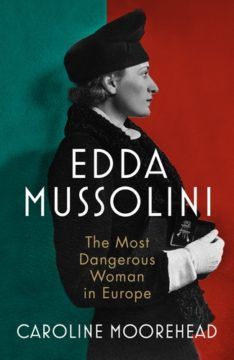 O
O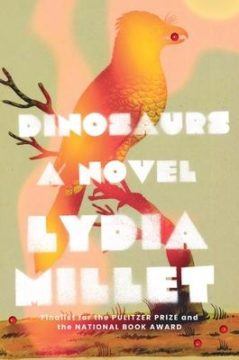 The novelist Lydia Millet once told an interviewer that when she first moved to New York, in 1996, she was “amazed” by how people were “relentlessly interested in exclusively the human self.” This myopia—a sort of “inarticulate, ambient smugness about everything”—wasn’t her creed. Millet, who now lives near Tucson, has written more than a dozen books of fiction, one of which was a finalist for the Pulitzer Prize, but she works at the Center for Biological Diversity and holds a master’s in environmental policy. As in life, so in art. Increasingly, fiction studies the “arc of the private individual,” Millet told another interviewer: “The personal struggles of a self and the ultimate triumph of that self over the obstacles in its path.” But Millet is energized, instead, by how feelings are “intermeshed with abstract thought,” with “our place in the wider landscape.” Why, her work demands, are we afraid to die? What are the ethics of wanting what we want?
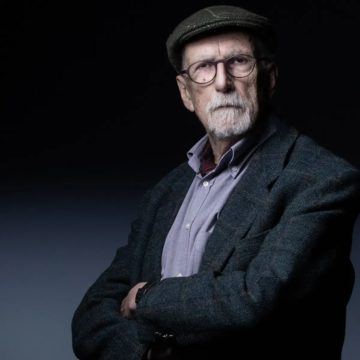 Down in the crypt of the basilica of Saint-Maximin-La-Sainte-Baume, in the South of France, there is an exquisitely rare object. It is a skull, behind a wall of glass, and it is described by two separate and very different labels. The one label tells you it comes from a woman in her fifties, likely born in the eastern Mediterranean in the early first century CE. The other label tells you it is the skull of Mary Magdalene. Legends of her late-life migration to Southern Gaul had already been circulating for some time when the discovery of her skeletal remains in Saint-Maximin was announced in 1279, and the basilica was subsequently built up around this gravesite. In the fourteenth century the Genoese Dominican author Jacobus de Voragine tells the full story of Mary Magdalene’s shipwreck off the coast of Marseille, and of her subsequent long career of miracle-working throughout Provence. Europe was made Christian not just by real-time conversion, but also a great deal of retroactive inscription of Biblical personages, apostles, and early Church Fathers into the ancient history of what was not yet a well-delineated cultural-geographical sphere.
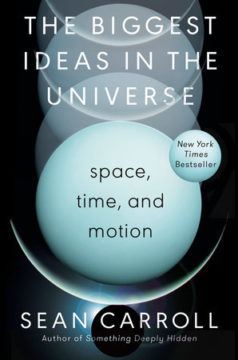 What Carroll wants is to give readers something of the mathematical essence which, after all, is how physics is done. To accomplish this goal he proposes a novel approach. As he rightly notes, to become a practicing physicist, a student must not only learn the equations
 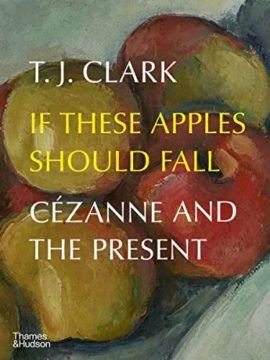 IT TAKES A STRONG STOMACH for paradox to write that Paul Cézanne “cannot be written about any more.” When art historian T.J. Clark began a 2010 London Review of Books article on the painter this way, he meant no insult. The post-Impressionist and proto-modernist Cézanne was one of the keenest observers of the industrial disenchantment of late 19th-century Western Europe. In the 21st century, Clark argued, his paintings had become “remote to the temper of our times,” ergo, a tough subject. Accordingly, Clark’s new study of the painter, If These Apples Should Fall: Cézanne and the Present, is a book about Cézanne, but also about the difficulties of writing such a book.