
Sopan Deb at the New York Times:
 Chuck Norris once gave a horse an uppercut and now we have giraffes.
Chuck Norris doesn’t sleep. He waits.
Chuck Norris is so tough he can slam a revolving door.
Chuck Norris’s calendar goes straight from March 31 to April 2, because no one fools Chuck Norris.
There was a time — in the days when the internet was still a force for fun — when Chuck Norris jokes flooded our screens.
It was the mid-2000s. Twitter and Facebook were not yet ascendant. We weren’t yet glued to our phones. People were still making prank calls using Jack Black soundboards. We allowed Daniel Powter’s “Bad Day” to become a megahit.
And Norris unwittingly became a pioneer of memedom.
More here.
Enjoying the content on 3QD? Help keep us going by donating now.
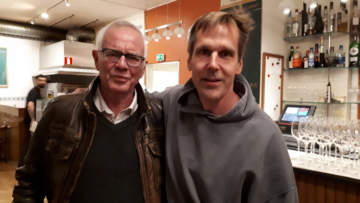 Robert Trivers, who died on March 12, 2026, was arguably the most important evolutionary theorist since Darwin. He had a rare gift for seeing through the messy clutter of life and revealing the underlying logic beneath it. E. O. Wilson called him “one of the most influential and consistently correct theoretical evolutionary biologists of our time.” Steven Pinker described him as “one of the great thinkers in the history of Western thought.”
 There used to be an academic discipline centered on a straightforward question: what helps poor countries get richer? It was called development economics, and it was the intellectual engine behind sprawling government bureaucracies: USAID, Britain’s Department for International Development (DfID), the World Bank, and many others.
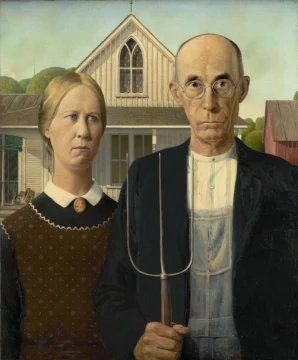 You’re not hallucinating the great weirding of America. The visual evidence is everywhere. Start with what you can see.
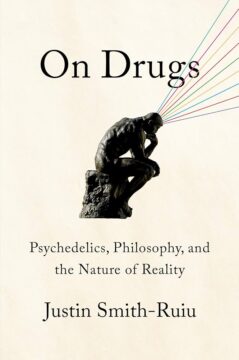 Higher education is no longer expanding; it is contracting, or transforming to the point of total discontinuity with what it had once been. It is only natural that this transformation should bring with it a rediscovery of the historical fact that there is nothing intrinsically “elite” about reading Homer or Shakespeare. Yorkshire coal miners used to do it, together, with great joy and satisfaction. It was a lie and a betrayal on the part of the hermeneuticists of suspicion to have told their students—and their deans—that humanistic inquiry is, in its essence, anything but democratic. The humanities are democratic precisely because they do not come down to us through blood ties, but must be cultivated anew over the course of an individual life. As Seneca said: “If there is any good in philosophy, it is this—that it never looks into pedigrees. All men, if traced back to their original source, spring from the gods.” (Of course, since the early 20th century the dominant strain of Anglophone philosophy has sought to distance itself from the humanities and to find its niche somewhere closer to the positive sciences—yet another case of hoverflies sneaking into the beehive. But this has been a futile effort—one which, again, we’ll have to address on another occasion.)
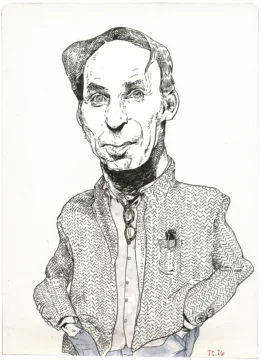 How could we satirize all sorts of different people, with different faiths, without implicitly arguing that they should
 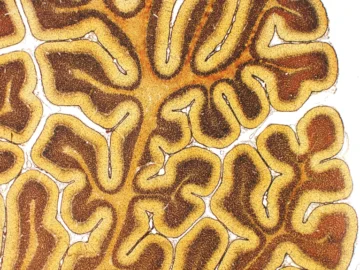 The brain is a noisy place. Sometimes two brain regions that are far apart are active at the same time, suggesting that they work together to support the same function. Such regions are said to be functionally connected, even though they do not necessarily sit close to each other in the brain.
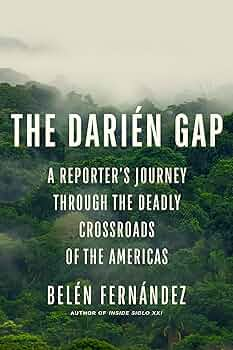 Why is it that a tourist can visit Panama—or any “supposedly fun” vacation destination from Baja to Colombia—and be welcomed like the second coming of divine capitalism? Yet at the same time, a weary migrant traveling through the same country is robbed and abused by state officials and officers they encounter along the way? The migrant journey, marked by mistreatment, also costs far more financially than the average tourist’s week-long vacation package. This problem of mobility/immobility is at the core of our modern predicament. And in recent years, like many contemporary crises, it appears to be worsening—especially in the Americas, from Minneapolis to Texas and southward along the maritime and land routes linking the United States with South America.
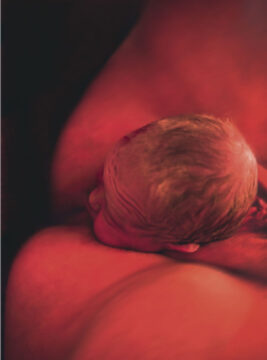 I had failed to grasp an obvious fact of parenthood: that I had bound myself irrevocably to the world and made myself freshly vulnerable to it. Nothing had prepared me for the cruelty of a culture that aggressively advocates breastfeeding and attachment parenting but has no federally mandated paid family leave. (Working wasn’t optional for me, as it had been for my mother; as a writer under contract, I was back at my desk within ten days.) I had not really understood, before giving birth, that parenthood was where society met my body, and that caregivers were continually making up for civilization’s many lacks, expected to embody all things lovingly boundless, unconditional, and selfless in a bottom-line world. I felt reduced to a symbolic ideal that didn’t align with the values of the society in which I existed as an actual woman, under real circumstances.
 The shocking West Asian war unleashed by the USA and Israel is a source of relief to Donald Trump because it has temporarily taken media attention away from his greatest domestic scandal, his long and sordid ties with the deceased sex trafficker, Jeffrey Epstein. But the Epstein story will return to haunt Trump forever.
 In the Georgics, a lyrical guide to agriculture published in 29 BCE, the Roman poet noted that “
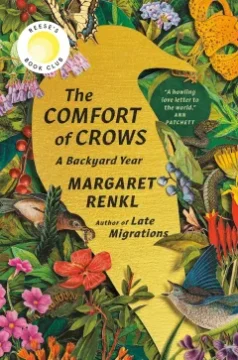 Nothing magnifies life — in the proper sense of the word, rooted in the Latin for “to make greater, to glorify” — more than the act of noticing its details, and nothing sanctifies it more: Kneeling to look at a lichen is a devotional act. We