
Andrés Muedano at JSTOR Daily:
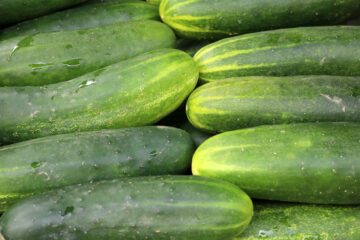 In the Georgics, a lyrical guide to agriculture published in 29 BCE, the Roman poet noted that “the cucumber, coiling through the grass, swells into a paunch.” His words evoke the image of an animal slithering on the ground before growing—an allusion that was likely intended as a gardening pun about reptiles, argues classics scholar Rebecca Armstrong. “For an instant reminding us of the sinister snakes lurking in the grass elsewhere in the Georgics,” she writes, “the cucumber emerges as a harmless, and welcome, vegetable.” It is, be thankful, an innocuous creature. It won’t jump at your pets and eat them.
But don’t let its stillness in the videos fool you. To think of this gourd as an object devoid of action would be a fatal mistake. Making sense of the cucumber demands an inquiry into movement. The plant that produces cucumbers is, after all, a creeping vine, and its history is shaped by different kinds of motion. The cucumber coils and it climbs; it circulates, and it spreads. It is, undoubtedly, a highly mobile plant.
more here.
Enjoying the content on 3QD? Help keep us going by donating now.