
Boar: Even Though
He stumps along on his cloven hooves,
his midget legs, bulging, fat, 300-pound
pig, gorgeous, huge porker, jiggling
hams and haunches. He’s surfeit,
an abundance of lean muscle and pure
lard, old feast in himself, a perfectly
fulfilled purpose in the flesh.
He stands for all the swine relatives
and ancient ancestors of 10,000
years—warthog, bush pig, white-lipped
peccary, woolly boar, javelina, bristled
tuskers, acorn shovelers, river
swimmers, acute detectors of thunder
and lightning two days away, keen
routers of hidden truffles and tubers.
He adores his pignut hickories. He adores
his sows and their wallows.
He can sprint as fast as a squirrel.
Rolling and rooting, settling
into sleep, his great breathing body
inside his grass nest is such a mound
of steady heaving someone might believe
a hillock of forest were quaking to life.
His rumbling, guttural, reverberating
bass snorting, rising from the subterranean
depths of his barrel chest, is the kettle
drumroll of the generous earth
announcing its bounty: Here he is.
He eats anything—fungi, grasshoppers,
grains and garbage, eggs, snakes,
mollusks, birds, bark, manure.
Forgive his stink, forgive his beady,
squinty eye, his ears like stiff hairy
handkerchiefs hanging over his brown,
his jutting teeth, his dripping digging
snout; for he possesses and intriguing
skull, a brain much superior to a cow’s
or a dog’s. And he is senior sire
of countless progeny, his seed so
multiplied “as the stars of the heaven.”
He is provision. He nourishes.
Waddle-trotting away now, see
how his tail in its coil is laughing
at everything he turns his back on.
by Pattianne Rogers
from Wayfare
Penguin Books, 2008
 After the Internet arrived and flooded the market with new voices, some outlets found that instead of going after the whole audience, it made more financial sense to pick one demographic and dominate it. How? That’s easy. You feed the audience news you know they will like. When Fox had success targeting suburban and rural, mostly white, mostly older conservatives – the late Fox News chief Roger Ailes infamously described his audience as “55 to dead” – other companies soon followed suit.
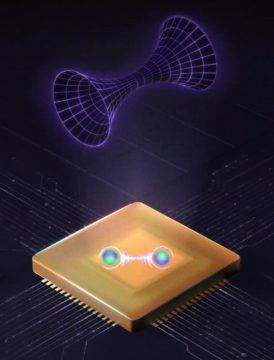 Physicists have purportedly created the first-ever wormhole, a kind of tunnel theorized in 1935 by Albert Einstein and Nathan Rosen that leads from one place to another by passing into an extra dimension of space.
 With or without the COVID-19 pandemic, China has maintained a greater capacity to control the internal movement of its population than perhaps any other country in the world. This is primarily enforced through the household registration system (hukou) which has linked the provision of social services to regional locales since 1958. Under Deng Xiaoping, China set about constructing a national labor market, which today allows citizens to enjoy the narrow market freedom to seek employment throughout the country. But social citizenship, including access to state subsidized health care, education, pensions, and housing, is structured at the level of the city.
 Man is an
 T
T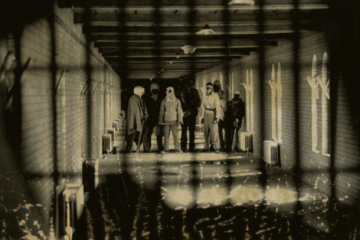 On a May evening in 1972—eight months after the uprising—Tisdale passed through Attica’s security gates and held his first workshop. He began by asking his students, “What is poetry?” He recorded their answers in his journal: “Personal, deals with emotions, historical, compact (concise), eternal, revolutionary, beauty, rhyme, rhythm, a verbal X-ray of the soul.” Knowing he was under nearly as much scrutiny as the imprisoned men, Tisdale approached the “revolutionary” aspects of poetry with caution. Attica’s administrators feared another revolt. Officers were always present for the workshops; Tisdale’s journal makes special note of the occasions when a Black officer, recruited after the uprising, attended. Regardless of the surveillance, the workshop began to gel after the first few weeks as participants became more comfortable with Tisdale. He noticed quickly that many contributors possessed great skill as poets. They told him that nothing had changed at Attica since the revolt; prison conditions remained abhorrent. They shared an urgency to write about the violence they had witnessed and America’s carceral system in general, and they did not hold back.
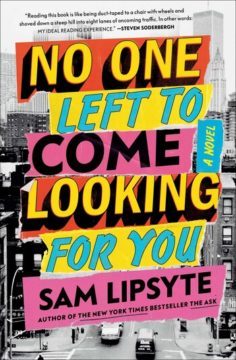 ONE OF SAM LIPSYTE’S SIGNATURE ACCOMPLISHMENTS has been to find the baroque musicality in the emergent vocabularies—commercial, bureaucratic, wellness-industrial, pornographic—opened up by twenty-first-century English. “Hark would shepherd the sermon weirdward,” he writes in his 2019 novel about an entrepreneurial inspirational speaker, “the measured language fracturing, his docile flock of reasonable tips for better corporate living driven off the best practices cliff, the crowd in horrified witness.” Across his first six books, Lipsyte’s sentences have been excessive, pun-laden, and lyrically raunchy. When language threatens to sound measured, a character with a zany name can be counted on to fracture it.
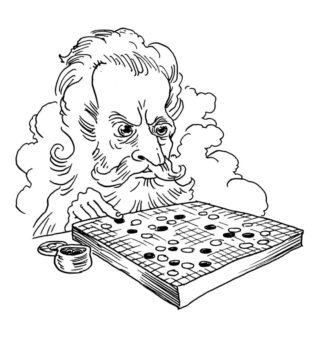 Science was supposed to have banished God, but he keeps turning up in our latest technologies. He is the ghost lurking in our data sets, the cockroach hiding beneath the particle accelerator. He briefly appeared three years ago in Seoul, on the sixth floor of the Four Seasons Hotel, where hundreds of people had gathered to watch Lee Sedol, one of the world’s leading go champions, play against AlphaGo, an algorithm created by Google’s DeepMind. Go is an ancient Chinese board game that is exponentially more complex than chess; the number of possible moves exceeds the number of atoms in the universe. Midway through the match, AlphaGo made a move so bizarre that everyone in the room concluded it was a mistake. “It’s not a human move,” said one former champion. “I’ve never seen a human play this move.” Even AlphaGo’s creator could not explain the algorithm’s choice. But it proved decisive. The computer won that game, then the next, claiming victory over Sedol in the best-of-five match.
 The future starts now? Drone footage shows construction beginning on Saudi Arabia’s sci-fi megacity called
 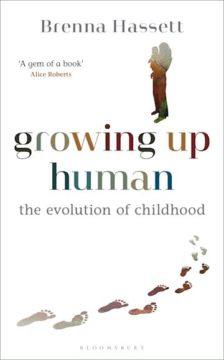 Humans are weird
 It’s easy enough to proclaim that we are curious creatures, but what does that really mean? What kinds of curiosity are there? And how does curiosity arise in our brains? Perry Zurn and Dani Bassett are a philosopher and neuroscientist, respectively (as well as twins), whose new book
 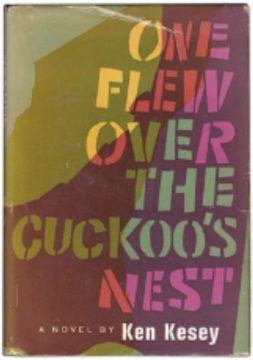 Ken Kesey (1935–2001) was a great admirer of manliness, a quality that would inform his countercultural indictment of America’s attitude toward mental illness, and of postwar America more generally. The darkly comic 1962 novel for which he is known,
  A FEW WEEKS AGO