
Yasmin Tayag in The New Yorker:
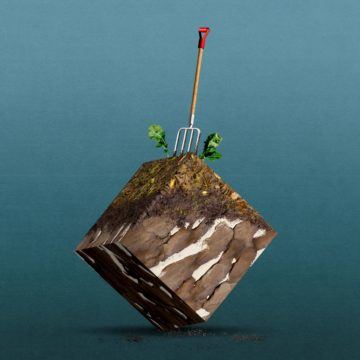 In 2010, Brad St. Pierre and his wife, Christine, moved from California to Fairbanks, Alaska, to work as farmers. “People thought we were crazy,” Brad said. “They were, like, ‘You can grow things in Alaska?’ ” Their new home, not far from where Christine grew up, was as far north as Reykjavík, Iceland, and receives about sixty inches of snow each year. It routinely experiences winter temperatures below minus ten degrees Fahrenheit. In the summer, however, the sun shines for twenty-one hours a day and the weather resembles San Francisco’s. Sturdy cabbages and carrots thrive in the ground, while fussier tomatoes and cucumbers flourish in greenhouses.
The main challenge with farming in this part of Alaska, Brad told me recently, is that craters often open up in fields, and some are the size of Volkswagen Beetles. The holes form when patches of frozen water, known as ice lenses, melt and gulp down the surrounding earth in a process known as subsidence. They tend to expand each year and sometimes fuse with other nearby pits; they can be filled, but farmers often run out of soil, so the pits become ponds. Sometimes holes hide under ruffles of kale or the shade of tart-cherry trees, or threaten to swallow Brad’s tractor. “All of a sudden, you have to stop,” he said. “There’s no grass. There’s just a hole.”
More here.
 Pranab Bardhan in New Left Review:
 Nell Minnow in response to 19 Republican state attorneys general’s letter to Blackrock:
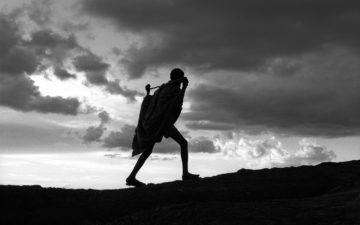 Dag Herbjørnsrud in Aeon:
 I am 81 years old, my partner 92. On my 70th birthday, I woke from a dream in which I had rounded a corner and seen the end. This disturbing dream moved me to begin photographing the two of us, chronicling our time together, growing old.
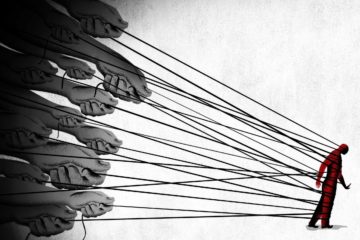 During the 2012 presidential election, there occurred one of those remarkably rare moments when campaign rhetoric actually clarified a large issue. It happened when Barack Obama, speaking without a written text,
  A
A 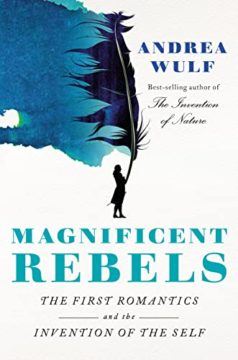 In 1793 Caroline Böhmer paid for her support for the French Revolution with arrest by the Prussians and three months of incarceration in a damp, dark, overcrowded, vermin-infested cell in the fortress of Königstein. It was made doubly painful by her having to share her suffering with her seven-year-old daughter. Intelligent, well educated, physically attractive, articulate and with a strong personality (‘I never flatter, I say what I think and feel’), Böhmer liked to be in charge. She was also unconventional when it came to sexual morality. Her spell in prison was complicated by the discovery that she was pregnant, the result of a one-night stand with a teenage French soldier. It was not to be the last of her extramarital adventures.
 A joke has structure. It has a central rule. Setup, punchline. The setup produces a tensed, expectant state; the punchline resolves the tension with a surprise. If the elements of the joke are not arranged into a setup and a punchline, it is not a joke. It is just a statement.
 Much remains to be learned about the nature and origins of various sex differences, but more is known than most people realize. Much of the current confusion is generated by activists who suppress, attack, and distort information on sex differences in order to reinforce their preferred ideological narratives. These ideology-driven distortions are helpfully illustrated by a recent New York Times
 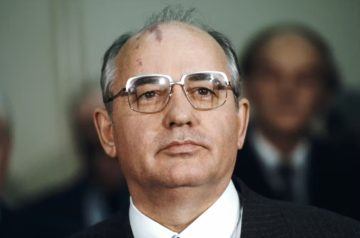 Mikhail Gorbachev was a contradictory figure; his legacy, complex. Hailed in the West as a
  Through a series of vignettes peppered with illustrative analogies and vibrant characters, Siddhartha Mukherjee invites readers of his new book, The Song of the Cell, on a tour of cell biology from its early origins to its present and future applications. Mukherjee is clear from the start that the book is not a comprehensive history of the field but rather a meandering journey through selected seminal scientific discoveries. The book’s conversational style draws the reader in, and the text is enlivened by descriptions of major players in the field. We learn, for example, that Frederick Banting—co-winner of the Nobel Prize for the discovery of insulin—devised his key experiment only after experiencing financial difficulties in his medical practice, a broken-down car, and a sleepless night puzzling over a recently published journal article.
 I
I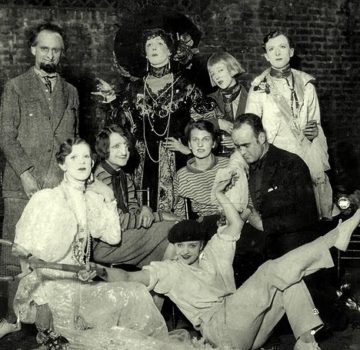 Inez Holden’s diary – a mammoth undertaking, only fragments of which have ever escaped into print – carries a rueful little entry from August 1948. “I read Brideshead Revisited by Evelyn Waugh,” the diarist writes. But the tale of Charles Ryder’s dealings with the tantalising progeny of the Marquess of Marchmain, here in an unfallen world of Oxford quadrangles and stately pleasure domes, awakens a feeling of “nostalgic depression”. This, Holden decides, is simply another of “those stories of High Life of the Twenties which everyone seemed to have enjoyed but I never did”.
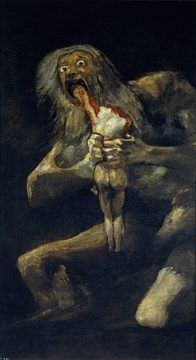 There are many complex theories about the nature and function of art; I am going to propose a very simple one. My simple theory is also broad: it applies to narrative fiction broadly conceived, from epic poems to Greek tragedies to Shakespearean comedies to short stories to movies. It also applies to most pop songs, many lyric poems and some—though far from most—paintings, photographs and sculptures. My theory is that art is for seeing evil.