
Alexander Stern in The Hedgehog Review:
 “I am sick to death of cleverness,” wrote the very clever Oscar Wilde in The Importance of Being Earnest. “Everybody is so clever nowadays…. The thing has become an absolute public nuisance.” The philosopher Ludwig Wittgenstein was tormented by the thought that he was “merely clever” and criticized himself and others for valuing cleverness over genuine wisdom. Søren Kierkegaard, who placed a genuinely religious life before a merely aesthetic one, wrote that “the law for the religious is to act in opposition to cleverness.”
Is there really something wrong with being clever? Even if it can get on our nerves sometimes, its associations remain overwhelmingly positive: Cleverness is seen as a source of not just amusement but insight. Nonetheless, many will identify with Wilde’s complaint; the cleverness that proliferates in public life today is a nuisance. Our popular media are drenched in contrived knowingness and irony. And cleverness has become something like a currency online, where hordes of commenters and commentators compete for likes and subscribers with world-weary analyses and smug jokes. What should we make of this apparent degradation?
More here.
 Janet Afary and Kevin B. Anderson in Dissent:
 Bruno Latour in Green:
 Kate Mackenzie, Lee Harris, and Tim Sahay in The Polycrisis at Phenomenal World:
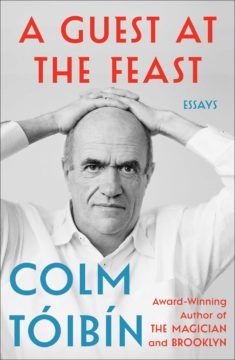 It’s all very meticulous, even his horror, which is considerable when it comes to the way the bishops covered up for their paedophile priests. On every subject, Tóibín’s writing is what people these days inevitably describe as nuanced, a word that has become a kind of shorthand for expressing a person’s rare ability to understand – or to try to understand – the foibles of others (how sad that this should be thought unusual). But he can be gripping, too. This country that censored the hell out of people’s hearts is so much his territory. If the speed with which the power of the church in Ireland has been undermined is still astonishing, it’s nevertheless important to consider the hold it may continue to have over those citizens – Tóibín is one – who remember when its authority was ironclad. In the end, this is a book of shadows: tumours in testicles, fog in Venice, expensively clad cardinals who may be up to no good.
 Remember boredom? The first English translation of the French writer
  S
S It was late in 1972 — a year in which the science of genetic engineering really began to sizzle — that two California researchers announced the unusually tidy transfer of genetic information from one bacterium to another with help from a specialized enzyme. It was a scientifically heralded result, but behind the hoopla was just one small catch. The information transferred enabled a common human disease bacterium, E. coli, to resist not just one antibiotic, but two. “Alarm bells should have rung,” writes Matthew Cobb, in his deeply researched and often deeply troubling history of gene science. And that nothing did ring — that scientific success trumped the obvious risks of the work — becomes the focus of his book’s primary inquiry: whether a research community capable of altering life is also capable of putting ethical decisions first.
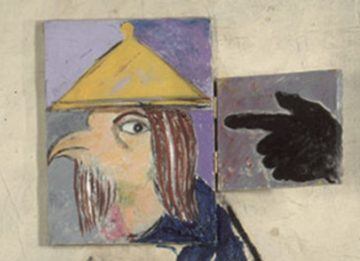 Missing persons cases are seldom about finding someone. Too often, people who have disappeared are not missing at all. They are either hiding or long dead, possibly victims of murders waiting to be solved. Such cases, in short, are best to avoid. But when I heard that there had been recent sightings of the long-lost Wandering Jew, I knew I had to investigate.
 Blood-sucking mosquitoes have their uses. An innovative approach analysing their last blood meals can reveal evidence of infection in the people or animals that the flying insects feasted on.
 Can Americans’ trust in elections be rebuilt?
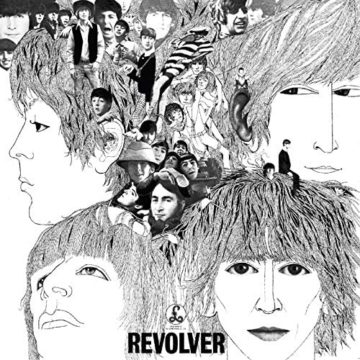 Weber says that most writings about the Beatles can be categorised into one of four principal narratives ‑ four ways of seeing and telling the band’s story. The first and earliest of these is the Fab Four Narrative. This is the more or less official version of the Beatles that evolved following their initial breakthrough. It was propagated by a largely friendly media nudged along by the Beatles themselves, their management and publicists. In the Fab Four Narrative, the Beatles are depicted as four friends whose relationship with each other is easy and free of tension. This is how they come across in their early interviews, their monthly fan magazine, and, especially, in their first two films: A Hard Day’s Night and Help. In Help, for example, the fictionalised Beatles live in a luxurious communal home that is, by mid-sixties standards, high-tech. These are rich young men, leisured and with few responsibilities, but who get along together, well enough to live in the same shared space like perpetual teenagers. As Weber comments, these mainstream films were especially important in differentiating one Beatle from another for a wider public (Jonathan Miller, commenting when they were new on the scene, had thought they all looked the same, like the Midwich Cuckoos).
 THE WORD “GENIAL” IN ENGLISH