What Is It Like to Have a Brain?: “Nineteen Ways of Looking at Consciousness”

Henry Cowles in LARB:
When the blackbird flew out of sight,
It marked the edge
Of one of many circles.

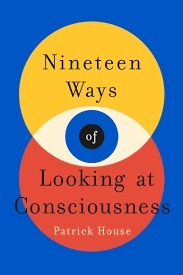
BLACKBIRDS AREN’T ALL BLACK. They can be red-winged or red-shouldered, saffron-cowled or tricolored, rusty or yellow-hooded or chestnut-capped. And that’s just the members of the family Icteridae called blackbirds. Orioles and grackles, with their oranges and iridescence, are part of the family too. Old World blackbirds, many of which are called thrushes, are only distantly related; black birds like ravens and most crows aren’t blackbirds at all. To me, this fuzziness is part of the joke of “Thirteen Ways of Looking at a Blackbird,” a poem by Wallace Stevens first published in 1917. Across the poem’s 13 cantos, birds whirl and whistle, cast their shadows or eye us from the trees. Whether or not they’re all blackbirds — and, if so, what kind, with what colors? — the singular “a” of Stevens’s title is clearly misdirection. There are as many birds as there are perspectives, if not more, and as ever, what is true of the poem is true of the world. The more ways we look, the more we realize how much there is to see. Glance by glance, the blackbirds multiply.

Think about anything often enough, from enough angles, and it’s bound to splinter and refract. Our minds are like kaleidoscopes, packed with mirrors we twist to see the world anew. Sometimes we’re twisting consciously, sometimes unconsciously. But no matter what, we end up seeing patterns that are more a product of the tool in hand than of the world on its other end. Stevens’s poem, on this reading, is less about blackbirds than about the lenses we use to spy on them. It’s a warning, in other words, not to mistake the kaleidoscope for the universe.

More here.

Human Brain Cells Grow in Rats, and Feel What the Rats Feel

Carl Zimmer in The New York Times:

Scientists have successfully transplanted clusters of human neurons into the brains of newborn rats, a striking feat of biological engineering that may provide more realistic models for neurological conditions such as autism and serve as a way to restore injured brains.
In a study published on Wednesday, researchers from Stanford reported that the clumps of human cells, known as “organoids,” grew into millions of new neurons and wired themselves into their new nervous systems. Once the organoids had plugged into the brains of the rats, the animals could receive sensory signals from their whiskers and help generate command signals to guide their movements. Dr. Sergiu Pasca, the neuroscientist who led the research, said that he and his colleagues were now using the transplanted neurons to learn about the biology underlying autism, schizophrenia and other developmental disorders.

More here.

Sunday, October 16, 2022

‘Could I understand the people who rushed into the Capitol?’: George Saunders on how stories teach empathy

George Saunders in The Guardian:

In the US, we are feeling the sickening after-effects of an attempted insurrection committed by people, many of whom, before that day, had never acted against their country or shown the least sign of being violent. What’s happening over here? Good question. And the truth is, nobody knows.

But here’s one way of looking at it: these people were told a false story and acted on it, with a level of passion and violence that would suggest true belief.

That false story – a set of false stories, really, bundled together – came to them via their newsfeeds and radio talk shows and partisan televisions shows with an alluring hi-tech gleam. In the face of this onslaught, their story receptors proved inadequate to the moment, and they exhibited a failure of what Hemingway called one’s “built-in, shockproof, shit detector”.

The stories these people fell for were laced with agenda, told for profit, designed to agitate, titillate, divide and antagonise; thrown together quickly; misshapen by the demands of the delivery vehicle, which limited the number of characters used or prioritised likes and shares. These stories entered the minds of their audience the way any story does, and their audience processed them earnestly, as if there was something vital to learn in them, because that’s what our minds do.

More here.

Douglas Hofstadter: Wacky Jabber

Douglas Hofstadter in Inference Review:

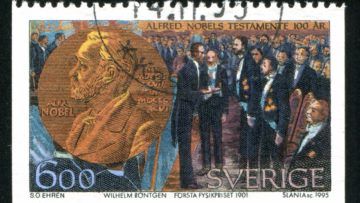
Actually, until 1961, when I was 16, I’d never given any thought to Sweden at all, but everything shifted on a dime when my Dad shared the 1961 Nobel Prize in Physics. That December, our family flew to Stockholm for the ceremonies and it was unforgettable. Not only were the solemn, yet deeply joyous, festivities a once-in-a-lifetime occurrence, but I was powerfully struck by the classic European beauty of Stockholm in the midst of that romantically dark and snowy Scandinavian winter—such a clean and sophisticated city with its old-fashioned trams, its glittering neon signs, its colorful store windows, its elegant ladies and gentlemen, and, last but not least, its strange, alien language.
When, one day in the Grand Hôtel, which certainly lived up to its name, our family first laid eyes on my Dad’s Nobel diploma, colorfully and exquisitely hand-calligraphed in Swedish, I tried to make some sense of the citation—“För hans banbrytande undersökningar över elektronspridningen mot atomkärnor och därvid gjorda upptäckter rörande nuckleonernas struktur”—but I couldn’t do much with it. Although I knew a weensy bit of German, I didn’t know a word of any of its cousin languages, such as Swedish. And yet I instantly noticed something that looked odd; a tiny little thing that, to my eye, stuck out like a sore thumb. Even if you know zero Swedish, I urge you to try to spot the spot that was an eyesore to me. Hint: it’s just one word toward the end. And by the way, in English, what those italicized words mean is this: “For his pathbreaking investigations of electron-scattering from atomic nuclei, and for his discoveries, made thereby, concerning the structure of nucleons.

More here.

The internet is already over

Sam Kriss in Numb at the Lodge:

In 1977, Ken Olsen declared that ‘there is no reason for any individual to have a computer in his home.’ In 1995, Robert Metcalfe predicted in InfoWorld that the internet would go ‘spectacularly supernova’ and then collapse within a year. In 2000, the Daily Mail reported that the ‘Internet may be just a passing fad,’ adding that ‘predictions that the Internet would revolutionise the way society works have proved wildly inaccurate.’ Any day now, the millions of internet users would simply stop, either bored or frustrated, and rejoin the real world.
Funny, isn’t it? You can laugh at these people now, from your high perch one quarter of the way into the twenty-first century. Look at these morons, stuck in their grubby little past, who couldn’t even correctly identify the shape of the year 2022. You can see it perfectly, because you’re smart. You know that the internet has changed everything, forever.

More here.

The worst Nobel Prizes ever awarded in science (and one in literature)

Scotty Hendricks at Big Think:

Nobel Prizes used to be awarded fairly quickly after the discovery, achievement, or event that prompted them. The instructions left by Alfred Nobel seemed to warrant this speed. However, this has occasionally led to awards for discoveries that later turned out to be bunk. Perhaps no case of this is clearer-cut than the 1926 prize in medicine, which was awarded “for [Fibiger’s] discovery of the Spiroptera carcinoma.”

In brief, Dr. Fibiger’s research appeared to show that a certain roundworm parasite could cause cancer in rats. However, later experiments proved that the “cancers” he claimed to have observed were lesions caused by insufficient vitamin A. The roundworms he examined didn’t cause cancer, although certain parasites are known to do so.

More here.

Jan. 6 shook US democracy. Has Jan. 6 committee helped shore it up?

Christa Bryant in The Christian Science Monitor:

The House committee tasked with investigating the Jan. 6 attack on the Capitol made its closing arguments to the American public today and voted 9-0 to subpoena former President Donald Trump. They highlighted snippets from more than a million Secret Service communications in the days and hours leading up to the breach of the Capitol, bolstering their thesis that then-President Donald Trump had incited a mob ​and bears singular responsibility for the violence that ensued. “Armed and Ready, Mr. President!” read one snippet of intelligence presented in a Secret Service email on Dec. 24, 2020, about two weeks before the Jan. 6 joint session of Congress to formalize Joe Biden’s election victory.
More here.

Study finds unexpected protective properties of pain

From Phys.Org:

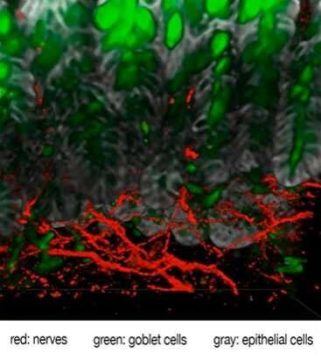
Pain has been long recognized as one of evolution’s most reliable tools to detect the presence of harm and signal that something is wrong—an alert system that tells us to pause and pay attention to our bodies. But what if pain is more than just a mere alarm bell? What if pain is in itself a form of protection? A new study led by researchers at Harvard Medical School suggests that may well be the case in mice. The research, published Oct. 14 in Cell, shows that pain neurons in the mouse gut regulate the presence of protective mucus under normal conditions and stimulate intestinal cells to release more mucus during states of inflammation.

The work details the steps of a complex signaling cascade, showing that pain neurons engage in direct crosstalk with mucus-containing gut cells, known as goblet cells. “It turns out that pain may protect us in more direct ways than its classic job to detect potential harm and dispatch signals to the brain. Our work shows how pain-mediating nerves in the gut talk to nearby epithelial cells that line the intestines,” said study senior investigator Isaac Chiu, associate professor of immunobiology in the Blavatnik Institute at HMS. “This means that the nervous system has a major role in the gut beyond just giving us an unpleasant sensation and that it’s a key player in gut barrier maintenance and a protective mechanism during inflammation.”

More here.

Sunday Poem

To Travel

—after the Finnish of Gosta Agren

If you should go to Samarkand
you might find Scheherazade
reproduced a thousand times,
tinsel-clad, in gift shops,
and Al-al-Din’s gold-plated domes
slung with Soviet tourist signs
and tarnished, on a brassy sky.

But staying is a kind of leaving.
From here, the fields of Oxfordshire
stretch almost sovereign-golden.
And when the wheat is rolled in bales
like wheels, and black tractor rills
run to the bare horizon, there shall be,
in the wordless autumn air, Samarkand,

the idea of Samarkand.

by Kate Clanchy
from The National Poetry Library

Saturday, October 15, 2022

Plant Machete

Via Adam Tooze, David Bowen at his site:

This installation enables a live plant to control a machete. plant machete has a control system that reads and utilizes the electrical noises found in a live philodendron. The system uses an open source micro-controller connected to the plant to read varying resistance signals across the plant’s leaves. Using custom software, these signals are mapped in real-time to the movements of the joints of the industrial robot holding a machete. In this way, the movements of the machete are determined based on input from the plant. Essentially the plant is the brain of the robot controlling the machete determining how it swings, jabs, slices and interacts in space.

Ottoman Revival?

Cihan Tugal in Sidecar:

During a war in which most countries have either taken sides or remained silent, Turkey has positioned itself as a mediator between Russia and Ukraine – seeking to negotiate with both Putin and Zelensky, and playing an important role in the semi-restitution of grain trade last summer. It has opposed Western sanctions on Russia, yet it has also limited Russian warships in the Black Sea. Such geopolitical manoeuvring – treading a fine line between Great Powers – is not confined to the current crisis, nor to Turkey’s bilateral relations with the two warring states. Rather, it is a reflection of Erdoğan’s broader foreign policy direction.

Ever since the Arab Spring, Turkey’s governing Justice and Development Party (AKP) has been reimagining the country as an independent actor: not simply a ‘bridge’ between the West and the rest, but a force that both the declining American empire and its emergent competitors must reckon with. This, however, is more an expression of fantasy than fact. As we shall see, the material basis for an autonomous Turkish foreign policy is weak, and domestic class dynamics are unfavourable. No matter how much Islamist media outlets try to promote their thin and mostly antisemitic version of ‘anti-imperialism’, it does not amount to a coherent overseas strategy. In the absence of such material and social anchors, the AKP’s search for independence ultimately amounts to a haphazard series of short-termist adventures.

This is in marked contrast to the country’s experience during the mid- to late-twentieth century. The Republic of Turkey’s first two decades were an early harbinger of Third Worldism, with all its merits and demerits.

More here.

Who Pays for Inflation?

Samir Sonti and JW Mason in Phenomenal World:

SAMIR SONTI: For a long time, I have been preoccupied by the way the politics of inflation affect working people. There is hardly anyone I’ve learned more from about this subject than Josh Mason. To kick us off, it might be helpful to get some basic definitions on the table. Headlines tell us that inflation is at a forty-year high, but for working people, a rising cost of living is nothing new: house prices, for instance, have been climbing for years. Could you explain what precisely we mean by the term inflation? What distinguishes the recent inflation we’ve experienced from some of these other trends?

JW MASON: The definition of inflation that people are most familiar with is a period of rising prices. But as you pointed out, that immediately invites the question: which prices? There are many prices in the economy, and they do not all move in lockstep. When we look at inflation, we’re measuring the average price of things that a representative household buys. But this, again, invites a question: Which household? Different people buy different things, and the average prices of some goods are difficult to calculate. There is no such thing as “the price level” out there in the world, just various ways of constructing it.

In general, when we measure inflation we look at goods and services that people use. We’re not including stocks, cryptocurrency, interest payments, and other financial assets. But we’re also including some things that aren’t goods and services. For instance, the biggest single item in the consumer price index is what’s called “owners equivalent rent.” This is not a price that anyone pays—it is an estimate by the Bureau of Labor Statistics of how much it would cost a homeowner to rent their home, and computing it is a fairly complicated process.

More here.

What to do about climate change (3): Andreas Malm on blowing up pipelines and other forms of property destruction

Ingrid Robeyns in Crooked Timber:

In his book How to Blog Up A Pipeline, Andreas Malm writes about the need for the climate movement to have a more radical wing (which would do things like blowing up pipelines, or other forms of property destruction). His view is that the climate movement is making a mistake by subscribing to radical forms of non-violence, since the climate crisis is getting worse year by year, while the tactics of the climate movement remain the same – and, in his view, have proven to be ineffective (or at least, insufficiently effective).

One of Malm’s targets is Extinction Rebellion (XR), one of the most visible groups within the climate movement. Local groups of XR are staging various forms of protest, but always non-violent; they do not destroy property. Malm argues that XR has a flawed understanding of how in the past movements operated who were fighting to abolish slavery or abolish apartheid in South Africa, or fighting for women’s political rights or equal civil rights in the US. They all first tried to reach their goals in a peaceful way, but at some point resorted to violence (against property, thereby doing their best to avoid hurting people). And that paid off, since it had the effect of making the claims of the non-violent part of the movement more acceptable to mainstream politics. Malm believes that what XR and other groups in the climate activist movement should learn from the history of the social justice movements, is to have a fraction or a wing in the movement that doesn’t shy away from destroying property. Hence the metaphor of blowing up a pipeline (in case anyone was wondering, Malm doesn’t tell his readers how to actually go about blowing up a pipeline).

More here.

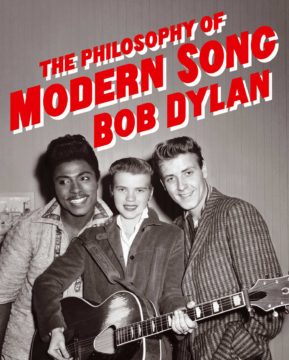
Bob Dylan On The Songs That Captivate And Define Us

Bob Dylan at the NYT:

This is a song that does no favors for anyone, and casts doubt on everything.

In this song, people are trying to slap you around, slap you in the face, vilify you. They’re rude and they slam you down, take cheap shots. They don’t like you because you pull out all the stops and go for broke. You put your heart and soul into everything and shoot the works, because you got energy and strength and purpose. Because you’re so inspired they put the whammy on, they’re allergic to you, and they have hard feelings. Just your very presence repels them. They give you frosty looks and they’ve had enough of you, and there’s a million others just like you, multiplying every day.

You’re in an exclusive club, and you’re advertising yourself. You’re blabbing about your age group, of which you’re a high-ranking member. You can’t conceal your conceit, and you’re snobbish and snooty about it.

more here.

Coleridge, Shelley And The Roots Of Communal Living

Fiona Sampson at The Guardian:

In June 1794, Samuel Taylor Coleridge visited Oxford, and was introduced to a student poet, Robert Southey. A restless if brilliant Cambridge undergraduate, Coleridge was passing through on a summer walking tour to Wales, then in fashion for its rugged good looks. After a brief stay in Oxford, he pressed on to Snowdonia, returning through the Cambrian mountains. He turned out to be no great evoker of the picturesque: “Gloucester is a nothing-to-be-said-about town. The women have almost all of them sharp noses.”

But this hardly mattered, because his trip had become instead a chance to proselytise for a scheme the new friends had dreamed up. In a Montgomeryshire pub, for example, Coleridge claimed that “two great huge fellows of butcher-like appearance danced about the room [shouting] ‘God save the King! And may he be the last!” Their republican outburst was a response to Coleridge regaling the pub with his idea for a radical community in which everything would be held in common, partly inspired by William Godwin’s recent Enquiry Concerning Political Justice.

more here.

Saturday Poem

Fugitive Beauty

The term “fugitive beauty” came
to me in a letter. A friend’s wife
had used it in conversation. My friend
is a painter who studied in Paris.
I sought his opinion on poetry.

Fugitive beauty, evanescent, fleeting,
as if it implied a criminality
I did not understand.
Did all art start that way —
alone, furtive, so coiled
in its incubation that it feared
possible success or failure?

Fugitive, running away,
not standing with the norm, the herd,
not strong enough
to be judged?

Or did it mean beauty as Keats meant it?
“Truth is beauty, beauty truth” —
a raw truth, or a new dimension of beauty,
a new adjective
to describe eagles soaring.
no parameters,
like prisoners breaking out.

Out there by itself,
not great, not mediocre,
but flying in its own space
against all normalcy, blasting off
to its own truthfulness,
its own freedom.

by George De Gregorio
from
Rutherford Red Wheelbarrow Poetry Anthology, 2008