
Category: Recommended Reading
Madonna’s New Face Is a Brilliant Provocation
Jennifer Weiner in The New York Times:
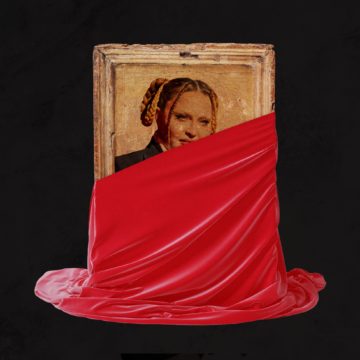 With blond braids looped over her ears, dressed in a long black skirt and black jacket accessorized with a riding crop, one of the best-selling female recording artists of all time stepped into the spotlight at the 65th annual Grammy Awards Sunday night. Madonna was there to introduce Sam Smith and Kim Petras, a nonbinary performer and a trans woman. She began by referring to her four decades in the music industry, and praised the rebels “forging a new path and taking the heat for all of it.” Was anyone listening? Social media’s loudest roars weren’t about her speech, her longtime L.G.B.T.Q. advocacy or her upcoming world tour. They were about Madonna’s preternaturally smooth and extravagantly sculpted face.
All of Madonna’s features looked exaggerated, pushed and polished to an extreme. There was her forehead, smooth and gleaming as a porcelain bowl. Her eyebrows, bleached and plucked to near-invisibility. Her cheekbones, with deep hollows beneath them. The total effect was familiar, but more than slightly off. People noticed. “Madonna confuses fans over new face,” wrote The New York Post. People posted her picture side by side with that of Jigsaw from “Saw,” or Janice from “The Muppet Show,” and made jokes about “Desperately Seeking Surgeon,” while extremely online plastic surgeons hastened to guess about exactly what procedures she had undergone.
Beyond the question of what she’d had done, however, lay the more interesting question of why she had done it. Did Madonna get sucked so deep into the vortex of beauty culture that she came out the other side? Had the pressure to appear younger somehow made her think she ought to look like some kind of excessively contoured baby?
More here.
Reviving the Black Radical Tradition
Manisha Sinha in Boston Review:
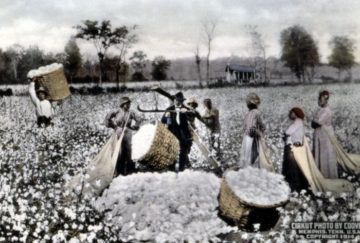 Walter Johnson is upset at the state of the historiography of slavery and rightly challenges uncritical talk of “dehumanization.” In its most extreme iteration, a few have even likened enslavement to the domestication of animals. This logic would carry us all the way back to Aristotle, who described slaves as talking tools. Pro-slavery ideologues were fond of this idea, even though southern slaveholders exploited the “human capacities” of enslaved people—to labor, reproduce, and, in Johnson’s more Genovesean formulation, “to bear witness, to provide satisfaction, to provide a living, human register of slaveholders’ power.”
To advance this critique, Johnson appropriates Cedric Robinson’s thesis of racial capitalism. But he does not fully engage the antithesis of that social arrangement: what Robinson called the black radical tradition and W. E. B. Du Bois “the role black folk played” in reconstructing democracy. Radical black scholars and activists—from Robinson, Du Bois, and C. L. R. James to Claudia Jones, Ida B. Wells, Sterling Stuckey, and Vincent Harding—wrote histories not just of black oppression but also of resistance, a term that many historians of slavery and the African American experience now consider passé. Indeed, Johnson does not use the word at all. It might have an old-fashioned Marxist ring to it, but it has proven fruitful and capacious in the hands of such contemporary scholars of black politics and art as Eric Foner, Nell Painter, Steven Hahn, and Robin D. G. Kelley. These writers are heirs to a tradition that stretches back, in my reckoning, to African American abolitionists: Phillis Wheatley, Sojourner Truth, David Walker, Henry Highland Garnet, Frederick Douglass, Frances Harper, and Martin Delany. The richness of this lineage is missing from Johnson’s account even though, following Kelley, he acknowledges its contemporary activist formulation in the Movement for Black Lives’ broad-ranging manifesto, “A Vision for Black Lives.”
More here. (Note: Throughout February, at least one post will be dedicated to Black History Month. The theme for 2023 is Black Resistance. Please send us anything you think is relevant for inclusion)
Thursday Poem
Yuri
When you held him, how heavy was his head cradled in your lap? How long did you carry that weight in your thighs? Did you close his eyes or keep them open, waiting for the final glimmer before ghost? What did it feel like to wash the red stain from your hands, water and blood dripping down the drain? Your hands, a thousand feathers. Your hands, permanently curved around the back of his neck. Your hands, scrubbed clean. Your hands, facing upward, longing for rain.
by Tiana Nobile
from Split This Rock
Author’s note:
Yuri Kochiyama was an Asian American activist and held Malcolm X’s head in her lap as he died. Her life and story deserve more attention, especially when solidarity between Black and Asian movement spaces remains often unacknowledged. I wrote this poem to honor Yuri, her grief, courage, and legacy
Wednesday, February 8, 2023
Józef Czapski: Facing the Void
Patti Smith Remembers Tom Verlaine
Patti Smith at The New Yorker:
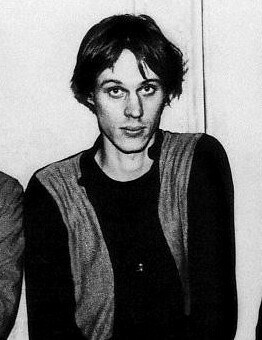 He awoke to the sound of water dripping into a rusted sink. The streets below were bathed in medieval moonlight, reverberating silence. He lay there grappling with the terror of beauty, as the night unfolded like a Chinese screen. He lay shuddering, riveted by flickering movements of aliens and angels as the words and melodies of “Marquee Moon” were formed, drop by drop, note by note, from a state of calm yet sinister excitement. He was Tom Verlaine, and that was his process: exquisite torment.
Born Thomas Joseph Miller, raised in Wilmington, Delaware, he left his parental home and shed his name, a discarded skin curled in the corner of a modest garage among stacks of used air-conditioners that required his father’s constant professional attention. There were hockey sticks and a bicycle and piles of Tom’s old newspapers strewn in the back, covered with ghostly outlines of distorted objects; he would run over tin cans until they were flattened, barely recognizable, and then spray them with gold, his two-dimensional sculptures, each representing a rapturous musical phrase.
more here.
A Conversation With Maggie Millner
Maya Binyam and Maggie Millner at The Paris Review:
 Three is a more interesting number than two. There’s a romance to the love triangle. There’s an inherent asymmetry, a more volatile set of relationships. Our desires are most manifest when we’re being pulled in two directions, when there are disparate, orthogonal, or even oppositional forces inside us. Those are the moments when complex self-knowledge happens. The times when you have to prioritize multiple, competing selves lead to personal transformation, I think.
I was thinking of Aristophanes’ idea about the source of romantic love: that people were originally conjoined and then split in half, so we’re doomed to wander the earth until we find our missing counterpart, at which point we become complete. His myth actually makes a provision for gay couples, but it unfolds only within a strictly binary gender system, and only within the premise that there’s a single lasting partner for each of us. If you depart from the idea that the couple is the default, preordained arrangement, suddenly the constructed dimensions of relational structures start to open up.
more here.
Wednesday Poem
To My Heart on Sunday
Thank you, my heart:
you don’t dawdle, you keep going
with no flattery or reward,
just from inborn diligence.
You get seventy credits a minute.
Each of your systoles
shoves a little boat
to open sea
to sail around the world.
Thank you, my heart:
time after time
you pluck me, separate even in sleep,
out of the whole.
You make sure I don’t dream my dreams
up to the final flight,
no wings required.
Thank you, my heart:
I woke up again
and even though it’s Sunday,
the day of rest,
the usual preholiday rush
continues underneath my ribs.
by Wstlawa Szymborska
from Poems new and Collected
translation:Stanislaw Baranczak
Harcourt, Inc. 1996
The Defiance of Salman Rushdie
David Remnick in The New Yorker:
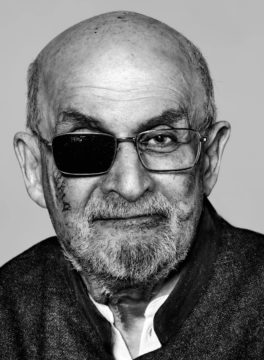 When Salman Rushdie turned seventy-five, last summer, he had every reason to believe that he had outlasted the threat of assassination. A long time ago, on Valentine’s Day, 1989, Iran’s Supreme Leader, Ayatollah Ruhollah Khomeini, declared Rushdie’s novel “The Satanic Verses” blasphemous and issued a fatwa ordering the execution of its author and “all those involved in its publication.” Rushdie, a resident of London, spent the next decade in a fugitive existence, under constant police protection. But after settling in New York, in 2000, he lived freely, insistently unguarded. He refused to be terrorized.
There were times, though, when the lingering threat made itself apparent, and not merely on the lunatic reaches of the Internet.
More here.
Turkey–Syria earthquake: what scientists know
Miryam Naddaf in Nature:
 A magnitude-7.8 earthquake hit southeastern Turkey and parts of Syria in the early hours of the morning of 6 February. At least 5,000 people are known to have lost their lives, with thousands more injured. The quake was followed by a magnitude-7.5 event some 9 hours later, as well as more than 200 aftershocks.
The earthquake and its aftershocks have flattened buildings and sent rescuers digging through concrete debris to find survivors, with the death toll expected to increase further. Nature spoke to four researchers about the seismic activity in the region and what the next few days will bring.
More here.
Imran Khan’s Double Game
Isaac Chotiner in The New Yorker:
 Thirty years ago, Imran Khan led the Pakistani national team to victory at the Cricket World Cup, cementing his place as one of the greatest athletes in the history of the sport, and as a hero in his country. He retired at the age of thirty-nine. Four years later, in 1996, he founded a political party called Pakistan Tehreek-e-Insaf (P.T.I.), and he began speaking out more on political and cultural issues. In 2013, his party started winning significant power, thanks largely to Khan’s popularity. Then, in 2018, in an election marred by polling irregularities, and with the support of Pakistan’s military, which wields de-facto control of the country, Khan was elected—or “selected,” as his opponents say—Prime Minister.
It was the culmination of a remarkable rise, but one fraught with irony: Khan had been an outspoken opponent of the American war on terror, and Pakistan’s two-faced role in fighting it, while at the same time accepting the help of Pakistan’s military, America’s partner in that war. (Pakistan’s military also helped bring the Taliban to power in Afghanistan, in the nineteen-nineties, and has nurtured it to varying degrees ever since.) Khan leads a party that is increasingly socially conservative, but he is famous internationally for what some have called his “playboy life style”: multiple marriages, claims of children out of wedlock. (The term “playboy life style” itself has a euphemistic feel, given Khan’s long history of misogynistic remarks, such as blaming sexual assault on what women wear.) Khan has also consistently made broadly sympathetic comments about the Taliban. (In 2012, for a Profile in The New Yorker, Khan told Steve Coll, “I never thought the Taliban was a threat to Pakistan”; by that time, various factions of the Taliban and their allies had murdered more than forty thousand Pakistanis.)
More here.
Can AI curate art better than a human?
10 rules of philosophy to live by
Julian Baggini in The Guardian:
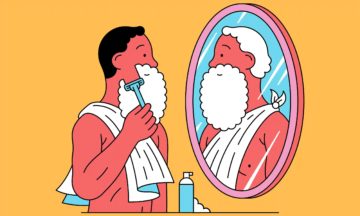 If we don’t know how to distinguish bad thinking from good, we can end up believing what we shouldn’t, and behaving in ways that are harmful to ourselves, to others, and to the planet.
Philosophers are, of course, the archetypal expert thinkers. Their discipline is often portrayed as a kind of formal method that lists fallacies to be avoided and distinguishes between deductive and inductive reasoning, invalid and sound arguments. These things have their place. But philosophy cannot be reduced to mere technique. Thinking well also requires adopting the right attitudes and being prepared to nurture effective habits. Without these “intellectual virtues” even the cleverest end up merely playing theoretical games.
Throughout history wise men and women have applied themselves to these problems in the service of their own development and that of humankind. Rather than start from scratch, why not draw on thousands of years of experience, and millions of hours of reflection and practice? Here is what some of the greatest philosophers in history can tell us about how to think – and live – well.
More here.
Black Resistance to Segregation in the Nineteenth Century
Jessica Parr in Black Perspectives:
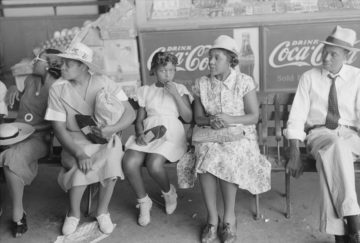 In 1852, the Third Avenue Railroad Company was founded. It ran between City Hall and 62nd Street in Manhattan. Its horse-drawn streetcars quickly became the primary mode of transportation in the city. A small number of the cars carried placards indicating that they accepted African American passengers. Additional cars occasionally allowed Black passengers at the discretion of the operator, and with the approval of the white passengers.
As historian Elizabeth Stordeur Pryor’s work emphasizes, freedom of movement was something that white Americans could take for granted. Mobility, which included equal access to transportation, was therefore a major area of focus for early Black activists. Some of the activism in nineteenth-century Black organizations revolved around the creation of networks to guard against the kidnapping of free African Americans into slavery. Black kidnapping victims’ lack of legal rights made it very difficult for them to prove their right to freedom. For example, it took Solomon Northup’s supporters twelve years to locate him and free him following his kidnapping and subsequent enslavement. This legitimate fear was one source of limitation on mobility. Another involved access to transportation or legal documentation that proved African Americans’ right to move around the country—or even across the globe—without restriction. As a result, Black civil rights organizations often initiated legal challenges to segregationist laws and company policies on street cars, trains, and ships. Successful legal challenges were then used as models in other cases throughout the country.
More here. (Note: Throughout February, at least one post will be dedicated to Black History Month. The theme for 2023 is Black Resistance. Please send us anything you think is relevant for inclusion)
Tuesday, February 7, 2023
Obesity in the age of Ozempic
Julia Belluz in Vox:
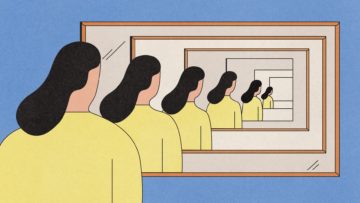 The new class of obesity drugs — referred to as “GLP-1-based,” since they contain synthetic versions of the human hormone glucagon-like peptide-1 — are considered the most powerful ever marketed for weight loss. Since the US Food and Drug Administration approved Wegovy for patients with obesity in 2021, buzz on social media and in Hollywood’s gossip mills has erupted, helping drive a surge in popularity that’s contributed to ongoing supply shortages. While celebrities and billionaires such as Elon Musk and Michael Rubin praise the weight loss effects of these drugs, regular patients, including those with Type 2 diabetes, struggle with access, raising questions about who will really benefit from treatment. But there’s another tension that’s emerged in the GLP-1 story: The medicines have become a lightning rod in an obesity conversation that is increasingly binary — swinging between fat acceptance and fatphobia. “It feels like you have to be like, ‘I love being fat, this is my fat body,’ or, ‘Fat people are evil,’” Juneja told me.
While many clinicians and researchers hail GLP-1-based therapy as a “breakthrough,” and one deemed safe and effective by FDA, critics question its safety and usefulness. They argue the drugs unnecessarily medicalize obesity and dispute that it’s an illness in need of treatment at all. They also say the medicines perpetuate a dangerous diet culture that idealizes thinness and weight loss at all costs.
More here.
Fighting for Freedom & Slavery in Antebellum Baltimore
(Note: Throughout February, at least one post will be dedicated to Black History Month. The theme for 2023 is Black Resistance. Please send us anything you think is relevant for inclusion)
Tuesday Poem
Man in Space
All you have to do is listen to the way a man
sometimes talks to his wife at a table of people
and notice how intent he is on making his point
even though her lower lip is beginning to quiver,
and you will know why the women in science
fiction movies who inhabit a planet of their own
are not pictured making a salad or reading a magazine
when the men from earth arrive in their rocket,
why they are always standing in a semicircle
with their arms folded, their bare legs set apart,
their breast protected by hard metal disks.
by Billy Collins
from The Art of Drowning
University of Pittsburg Press, 1995
Atlas Gets a Grip | Boston Dynamics
How Flowers Gave Rise To Life On Earth
Maria Popova at The Marginalian:
 Two hundred million years ago, long before we walked the Earth, it was a world of cold-blooded creatures and dull color — a kind of terrestrial sea of brown and green. There were plants, but their reproduction was a tenuous game of chance — they released their pollen into the wind, into the water, against the staggering improbability that it might reach another member of their species. No algorithm, no swipe — just chance.
But then, in the Cretaceous period, flowers appeared and carpeted the world with astonishing rapidity — because, in some poetic sense, they invented love.
Once there were flowers, there were fruit — that transcendent alchemy of sunlight into sugar.
more here.
A Spy In Your Pocket
Michael Burleigh at Literary Review:
 Some of NSO’s human targets had already been beaten or tortured in, for example, Morocco (for oppositional activity or revealing property deals involving the royal family), where five thousand phones were invaded. In Mexico, where over 150 journalists (including those investigating drug cartels) have been murdered by both cartels and the police since 2000, fifteen thousand phone numbers were on NSO’s list. Among NSO’s targets in Mexico, alongside lawyers and journalists, were the driver, the cardiologist and the wife of the politician Andrés Manuel López Obrador (who was elected president in 2018), along with three of his children.
The intrepid authors needed to persuade individuals, who were often being harassed and persecuted, to allow experts to go into their phones in search of evidence of NSO activity. Once the telltale signs had been identified, and with the malware being traced back to suspiciously identical servers, Forbidden Stories shared its findings with the Washington Post, Le Monde, Die Zeit, The Guardian, Süddeutsche Zeitung and twelve other media outlets.
more here.