
Next Year or Someday
I’ll see you at the Farmer’s Market
moving slowly through the crowd – there will
be a crowd then among the stalls, shoppers
touching tomatoes glowing earth-blood colors,
asking unmasked farmers about their climate-year.
On a festive day I’ll join you to watch
the Miwuk dancers stomp and spin, fringes
moving with the drums. Back in the time of masks,
we traded Columbus for Indigenous Peoples
Day. We brought Dia de los Muertos to the Market,
singers cloaking their fado-mariachi.
Back then, I wondered if it was infringement,
being outside our pod under sky
with the dancers chanting their songs, a flute
exhaling, everyone stirring the air to particulate
eddies of grief and joy. Beauty, love, life
always at risk. Isn’t that what grounds the ancient
songs? Next year or someday we’ll gather again
to celebrate what we’ve lived, lost, and found.
by Taylor Graham
from Poets Online
 California’s population growth was one of defining trends of 20th-century America. From 1900 to 1950 the population increased 500%, going from two million to ten million. Then things really exploded, and by the year 2000 the state’s population had climbed to 34 million, making California the most populous state in America. People have been lured west for a variety of reasons, from the gold rush to Hollywood dreams, but beyond riches and fame there has been also the promise of the sunny California lifestyle, one captured by LIFE staff photographer
  Loneliness can be difficult to study empirically because it is entirely subjective. Social isolation, a related condition, is different — it’s an objective measure of how few relationships a person has. The experience of loneliness has to be self-reported, although researchers have developed tools such as the
  Someone asks: why is “Jap” a slur? It’s the natural shortening of “Japanese person”, just as “Brit” is the natural shortening of “British person”. Nobody says “Brit” is a slur. Why should “Jap” be?
 After years of debates and discussions, nations have agreed on a High Seas Treaty to protect marine biodiversity and provide oversight of international waters. It is being lauded by researchers as an important step for conservation that encourages international research collaboration without hindering science.
 In May 2014, Greg Lukianoff invited me to lunch to talk about something he was seeing on college campuses that disturbed him. Greg is the president of FIRE (the
  UNTIL THE NINETEENTH CENTURY
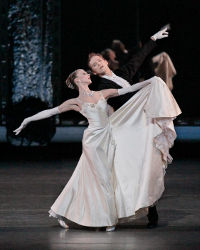 The map of Balanchine’s life once he left Russia in 1924 and until he finally settled into the New York City Ballet in 1948 may read as a kind of wandering, but his life as an artist was made of circles: the revolving of the repertory, the return to old ballets, the rethinking and recalibration of steps and phrases. To the dismay of his audience, for instance, Balanchine pared back the iconic
  One afternoon a few weeks ago, Alicea Hotchkiss’s 14-year-old son, Eli, came home from his high school in Tampa with a question about something a classmate had said to him. He’d heard the student use the word “gay” as an insult, so Eli responded the way he always does when this happens. “Hey,” Eli said, “my dad’s gay.” But this time, Eli told his mom, the other kid offered a startling rebuke: You’re not allowed to say that at school.
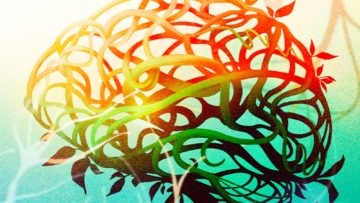 I was never into house plants until I bought one on a whim—a prayer plant, it was called, a lush, leafy thing with painterly green spots and ribs of bright red veins. The night I brought it home I heard a rustling in my room. Had something scurried? A mouse? Three jumpy nights passed before I realized what was happening: The plant was moving. During the day, its leaves would splay flat, sunbathing, but at night they’d clamber over one another to stand at attention, their stems steadily rising as the leaves turned vertical, like hands in prayer.
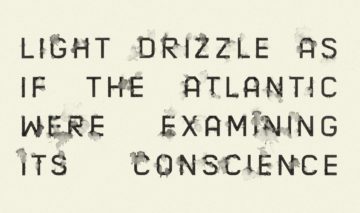 The Polish poet Adam Zagajewski’s great poem “To Go to Lvov” has a special importance for many young poets in different languages. That poem weaves the historical and the personal, the rhythms of cataclysm and of ordinary life, loss and persistence, all embodied in Zagajewski’s native city. “To Go to Lvov” has provided a model — intensely local, adamantly not nationalistic — for poems rooted in Philadelphia, Buenos Aires and Lahore.
 Human behavior is often paradoxical. We show humility to prove we’re better than other people, we bravely defy social norms so that people will praise us, and we donate to charity anonymously to get credit for not caring about getting credit. Here, I argue that these and other social paradoxes have a common thread: they are all attempts to signal a trait while concealing the fact that one is signaling the trait. Such self-negating signals emerge from the interaction of two cognitive abilities: 1) cue-based inference, and 2) recursive mentalizing. If agents can model each other’s mental states, including their intentions to signal positive traits, then intentional signals of positive traits can, themselves, become cues of negative traits. The result is that status-seeking and virtue-signaling are forced to occur covertly, without becoming common knowledge among signalers or recipients. Social paradoxes also play a crucial role in enabling intergroup dominance by inhibiting common knowledge of the group’s dominance-seeking tactics, which would otherwise disrupt coordination by eliciting moral disapproval. The analysis of social paradoxes can explain a variety of puzzling aspects of human social life, including the cultural evolution of status symbols, the function of sacred values, and the nature of political belief systems.
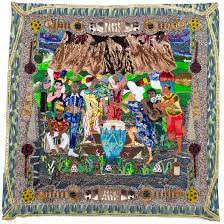 The large masterpieces in the upper two rooms mushroom into psychological and spatial multitudes. Constant is working at the scale of the Mexican muralists while echoing something of Chris Ofili’s early dazzling dotted paintings with elephant dung attached. You look at Constant’s work all at once and also millimeter by millimeter, bead by bead. The maniacal density of visual information is transporting.
 As a scholar, I decided to bring my devotion to BTS to my research. Because of my growing fascination with this segment of BTS fandom and their love for the group, I interviewed 25 Gen-X women of diverse backgrounds who currently reside in the United States. Older women face enormous stigma for loving a “boy band,” and the seven Korean men of BTS are wholly different from the men many of us were taught to idealize. Women my age are rarely given the space to express desire, let alone lust, and I wanted to understand the contours and contexts of their experience.