
Ashley Gardini at JSTOR Daily:
 This month marks seven years since the unexpected passing of the British-Iraqi architect Zaha Hadid, at what was undoubtedly the height of her historic career. Her influence on international architecture can’t be overstated. She was part of a generation of architects who both redefined and invented the forms that would characterize contemporary design. And as an Arab woman garnering international fame, she challenged “who” an architect could be.
Hadid was born in Baghdad, Iraq, in 1950. She grew up in a cosmopolitan household that was engaged in both politics and the arts. She realized her interest in architecture at an early age and, later in life, connected it to childhood visits to Sumerian cities in the south of Iraq. In the 1970s, Hadid studied mathematics at the American University in Beirut, Lebanon, before moving to London to study architecture at the Architectural Association School of Architecture. There, her work was shaped by her interest in Russian avant-garde movements.
more here.
 Johnson, who died in 2017, was a National Book Award winner, two-time Pulitzer finalist, and the recipient of the Library of Congress Prize for American Fiction. George Saunders called him “Our most poetic American short-story writer since Hemingway.” It’s therefore curious that, despite wide recognition within the world of letters, Johnson’s renown hasn’t crossed into household lexicon in the manner of some recent greats (Egan, Whitehead, Franzen).
 The U.S. is a powerhouse in technology, so it’s no surprise that the biggest success in the medical field has been technology based. Medicine in the U.S. is a powerful engine of creation, with more clinical trials and more medical start-ups than any other country. If you need a treatment for a rare disease, or heart transplant surgery, or cancer immunotherapy, the U.S. is the best place to be—it is the center of cutting-edge technologies and procedures. But the trend towards faster, better and cheaper that characterizes the evolution of technology has not translated to health care, which each year seems to get more cumbersome, expensive and, especially considering the recent fall in life expectancy during the pandemic, worse in terms of outcomes.
 There’s a moment deep in the Marquis de Sade’s novel “120 Days of Sodom” when a libertine laments the numbness of having committed every possible debauchery. “How many times, by God, have I not longed to be able to assail the sun, snatch it out of the universe, make a general darkness or use that star to burn the world!” The most destructive binge has limits, he realizes. Just knowing that will dampen the best sadistic orgy.
 In Hound of the Baskervilles (1902) by Sir Arthur Conan Doyle, Sherlock Holmes examines a note written on a snippet from The Times. He concludes its author was an « educated man who wished to pose as an uneducated one, and his effort to conceal his own writing suggests that that writing might be known. » Dr. Mortimer calls it guesswork, but Holmes disagrees: « It is the scientific use of the imagination. »
 Researchers have made eggs from the cells of male mice — and showed that, once fertilized and implanted into female mice, the eggs can develop into seemingly healthy, fertile offspring.
 I would like to focus on a special way of predicting the future, and to invite you to take a trip down paths that are rarely trodden by humanists. As we are living at a time of unusual uncertainty and anxiety about what will happen next, this topic is on many people’s minds, prompting us to ask: “What is our future going to be like?” And also: “Can we foresee it to any degree at all?” When I say “our future” I’m not thinking of the next few years, but rather about the gradual processes whose effects will be visible several centuries from now.
 She too was a link, though a precious one, the only living connection to the ghost I stalked. Katherine Mansfield. The romantic renegade writer, older by five years at her death at 34 in January 1923 than I was/am on this June day in 1975.
 California’s population growth was one of defining trends of 20th-century America. From 1900 to 1950 the population increased 500%, going from two million to ten million. Then things really exploded, and by the year 2000 the state’s population had climbed to 34 million, making California the most populous state in America. People have been lured west for a variety of reasons, from the gold rush to Hollywood dreams, but beyond riches and fame there has been also the promise of the sunny California lifestyle, one captured by LIFE staff photographer
 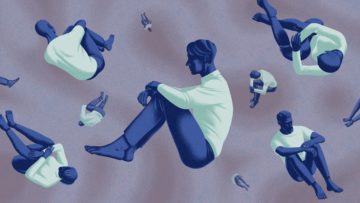 Loneliness can be difficult to study empirically because it is entirely subjective. Social isolation, a related condition, is different — it’s an objective measure of how few relationships a person has. The experience of loneliness has to be self-reported, although researchers have developed tools such as the
  Someone asks: why is “Jap” a slur? It’s the natural shortening of “Japanese person”, just as “Brit” is the natural shortening of “British person”. Nobody says “Brit” is a slur. Why should “Jap” be?
 After years of debates and discussions, nations have agreed on a High Seas Treaty to protect marine biodiversity and provide oversight of international waters. It is being lauded by researchers as an important step for conservation that encourages international research collaboration without hindering science.
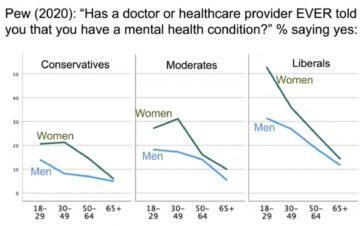 In May 2014, Greg Lukianoff invited me to lunch to talk about something he was seeing on college campuses that disturbed him. Greg is the president of FIRE (the