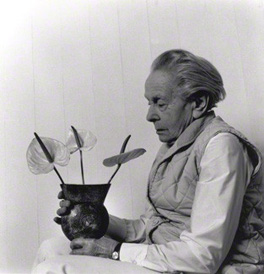
Jeff Weiss in the Los Angeles Times:
 At 53, Suga Free still looks exactly like Suga Free. Honoring his commandment to be fly for life, his hair remains long and luxurious. He’s draped in a custom-made tracksuit with his name emblazoned on the back. The right questions elicit stanzas of profane one-liners, flamboyant slang and coldblooded wisdom. (“Every time I walk out of my house and turn that key in my car, that means I’m finna spend some money,” he laughs. “I’m trying to squeeze a quarter till the eagle screams.”) Ask the wrong question and you don’t want the answer.
The successes of the last quarter-century adorn his sanctuary. Gold and platinum plaques honor his collaborations with DJ Quik, Snoop Dogg and Lil Jon. A gilded disc celebrates “If You Stay Ready,” his pimpadelic ode to the art of preparation, which reached the top of Billboard’s Bubbling Under the Hot 100 list in May 1997.
More here.
 It’s coming. Winds are weakening along the equatorial Pacific Ocean. Heat is building beneath the ocean surface. By July,
  It might feel pretty obvious to you that you’re weak-willed. You feel it, after all – every time you find yourself hitting the snooze button on the alarm when you know you ought to get out of bed; every time you scroll through cat videos on Instagram when you know you ought to be writing; every time you help yourself to a third slice of cake when you know you ought to order a kale smoothie instead. When you find yourself in these situations, there’s often a bit of shame, a bit of guilt, a bit of frustration. In many cases, the subsequent conviction that we’re weak-willed shapes our entire approach to motivating ourselves.
 Patterson, a poet, essayist, and translator, has a good ear for the sonic qualities of the Recherche’s prose. This is particularly notable in the opening of the volume. Finding Time Again begins with one of Proust’s analogies between nature and artifice, couched in a meandering, multiclausal sentence that is, nonetheless, beautifully balanced in its Byzantine way, culminating in one of Proust’s classic, grammatical course corrections in which, after drifting away from the initial subject in a metaphorizing reverie, the sentence begins all over again without ending, usually after the nominal concession of a semicolon: “Toute la journée,” it begins, “all day long” as Patterson renders it, before describing the “slightly too bucolic residence” where the narrator finds himself,
 S
S In Jo Walton’s 2019 fantasy novel
 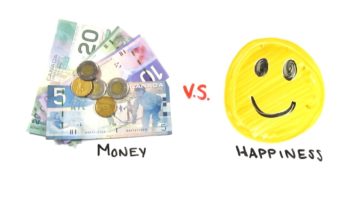 Can money buy happiness? Two authors of this article have published contradictory claims about the relationship between emotional well-being and income. We later agreed that both studies produced valid results and that it was our responsibility to search for an interpretation that explains both findings. We engaged in an adversarial collaboration and asked Barbara Mellers to be the facilitator. This article reports the outcome of our work.
 The year 2023 is still young, and already there have been at least
 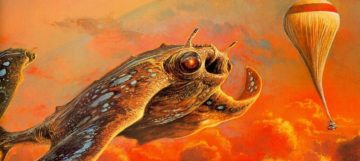 I first read Carl Sagan’s Contact and Cosmos in high school, when I was working at a bookstore that let us borrow any book we had at least two copies of on the shelves. I loved them then and was excited to revisit these books in the course of my research for The Possibility of Life. A scene from Cosmos had stayed with me—and confounded me—for almost twenty years, and I was ready to make new sense of it. But when I got to the place in the book where the scene should have been, the chapter just ended.
 For Rick Doblin, 2023 could be a landmark year: the year that the US government decides whether it will allow the
 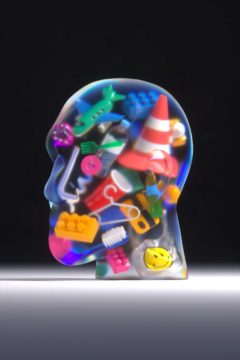 There is plastic in our bodies; it’s in our
  M
M