
J. W. Traphagan and John J. Kaag in The Conversation:
 A common complaint in America today is that politics and even society as a whole are broken. Critics point out endless lists of what should be fixed: the complexity of the tax code, or immigration reform, or the inefficiency of government.
But each dilemma usually comes down to polarized deadlock between two competing visions and everyone’s conviction that theirs is the right one. Perhaps this white-knuckled insistence on being right is the root cause of the societal fissure – why everything seems so irreparably wrong.
As religion and philosophy scholars, we would argue that our apparent national impasse points to a lack of “epistemic humility,” or intellectual humility – that is, an inability to acknowledge, empathize with and ultimately compromise with opinions and perspectives different from one’s own. In other words, Americans have stopped listening.
So why is intellectual humility in such scarce supply?
More here.
 Dazzling intricacies of brain structure are revealed every day, but one of the most obvious aspects of brain wiring eludes neuroscientists. The nervous system is cross-wired, so that the left side of the brain controls the right half of the body and vice versa. Every doctor relies upon this fact in performing neurological exams, but when I asked my doctor last week why this should be, all I got was a shrug. So I asked
  Ramped up, amped up, ratchet up, gin up, up the ante, double down, jump-start, be behind the curve, swim against the tide, go south, go belly up, level the playing field, open the floodgates, think outside the box, push the edge of the envelope, pull out all the stops, take the foot off the pedal, pump the brakes, grease the wheel, circle the wagons, charge full steam ahead, pass with flying colors, move the goal posts, pour gasoline on, add fuel to the fire, fly under the radar, add insult to injury, grow by leaps and bounds, only time will tell, go to hell in a handbasket, put the genie back in the bottle, throw the baby out with the bathwater, rearrange the deck chairs on the Titanic, have your cake and eat it too, a taste of one’s own medicine, stick to one’s guns, above one’s pay grade, punch above one’s weight, lick one’s wounds, pack a punch, roll with the punches, come apart at the seams, throw a wrench into, caught in the cross hairs, cross the Rubicon, tempt fate, go ballistic, on tenterhooks, hit the nail on the head…
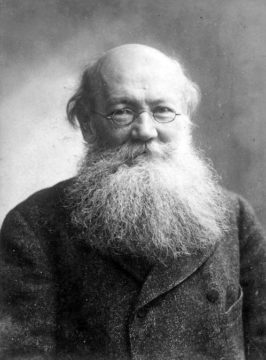 Greg Afinogenov in the LRB:
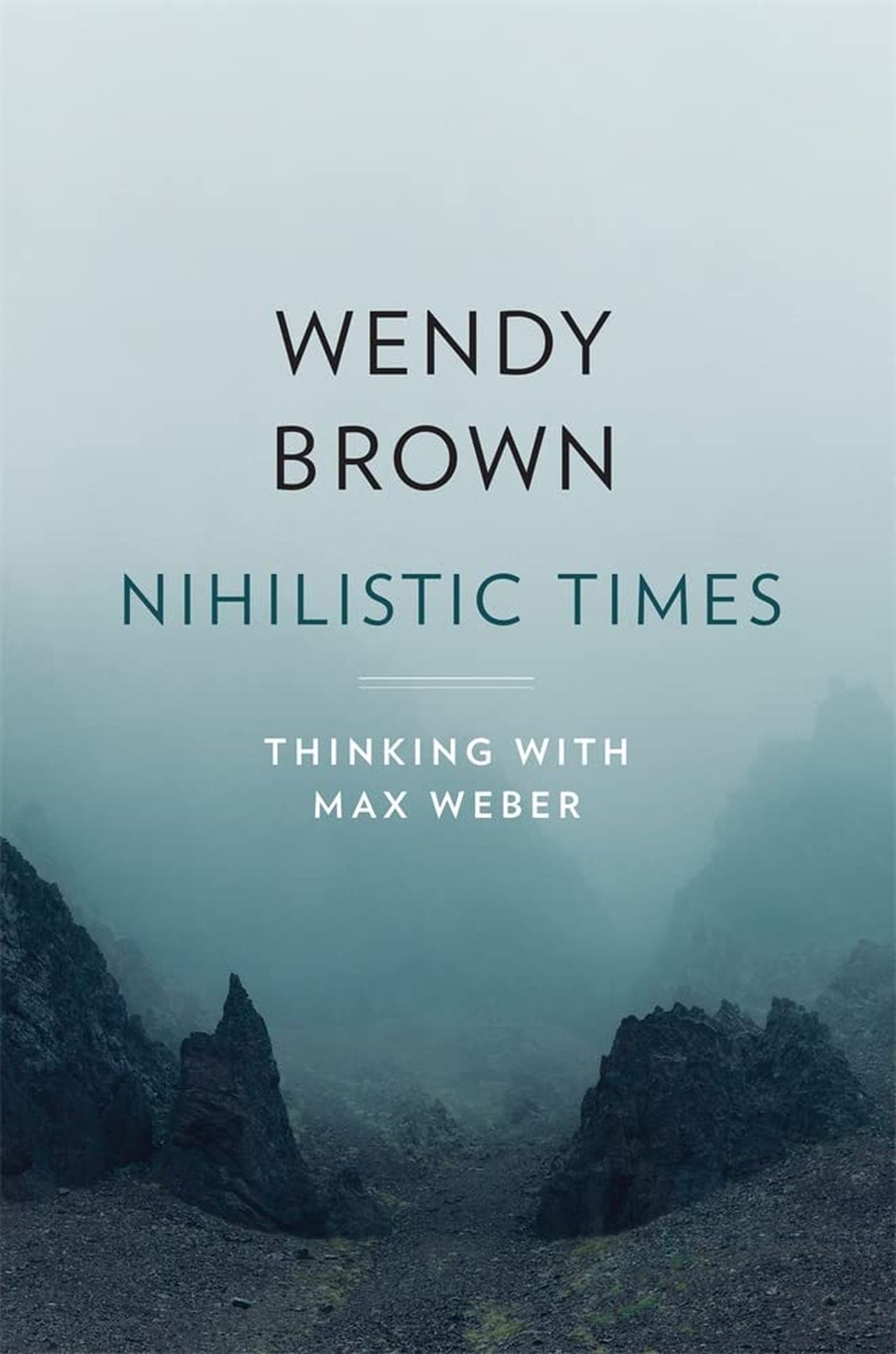 Kieran Setiya in the LA Review of Books:
 Jay Newman and Meyrick Chapman in Politico:
 Marco D’Eramo in Sidecar:
 Yoga depicts Carrère’s third major depressive crisis. His first followed the success of his fifth novel, The Moustache (1986) from which he recovered by writing a biography of Phillip K Dick. His breakthrough work came in 1993 when he was drawn to the case of Jean-Claude Romand, who had pretended he was a doctor at the World Health Organisation for eighteen years, and on the cusp of having his fraud exposed, murdered his entire family. Carrère had no idea when he followed the journalistic throng to Romand’s little French village just how many years he’d spend trying to narrativize the murders in the style of Capote’s In Cold Blood. But how to do it? He didn’t want his intrusive ‘I’ to appear on the page, drawing attention to itself. Not yet, anyway. The author should be everywhere present but nowhere visible, Flaubert, one of his role models, had proclaimed. After seven years of bashing his head against Capote, he gave up and sought closure by writing a conversational letter to himself about all he’d been through.
 “T
“T Though many gaps in the story remain, the emerging evidence suggests clothing really had two origins: first for biological needs, then cultural. Archaeologists who study the Paleolithic or Stone Age
  On December 1, 2021, I tweeted: «Earlier this year I argued that we are living in a golden age of popular criticism. To prove my point … here’s the tip of the iceberg: my list of 21 of the best essays, reviews, and criticism published in 2021.»
 Beginning as early as the 1970s, astronomers noticed something funny going on with the galaxies in our nearby patch of the Universe. There was the usual and expected Hubble flow, the general recession of galaxies driven by the overall expansion of the Universe. But there seemed to be some vague directionality on top of that, as if all of the galaxies near us were also heading toward the same focal point.
 For almost two decades, Peter Turchin has been involved, with many colleagues and co-authors, in an epochal project: to figure out, using quantifiable evidence, what are the forces that lead to the rise, and more importantly, to the decline of nations, political turbulence and decay, and revolutions. This has resulted in the creation of an enormous database (CrisisDB) covering multitude of nations and empires over centuries, and several volumes of Turchin’s writings (e.g.,