
Category: Recommended Reading
Bruce McCall (1935 – 2023) Retrofuturist And Illustrator
Pills, Politics, and Pence
Rafia Zakaria in The Baffler:
 IT WAS HIGH TIME for someone to throw Mike Pence a bone. It arrived on April 7, hurled all the way from Texas. On that day, Matthew Kacsmaryk, a U.S. District Court judge, issued a bizarre but consequential ruling that sought to halt the use of mifepristone, which is part of a two-drug regimen to induce a medical abortion. Kacsmaryk, a judge in northern Texas who was appointed by former president Donald Trump, took issue with the Food and Drug Administration’s approval of mifepristone twenty-three years ago. The U.S. Court of Appeals for the Fifth Circuit took on the case soon after, narrowing some of Kacsmaryk’s ruling but also questioning the FDA’s efforts in recent years to ensure easier access to the pill. They issued a preliminary ruling, with a full-case appeal to come.
Pence, who lives in a McMansion in a tony Indianapolis suburb, excitedly caught the bone from Texas in his teeth. The former vice president, who is trying to position himself as the great hope of evangelicals in the GOP presidential race, took to the airwaves prepped with all the talking points he had been dying to use. On CBS’s Face the Nation he declared that he wanted the abortion pill “off the market.” It was an A-plus performance, with Pence frowning and extrapolating on how problematic he found the FDA’s approval of the drug twenty-three years ago, as if it had been on his mind every day since. Finally, to make sure that he was also pinning blame on the Biden administration as evangelical enemy number one, he decried current policies that have permitted the drug to be obtained through the mail.
More here.
Sunday Poem
Woodstock
I came upon a child of God
He was walking along the road
And I asked him, where are you going
And this he told me…
I’m going on down to Yasgur’s farm
I’m gonna join in a rock ‘n’ roll band
I’m gonna camp out on the land
I’m gonna try and get my soul free
We are stardust
We are golden
And we’ve got to get ourselves
Back to the garden
Then can I walk beside you
I have come here to lose the smog
And I feel to be a cog in something turning
Well maybe it is just the time of year
Or maybe it’s the time of man
I don’t know who I am
But you know life is for learning
We are stardust
We are golden
And we’ve got to get ourselves
Back to the garden
By the time we got to Woodstock
We were half a million strong
And everywhere there was song and celebration
And I dreamed I saw the bombers
Riding shotgun in the sky
And they were turning into butterflies
Above our nation
We are stardust
Billion year old carbon
We are golden
Caught in the devil’s bargain
And we’ve got to get ourselves
Back to the garden
by Joni Mitchell
from Ladies of the Canyon, 1970
A Reading by Author and Activist: Ruchira Gupta
Saturday, May 6, 2023
B-SIDES: READING, RACE, AND “ROBERT’S RULES OF ORDER”
 Kent Puckett in Public Books:
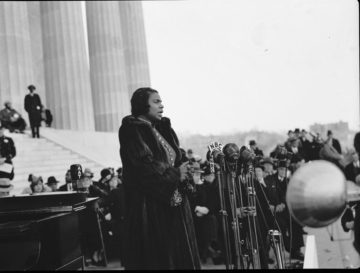
Does anyone read Robert’s Rules of Order? We often threaten to consult it, but it’s hard to imagine someone really reading any of the many versions of Henry Robert’s 1876 text. Even in Robert’s own early editions, the guidance on secondary, subsidiary, incidental, privileged, unclassified, and other motions was presented in a pointedly systematic form that invited not slow perusal but rather tactical, and sometimes supercilious, consultation. “If only you had looked at page 47 of Robert’s Rules,” we can hear someone saying, “you would have known that a Motion to Suppress the Question requires a two-thirds vote. You moron.”
Its talismanic power is such that an effective use of the book might not even require consultation. Sitting down at a committee table and placing an unopened, unread copy where others could see it is a power move all its own: an index of the paradoxically occult sway of ostensibly transparent procedure, a threat and a promise. Its potential as both an effective tool and a bespoke weapon has long been a part of the book’s appeal. Arthur T. David, in his 1937 Robert’s Rules Simplified, acknowledges that for some, Robert’s rules look like “a ‘bag of tricks’ with which a few members can run things to suit themselves.” In his Notes and Comments on Robert’s Rules, Jon Ericson acknowledges that, for many, “parliamentary procedure is that tricky, pedantic, officious, dull, boring, unfair system that tyrants use to suppress the rights of all us good folk.” “Meetings,” says Mary A. De Vries in The New Robert’s Rules of Order, “are one of the few things in life that are pursued relentlessly even though they provoke endless complaints of frustration, stress, wasted hours, and dissatisfaction with the outcome.” And Doris P. Zimmerman dedicates her Robert’s Rules in Plain English “to everyone who has served as a member or leader of a group, and who has, at one time or another, felt ignorant, ineffectual, helpless, frustrated, repressed, or just plain bored.”
More here.
The End of the Cold Peace
 Tim Sahay and Kate Mackenzie in Polycrisis:
Watch the Korean Peninsula. It is in South Korea that the New Cold War has most visibly upset the delicate balance between industry, security, and domestic politics.
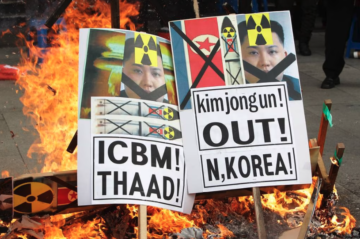
South Korea’s growth miracle has been based on deterrence and detente between China, its main trading partner; the United States, its ally and security guarantor; and North Korea, its neighbor with newly developed intercontinental ballistic missiles. The country has been on hair-trigger alert since last October, when North Korea stepped up its barrage of ballistic missile tests, including launching one over Japan. In a show of strength, South Korea launched its own ballistic missile, but the weapon malfunctioned, crashing in the coastal city of Gangneung, where the resulting fire raised panic of a North Korean attack.
Now that North Korea has demonstrated the ability to strike the US homeland, South Koreans worry that Washington might abandon them in a conflict to protect US cities instead. Today, 71 percent favor developing their own nuclear weapons. “New York for Berlin” was the central extended deterrence dilemma of the old cold war. The new question is: Would the Americans really trade “Seattle for Seoul?”
Last week, while the national security advisor Jake Sullivan was unrolling the “new Washington consensus” (the subject of our next dispatch), Presidents Biden and Yoon were holding security and trade negotiations in DC that resulted in a Washington Declaration. “Our mutual defense treaty is ironclad, and that includes our commitment to extended deterrence,” Biden said, referring to the treaty signed to end the Korean War seventy years ago. For his part, Yoon referred to the “unprecedented expansion and strengthening” of the US nuclear umbrella. The upshot was that South Korea agreed not to pursue its own nuclear weapons program in return for a greater decision-making role in US military planning should North Korea launch a nuclear attack.
More here.
Economists We’ll Be Talking About: Wassily Leontief
 Yakov Feygin in Building a Ruin:
My theory of how economics interacts with policy is a bit more complicated than some more popular accounts. Very good studies on the anthropology of economics as a profession and policy-making discipline. For example, Marion Fourcade, and Elizabeth Popp Berman’s work, have noted that economics’ political influence and professional formation are deeply embedded in particular differences in local political cultures. Thus, for example, I think that in the United States, lawyers tend to be very important transmitters of economic ideas into policy. American policymakers tend, themselves, to be lawyers, and the government itself has deep legal performativity, even in the bureaucracies.
Despite these longer structural patterns, in the past few decades, I think there has been a bit of technological disruption in how economics and economic ideas move into action. A few years ago, I coined the term “posting to policy pipeline” to describe how the econ blogosphere and Twitter have become key sites of idea making. Before the advent of these new forums, the top economic journals really dominated everything and painted the conventional wisdom as having some scientific validity. After the advent of social media, one could not only call Larry Summers an idiot to his face without being invited to an exclusive meeting but also explain to a large audience precisely why he was an idiot.
Like all technical changes, the emergence of the posting-to-policy pipeline had a strong social component.
More here.
The two-hundred-year search for botanical memory
Virginia Morell in Lapham’s Quarterly:
 A member of the pea family, M. pudica is a small plant with tiny leaflets paired along the length of each stem and pretty lavender-pink globular flowers. The leaves give it a fernlike, feminine look, although it is also armed with thorns to ward off attacks. It’s native to Central and South America but has spread throughout the tropics partly because of its popularity as a novel ornamental that exhibits a fascinating behavior: if you touch a single leaf, the plant will swiftly fold up all its leaves before your eyes. Only a soft touch is required to bring on this collapse; after a while, you can also watch as the wilted-appearing mimosa sets about righting itself and reopening its leaves. You may have discovered the mimosa’s animal-like trick in an arboretum or store where the plants are sometimes displayed or sold. The rapid response to being touched is another defensive tactic—it startles most insects, as it does naive humans.
M. pudica and its curious actions were known to Western science even before 1753, when Linnaeus officially named the species. Many leading scientists of the day, including Robert Hooke (the English natural philosopher best known for being the first to see and describe a cell via a microscope) and later the French naturalist Jean-Baptiste Lamarck studied the plant. Lamarck was particularly struck by how mimosas eventually no longer respond to being repeatedly touched.
More here.
Author Fatimah Asghar is the first winner of the Carol Shields Prize for Fiction
Tilda Wilson in NPR:
 Fatimah Asghar is the first recipient of the Carol Shields prize for fiction for their debut novel When We Were Sisters. The award was announced Thursday evening at Parnassus Books in Nashville, Tenn. They will receive $150,000 as well as a writing residency at Fogo Island Inn in Newfoundland and Labrador.
Asghar’s When We Were Sisters is a coming-of-age novel that follows three orphaned Muslim-American siblings left to raise one another in the aftermath of their parents’ death. The prize jury wrote that Asghar “weaves narrative threads as exacting and spare as luminous poems,” and their novel is “head-turning in its experimentations.” When We Were Sisters reflects some of Ashgar’s own experiences both as a queer South Asian Muslim and a person whose parents died when they were young. In October, they told NPR’s Scott Simon that being on the margins of society and vulnerable from such a young age was a window into “a certain kind of cruelty that I think most people don’t have a reference point for.”
Ashgar said that the stories they read about orphans while growing up never really rang true — that they’d always think “this doesn’t feel accurate.”
More here.
Natural Light by Julian Bell
John Banville at The Guardian:
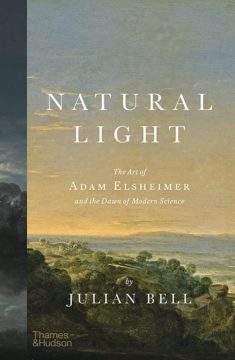 At the start of this marvellous, engrossing and illuminating study, Julian Bell poses a simple question, one that will recur throughout the book: “What is nature?” Easy to ask, yes, but not so easy to answer. The word “nature” itself comes, of course, from the Latin natura, which Bell translates as “having-been-born-ness”, and which he allies with “physics” from the Greek physis, “‘whatever grows’ or ‘whatever has a body’”. This version of nature he sets against the godly supernatural, and against the mind and consciousness.
By now we are on page two. However, we should not be daunted. Things will become simpler as we go on. Given the author’s Bloomsbury antecedents –he is the son of Quentin Bell, the art historian, nephew and biographer of Virginia Woolf – we might expect, we might dread, a precious style and an impregnable self-regard. Not a bit of it. Natural Light is as light and natural as its subject warrants, a “mystery journey” on which we will encounter wondrous sights and uncover troves of treasure. It’s even funny, in places.
more here.
Julian Bell: Delacroix and the Rise of Modern Art
A.I. Wrote the Book
Dwight Garner at the NY Times:
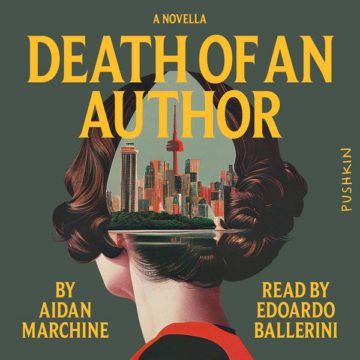 Now comes a new novella, “Death of an Author,” a murder mystery published under the pseudonym Aidan Marchine. It’s the work of the novelist and journalist Stephen Marche, who coaxed the story from three programs, ChatGPT, Sudowrite and Cohere, using a variety of prompts. The book’s language, he says, is 95 percent machine-generated, somewhat like the food at a Ruby Tuesday.
Well, somebody was going to do it. In truth, other hustlers out there on Amazon already have. But “Death of an Author” is arguably the first halfway readable A.I. novel, an early glimpse at what is vectoring toward readers. It has been presided over by a literate writer who has pushed the borg in twisty directions. He got it to spit out more than boilerplate, some of the time. If you squint, you can convince yourself you’re reading a real novel.
more here.
Saturday Poem
Seven in the Woods
Am I as old as I am?
Maybe not. Time is a mystery
that can tip us upside down.
Yesterday I was seven in the woods,
a bandage covering my blind eye,
in a bedroll Mother made me
so I could sleep out in the woods
far from people. A garter snake glided by
without noticing me. A chickadee
landed on my bare toe, so light
she wasn’t believable. The night
had been long and the treetops
thick with a trillion stars. Who
was I, half-blind on the forest floor
who was I at age seven? Sixty-eight
years later I can still inhabit that boy’s
body without thinking of the time between.
It is the burden of life to be many ages
without seeing the end of time.
by Jim Harrison
Friday, May 5, 2023
Snoop Dogg on AI risk: “Sh–, what the f—?”
Benj Edwards in Ars Technica:
 During his response, Snoop described how conversing with a large language model (such as ChatGPT or Bing Chat) reminds him of sci-fi movies he watched as a kid. Showing that he keeps up with current events, Snoop also referenced Geoffery Hinton, who resigned this week from Google so he could speak of the dangers of AI without conflicts of interest:
Well I got a motherf*cking AI right now that they did made for me. This n***** could talk to me. I’m like, man this thing can hold a real conversation? Like real for real? Like it’s blowing my mind because I watched movies on this as a kid years ago. When I see this sh*t I’m like what is going on? And I heard the dude, the old dude that created AI saying, “This is not safe, ’cause the AIs got their own minds, and these motherf*ckers gonna start doing their own sh*t. I’m like, are we in a f*cking movie right now, or what? The f*ck man? So do I need to invest in AI so I can have one with me? Or like, do y’all know? Sh*t, what the f*ck?” I’m lost, I don’t know.
More here.
Tragedy & farce in climate commentary
Ingo Venzke in the European Review of Books:
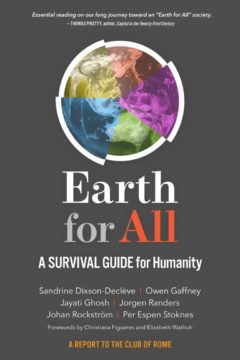 The phrase « it’s not too late », for me, brings an artificial smile. I stumble onto it as I walk into a bookstore and see the flashy Carbon Almanac (2022) promoted at the entrance, one of many such books to appear in the last, late year. It shouts from the cover: « It’s not too late. » The foreword was written by Seth Godin, a marketing guru out of the dot-com avantgarde. What will save us is « the hope that comes from realizing that it’s not too late. » The refrain is a staple of the genre. Another entry, a new report from the Club of Rome entitled Earth for All: A Survival Guide for Humanity, offers a kindred burst of optimism about the future against the backdrop of a bleak present. Greater planetary health and social well-being are within reach. The authors will « show you that this is indeed fully possible ». Meanwhile the heavy-weight United Nations Intergovernmental Panel on Climate Change (IPCC), released two punchy reports of its own in 2022. They hammered the message that countries’ pledges to cut emissions fall far below climate change targets, and that the impact of climate change is already devastating for many parts of humanity, the ecosystem, and for the biodiversity that now suffers a mass extinction.
Earth for All may have drowned in the sea of climate commentary. But it is worth reading, for what it is, and what it is not.
More here.
Can you guess the Beatles song from the drum part?
Sri Lanka debt deal shows creditors can set aside geopolitical rivalries for debt-distressed nations
Ram Manikkalingam in SCMP:
 The International Monetary Fund approved a US$3 billion loan to Sri Lanka a month ago as the first step in restructuring its debt. This is a significant victory for Sri Lanka’s President Ranil Wickremesinghe and could lead to a gradual stabilisation of the economy and the government’s turnaround from bankruptcy.
After the “staff-level agreement” signed with the IMF six months ago, Sri Lanka’s debt restructuring has finally been approved by the IMF board. In this restructuring, China played a major role. As Sri Lanka’s (and the world’s) largest sovereign creditor, China joined Western governments and India in providing the assurances that unlocked the financing.
But is China’s role in Sri Lanka’s debt restructuring a one-off or a signal that China’s position on sovereign debt has shifted – something that could lead to a global policy breakthrough in negotiating debt restructuring?
More here.
How Philosophy Got Lost
Fusion And The Holy Grail
Tristan Abbey at The New Atlantis:
 A little history never hurt anybody. We can start the clock in 1920. In February of that year, the journal Nature reported the results of an experiment conducted by a British scientist named Francis William Aston. A future Nobel laureate, Aston’s job at the famous Cavendish Laboratory was to estimate the masses of chemical elements. At the time, it was believed that a single helium atom comprised four hydrogen atoms, suggesting that the mass of a single hydrogen should be exactly one-fourth the mass of a helium. Aston determined this was not, in fact, the case. Hydrogen atoms were just a smidge heavier than they should have been. When four hydrogen atoms fused into a helium, where did the extra mass go?
Enter Arthur Eddington, a British scientist who served essentially (but not merely) as Albert Einstein’s chief popularizer. In August of that year, Eddington delivered a lecture in which he described how stars in outer space were “drawing on some vast reservoir of energy by means unknown to us.”
more here.