
From Time Magazine:
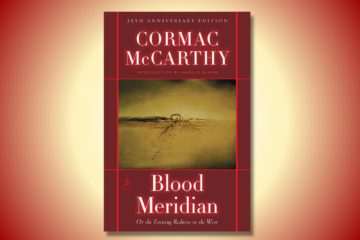 Cormac McCarthy, the Pulitzer Prize-winning author of often grisly, hypermasculine fiction died Tuesday at 89, in his Santa Fe, N.M. home. One of the most acclaimed—if reclusive—American writers of the last 50 years, McCarthy’s dark and devastating fiction centered on outsiders attempting to survive their often violent worlds.
…Here, the essential books to celebrate and understand McCarthy’s contributions to the literary canon.
Blood Meridian (1985)
Violence is the seeming lifeblood of Blood Meridian, McCarthy’s fifth novel, which is a macabre epic of the American West. Published in 1985, it centers on the harrowing experiences of a ruthless runaway known only as “the kid.” McCarthy’s protagonist comes of age as part of the Glanton gang, a group of outlaws who were notorious in the mid-19th century for murdering Indigenous peoples across Texas and Mexico. The result is a nightmarish fever dream of gang violence and robberies, scalp hunting and cold-blooded killings—one that disrupts any heroic or romantic fantasies of the frontier.
More here.
 Travelers to Unimaginable Lands is that rarity: true biblio-therapy. Lucid, mature, wise, with hardly a wasted word, it not only deepens our understanding of what transpires as we care for a loved one with Alzheimer’s, it also has the potential to be powerfully therapeutic, offering the kind of support and reorientation so essential to the millions of people struggling with the long, often agonizing leave-taking of loved ones stricken with the dreaded disease. The book is based on a profound insight: the concept of “dementia blindness,” which identifies a singular problem of caring for people with dementia disorders—one that has generally escaped notice but, once understood, may make a significant difference for many caregivers.
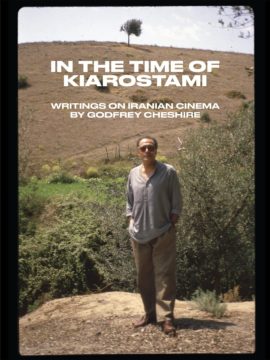 In theory, a fundamentalist religious dictatorship should not be a hospitable environment for an extraordinary artistic flowering whose treasures continue—four decades later—to please, confound, and reinvent themselves to audiences around the world. Yet this seems to be exactly the case with Iran’s cinematic output since 1979, when Ayatollah Ruhollah Khomeini and his followers consolidated power in the wake of the Shah’s departure. (The Shah was himself a tyrant, but of the kind who sought to project a modern and art-friendly image.) We are all familiar with artists, writers, and filmmakers circumventing official and de facto censors to produce subversive masterpieces. But the consistency of Iranian cinema’s march across the world stage over the last 30-plus years suggests that something more powerful than individual creativity is at play—rather, a kind of relentless cultural force inexorably punching through whatever obstacles an authoritarian government places in its way.
 After years of official pronouncements to the contrary, significant new evidence has emerged that strengthens the case that the SARS-CoV-2 virus accidentally escaped from the Wuhan Institute of Virology (WIV).
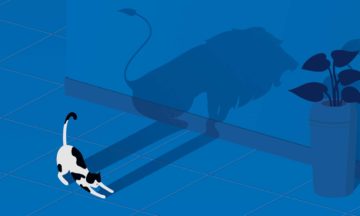 Few people would mistake a wolf for a dog. But if you saw the ancestor of the domestic cat in your backyard, your first thought would likely be “What a cool-looking housecat!” rather than “What’s an African wildcat doing in Manchester?” That’s how little they’ve changed, earning them the tag “barely” or “semi-domesticated”. There have been some minor anatomical shifts – domestic cats have longer intestines and smaller brains, for example – but very few genetic ones (and certainly many fewer than separate dogs from their wild ancestors). What about behaviour, then? Which of the traits we commonly associate with our furry friends are the result of domestication, and which do they share with their wild relatives?
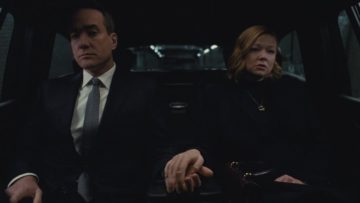 Did you watch the finale of “Succession” on HBO this week? If so, did the final shot of Tom and Shiv in their car make you think of “
 S
S 6
6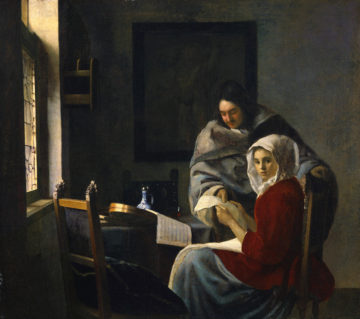

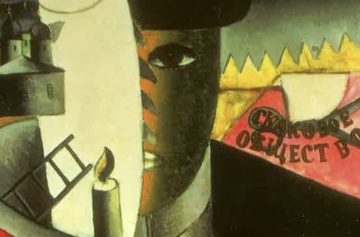 Bulgakov’s Moscow is my Moscow. Zemlyanoy Val, my street, is a few trolleybus stops away from his—Sadovaya. On evening walks of nearly six decades ago, I listened to my awe-struck parents talk about the seemingly unpublishable masterpiece of a forgotten writer improbably seeing the light of day.
 Scenario 1: Propaganda and bad actors
 I have never in my life ‘loved’ any people or collective,” Hannah Arendt famously wrote in a 1963 letter to Gersom Scholem, embracing Scholem’s accusation that she was a daughter of the Jews who failed to love the Jewish family as a whole. Besides the circularity and the meanness entailed in such self-love, Arendt made clear, the love of an abstraction made no sense to her: “I indeed love ‘only’ my friends and the only kind of love I know of and believe in is the love of persons.” Daniel Boyarin’s latest book, The No-State Solution: A Jewish Manifesto, can be read as the reply that Scholem, who stopped talking to Arendt, never sent—an attempt to describe a Jewish love of the Jewish people that somehow turns on the love of persons.
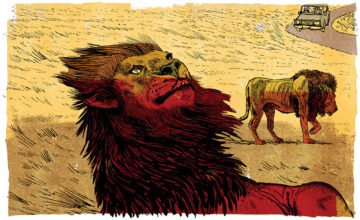 Even the warthogs in Botswana are incredibly charming. Everything is very distinct and pure. The Okavango Delta is an alluvial plain, sort of like a Louisiana swamp but with incredibly non-humid clear air. Especially compared to the camp on the Zambezi River, which was foreboding, with elephants constantly crushing the dry gnarled branches.
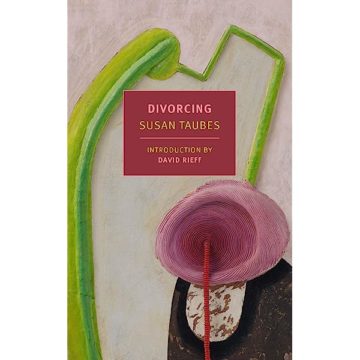 Susan Taubes’s novel “Divorcing” (1969) begins with a report in France-Soir of a femme décapitée, a woman whose head was cut clean off when she was hit by a car in the Eighteenth Arrondissement of Paris. The woman, Sophie Blind, is, like Taubes, the daughter of a psychoanalyst, the granddaughter of a rabbi, and the estranged wife of a scholar and a rabbi. She is also the mother of mostly male children, and the lover of Gaston, Roland, Alain, Nicholas, and Ivan. In flight from her married life in New York, she has just moved to Paris with her children. She is killed before she has a chance to finish arranging the furniture in her new apartment.