
David Mason at the Hudson Review:
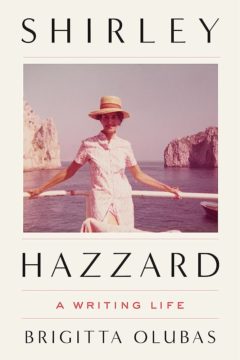 Among the literary genres, biography appears to be thriving. Perhaps it satisfies some element of life writing we also get from fiction, adding a dose of gossip and the illusion that we can actually know the truth of other people’s lives. There is always more than one way to tell a story. Some good recent biographies have been thematic or experimental: Katherine Rundell on John Donne, Frances Wilson on D. H. Lawrence, Andrew S. Curran on Diderot, Clare Carlisle on Kierkegaard. We have authoritative doorstoppers from Langdon Hammer on James Merrill to Heather Clark’s numbingly detailed book on Sylvia Plath. And we find a happy medium-sized biography in Mark Eisner’s on Neruda or Ann-Marie Priest’s on the great Australian poet Gwen Harwood. Among the best of these, Brigitta Olubas’ Shirley Hazzard: A Writing Life is not overstuffed or particularly arcane in structure, not weighted down with newly discovered scandal, but lucidly and even gracefully organized, guided by a compelling thesis.[1] Olubas believes, and I agree, that Hazzard pursued one erotic object more than all others, poetry, which is inseparable from Eros in its other meanings. “This . . . large belief in romantic and sexual love stands behind all Shirley Hazzard’s writing,” Olubas tells us. “It is aligned with her sense of human connectedness and above all with poetry, which is at heart for her a way of being human.”
more here.
 IN A 2013 AFTERWORD
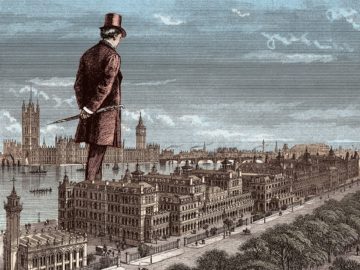 For the first thirty years of my life, I lived within a one-mile radius of Willesden Green Tube Station. It’s true I went to college—I even moved to East London for a bit—but such interludes were brief. I soon returned to my little corner of North West London. Then suddenly, quite abruptly, I left not just the city but England itself. First for Rome, then Boston, and then my beloved New York, where I stayed ten years. When friends asked why I’d left the country, I’d sometimes answer with a joke: Because I don’t want to write a historical novel. Perhaps it was an in-joke: only other English novelists really understood what I meant by it. And there were other, more obvious reasons. My English father had died. My Jamaican mother was pursuing a romance in Ghana. I myself had married an Irish poet who liked travel and adventure and had left the island of his birth at the age of eighteen. My ties to England seemed to be evaporating. I would not say I was entirely tired of London. No, I was not yet—in
  Injecting ageing monkeys with a ‘longevity factor’ protein can improve their cognitive function, a study reveals. The findings, published on 3 July in Nature Aging
 Anything I could ever know about Caravaggio derives from what Roberto Longhi had to say about him. Yes, Caravaggio was a great inventor, and thus a great realist. But what did Caravaggio invent? In answering this rhetorical question, I cannot help but stick to Longhi’s example. First, Caravaggio invented a new world that, to invoke the language of cinematography, one might call profilmic. By this I mean everything that appears in front of the camera. Caravaggio invented an entire world to place in front of his studio’s easel: new kinds of people (in both a social and characterological sense), new kinds of objects, and new kinds of landscapes. Second: Caravaggio invented a new kind of light. He replaced the universal, platonic light of the Renaissance with a quotidian and dramatic one. Caravaggio invented both this new kind of light and new kinds of people and things because he had seen them in reality. He realized that there were individuals around him who had never appeared in the great altarpieces and frescoes, individuals who had been marginalized by the cultural ideology of the previous two centuries. And there were hours of the day—transient, yet unequivocal in their lighting—which had never been reproduced, and which were pushed so far from habit and use that they had become scandalous, and therefore repressed. So repressed, in fact, that painters (and people in general) probably didn’t see them at all until Caravaggio.
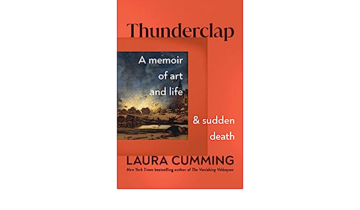 ‘We see pictures in time and place … They are fragments of our lives, moments of existence that may be as unremarkable as rain or as startling as a clap of thunder,’ Cumming writes. A love of Dutch art and a passion for looking at pictures were bequeathed to Cumming by her artist parents. She wrote about her mother’s fragmented, mysterious early life in On Chapel Sands (2019). In Thunderclap it is Laura’s father, James Cumming, who takes centre stage, and like On Chapel Sands the book is infused with love – of parents, childhood, pictures and words. It is at once deeply personal and inclusive, because it is about the shared experience of looking at pictures and the shared desire to know and understand what these ‘moments of existence’ mean. I liked reading Thunderclap so much that I immediately reread On Chapel Sands. Together, these books are a remarkable experiment in form as well as a richly satisfying extended meditation on art, life and death.
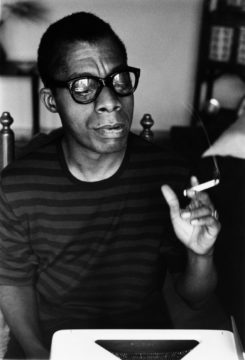 The eleven-minute
 The discovery, announced today, shows that extra-large ripples in space-time are constantly squashing and changing the shape of space. These gravitational waves are cousins to the echoes from black hole collisions first picked up by the Laser Interferometer Gravitational-Wave Observatory (LIGO) experiment in 2015. But whereas LIGO’s waves might vibrate a few hundred times a second, it might take years or decades for a single one of these gravitational waves to pass by at the speed of light.
 Khaled Khalifa is a Syrian novelist, poet and screenwriter whose work has been awarded the Naguib Mahfouz medal for literature, one of the Arab world’s highest literary honours. His soulful, often wry stories traverse time but are centred on the Syrian city of
 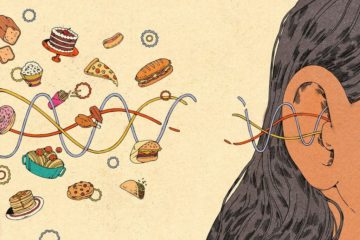 Until she started taking the weight loss drug
 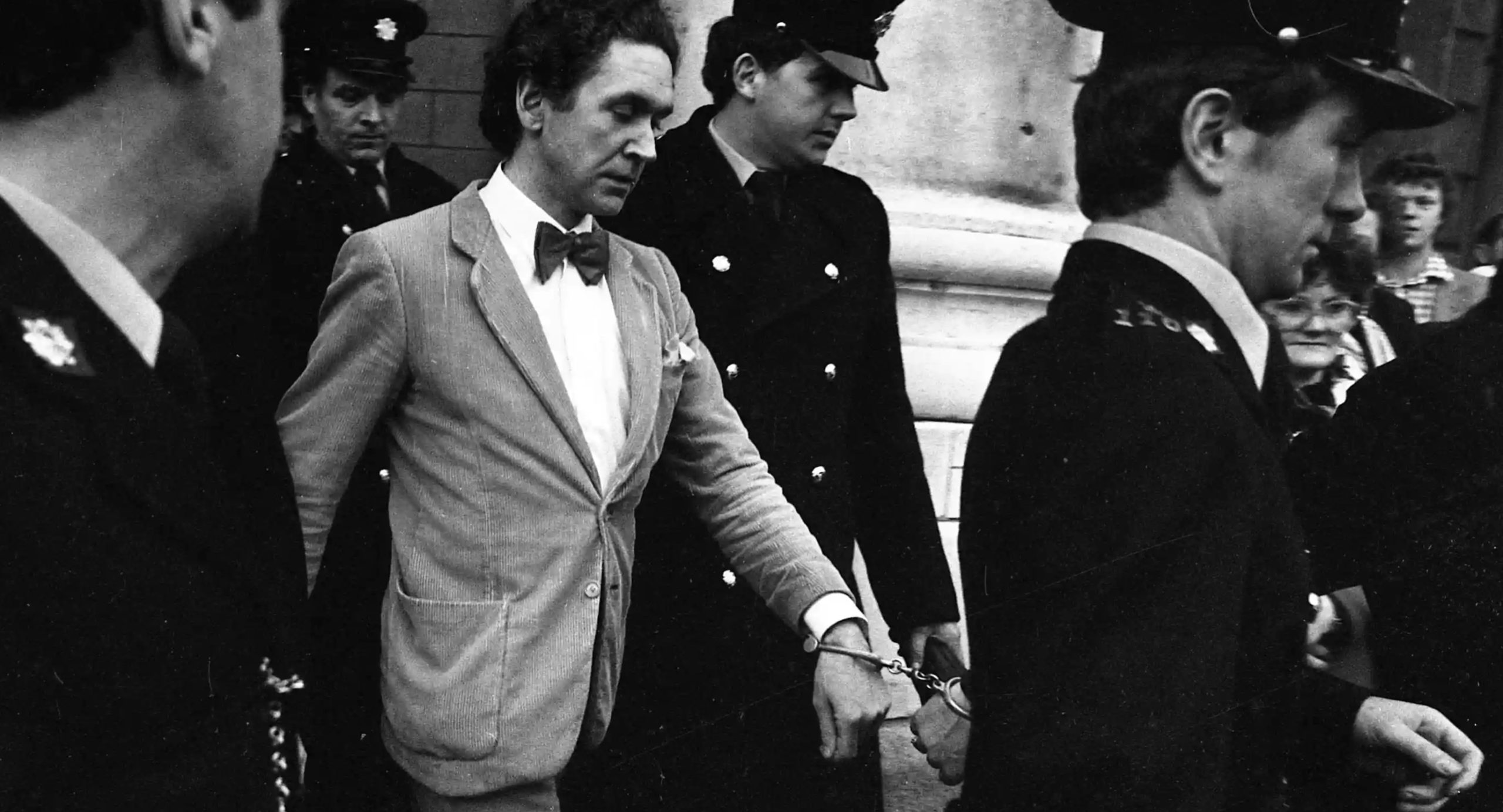 Among Irish people old enough to remember the summer of 1982, Malcolm Macarthur is as close to a household name as it is possible for a murderer to be. He grew up in County Meath in the east of
  For every dollar of petrol you put, you get just 20 cents’ worth of driving motion. The other 80 cents is wasted along the way – most of it as heat from the engine.
 The collective power endowed by language is captured in the legend of the Tower of Babel, where it threatened even God himself. “Go to,” God said, “Let us go down, and there confound their language, that they may not understand one another’s speech.” And lo, as a result of quasi-evolutionary divergence, we speak many thousands of mutually unintelligible tongues, the exact number undefined, mostly because dialect grades into language so we can’t decide where one language ends and the next begins. This smearing out is seen both across geographical space (think English worldwide) and through historical time as languages evolve through the centuries (try reading Chaucer). Nevertheless, because language is partly digital, chunked into the discrete semantic units that we call words, it is capable of great fidelity of transmission, especially in written forms. Yet, despite being thus capable, precious little verbal information from our dead ancestors filters down.
 A few years ago, I listened to Jim Yong Kim, then the President of the World Bank, address the Milken Global Conference, a gathering that is about as plutocratic as it sounds. At the start of his remarks, Kim told the multimillionaires and billionaires who made up the bulk of the audience an anecdote, which he seemed to consider charming, about how he got his job.