
Category: Recommended Reading
The Art Of Lygia Pape
Michael Dango at Artforum:
The Neo-Concrete movement was famously short-lived, essentially moribund within a couple of years of the manifesto’s publication. When a US-backed coup deposed Brazil’s leftist president in 1964 and installed a military dictatorship that lasted twenty-one years, Lygia Clark, Ferreira Gullar, and other artists central to the movement fled. Pape remained. Among her peers, Pape always stood out for being left behind. During the Neo-Concrete years, she devoted herself to a seemingly passé medium with which she’d been engaged since the early 1950s: the woodblock. Newspapers singled her out, often simply calling her the gravadora, or printmaker. Pape would later theorize these works as the basis for her whole oeuvre, which came to span film, installation, and participatory performance. As the art historian Adele Nelson explains in her book Forming Abstraction: Art and Institutions in Postwar Brazil (2022), Pape “conceived printmaking as a conceptual foundation for her artistic practice. . . . She refused to view her early prints as mere preludes to participatory works of art” and instead proposed that “prints—that is, stationary works of art—can activate an experiential, phenomenological experience for the viewer.”
more here.
Gender and Genre—Lygia Pape’s Self-Fashioning in Print
Big Caesars and Little Caesars
Gaby Hinsliff in The Guardian:
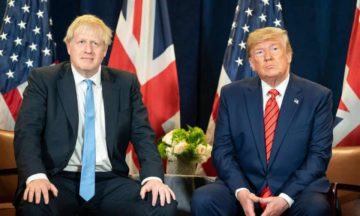 One by one, the toxic giants have come crashing to earth. In the last month or so Boris Johnson has quit, Donald Trump has been arraigned on felony charges, Italy’s Silvio Berlusconi has died, and even Vladimir Putin looks significantly weaker than he did. It’s sorely tempting to conclude that the chaotic ride of recent years is finally over, and life might return to something more like normal.
But that, according to Ferdinand Mount’s absorbing tour of populist rogues through the ages, would be a rookie mistake. It may be comforting to think of so-called Caesars – a type of leader defined by what Mount calls his (and it’s mostly, though not invariably, his) “relentless egotism, his lack of scruple, his thoughtless brutality, his cheesy glitz” and above all his loathing of democratic checks and balances – as freakish aberrations from a generally orderly norm. But trace the line from ancient Rome to Oliver Cromwell, from Napoleon Bonaparte to modern-day strongmen, and it becomes obvious that they are a regularly recurring phenomenon for which nations just as regularly fall, and from which they don’t recover overnight. “These ill-starred comets,” Mount writes, “leave a long trail of debris.” But they also have something to teach us about stopping the next Caesar early.
More here.
Taylor Swift in Philadelphia
Jack Nevins at The Paris Review:
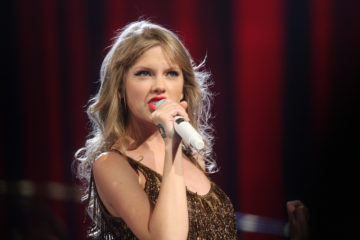 Things get especially interesting every weekend night about two and a half hours into the show, when Swift diverges from her otherwise precisely orchestrated set to perform two “surprise songs” from her catalog acoustically, never to be repeated at a later show, or so she says. The number of viewers in the live streams increase threefold, and fans on TikTok broadcast their feral reactions to Swift’s choices, which become ripe for close reading. “If I hear ‘friends break up’ I’m gonna kill myself,” one user watching the Cincinnati show declares, referencing the first line of the song “right where you left me.” Swift plays the opening chords of “Call It What You Want” instead. “Shut the fuck up,” our Swiftie replies, vaulting herself off the couch like an eel out of water. “Not ‘Call It What You Want’!”
Before the Philadelphia show, fans had been speculating that Swift might play “gold rush,” a song that mentions an Eagles T-shirt, or “seven,” which invokes her Pennsylvania childhood. Meanwhile, I’d just won $629 on FanDuel placing a four-leg parlay on a New York Knicks game, and the idea of siphoning my winnings away from rent or clothes or utilities and into an Eras Tour fund seemed both fiscally and sentimentally appealing, an exchange between two of my principal enthusiasms: sports and Taylor Swift.
more here.
Hollywood movie aside, just how good a physicist was Oppenheimer?
Adrian Cho in Science:
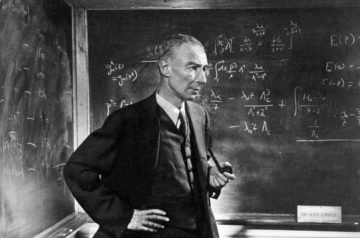 This week, the much anticipated movie Oppenheimer hits theaters, giving famed filmmaker Christopher Nolan’s take on the theoretical physicist who during World War II led the Manhattan Project to develop the first atomic bomb. J. Robert Oppenheimer, who died in 1967, is known as a charismatic leader, eloquent public intellectual, and Red Scare victim who in 1954 lost his security clearance in part because of his earlier associations with suspected Communists. To learn about Oppenheimer the scientist, Science spoke with David C. Cassidy, a physicist and historian emeritus at Hofstra University. Cassidy has authored or edited 10 books, including J. Robert Oppenheimer and the American Century.
The following has been edited for length and clarity.
Q: Oppenheimer’s name appears in the early applications of quantum mechanics and the theory of black holes. How good a physicist was he?
A: Well, he was no Einstein. And he’s not even up to the level of Heisenberg, Pauli, Schrödinger, Dirac, the leaders of the quantum revolution of the 1920s. One of the reasons for this was his birth date. He was born in 1904, so he was 3 years younger than Heisenberg, 4 years younger than Pauli. Those few years were enough to place him in the second wave of the quantum revolution and behind the main wave of discovery, in what [philosopher of science] Thomas Kuhn called the “mopping-up operation,” applications of the new theory.
More here.
Wednesday Poem
After Orgoniland*
Can I still picture home, in the wreckage of things?
… The dying of fish and everything aquatic. That water
… is oil, that another name for
… nostalgia is time.
Can I still teach myself how to forget? The story is
… that the befouled river still remains. My mother who
… is now blind, still trades. Biscuits,
… not periwinkles.
It’s early summer and hard to tell what is sky and what is
… gas flare. Into the horizon, the air is toxic, and
… my only surviving uncle keeps licking franol to relieve
… his lung. How long was it? Does the world even read our
… ugly stories, does my country even know we
… exist?
I have forgotten we’re so minor, not even close to
redemption, children keeping warm oily waters, a pillow
… for their trauma. Distant but soft and cozy.
… Present but soiled. This land rid of all
… her innocence.
|
This land full of dirt and broken pipes. Still I dream. Still I am curious.
… Still I want to say: O glorious creeks,
… born into a cold marshland.
There is no love greater
than empathy. As fisher-boys, we were brought into the creek,
… and told that water is life, and as such we
… should keep it clean.
by Ojo Taiye
from The Poetry Archive, 2022
*Ogoniland is situated in the Niger Delta region, the third largest
mangrove ecosystem in the world.
Tuesday, July 18, 2023
Everything Feels Like the End of the World
Megan Cheong in the Sydney Review of Books:
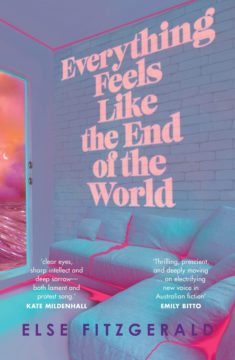 Climate anxiety is understood by psychologists to be a form of ‘practical’ anxiety as it is considered a rational response to the threat of climate change and can lead to constructive behaviours. At a Melbourne Writers Festival panel in 2022, Else Fitzgerald described her debut short story collection, Everything Feels Like the End of the World, as an attempt to work through her own climate grief, a sorrow that has its roots in the successive periods of drought and flooding she experienced growing up in East Gippsland. This, surely – writing a book – is the kind of ‘constructive behaviour’ the psychologists have in mind. But what of climate anxiety that clamps down, that debilitates and immobilises? The anxiety I feel in relation to the climate crisis leaves me swinging wildly between maniacal bouts of information gathering and long periods of psychic paralysis, during which I work equally hard to avoid any mention of climate change and its attendant calamities.
Many of the stories in Everything Feels Like the End of the World are difficult to stomach, beginning at a point when it is no longer possible to ignore the facts of ecological collapse.
More here.
How climate change intensifies the water cycle, fueling extreme rainfall and flooding – the Northeast deluge was just the latest
Mathew Barlow in The Conversation:
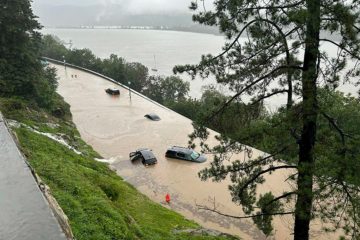 A powerful storm system that hit the U.S. Northeast on July 9 and 10, 2023, dumped close to 10 inches of rain on New York’s Lower Hudson Valley in less than a day and sent mountain rivers spilling over their banks and into towns across Vermont, causing widespread flash flooding. Vermont Gov. Phil Scott said he hadn’t seen rainfall like it since Hurricane Irene devastated the region in 2011.
Extreme water disasters like this have disrupted lives in countries around the world in the past few years, from the Alps and Western Europe to Pakistan, India and Australia, along with several U.S. states in 2022 and 2023.
The role of climate change is becoming increasingly evident in these types of deluges.
Studies by scientists around the world show that the water cycle has been intensifying and will continue to intensify as the planet warms. An international climate assessment I co-authored in 2021 for the Intergovernmental Panel on Climate Change reviewed the research and laid out the details.
More here.
David Byrne: The 60 Minutes Interview
After the Murder: When the wave of hope finally broke for Black America
Donovan X. Ramsey in Guernica:
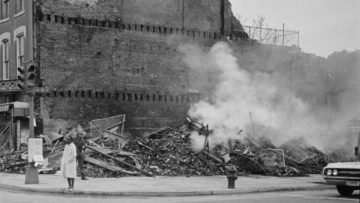 Especially in northern cities, Blacks were boxed into lives of poverty, redlined into areas of concentrated poverty and further isolated when the federal government built interstate highways that separated them from their white neighbors. Their neighborhoods were patrolled by police departments who moved like occupying forces, with extreme prejudice and impunity. In these places — Los Angeles, New York, Newark, Detroit, and other cities — police brutality was a regular occurrence.
Those conditions birthed another movement. It existed alongside the same timeline as the Civil Rights Movement but wasn’t focused on inclusion and legal protection. It wanted power, the ability for Blacks to control their own lives and communities — including self-defense. This movement also excited Black America, segments that the Civil Rights Movement did not and in ways it couldn’t. The most prominent leader in this movement, of course, was Malcolm X who advocated for complete independence of Black Americans from a fundamentally wicked white society.
More here.
Prog-Father To Post-Punk
A Thread of Violence: A Story of Truth, Invention, and Murder
Ruth Dudley Edwards at Literary Review:
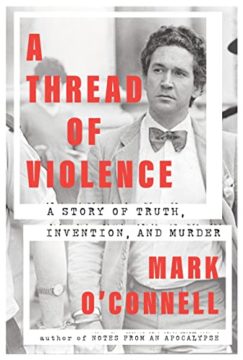 ‘And so it was that, on the evening of August 4, 1982,’ writes Mark O’Connell halfway through this gripping portrait of double killer Malcolm Macarthur, ‘the Irish government’s most senior legal official had his housekeeper prepare the spare room for his friend, a man who had just days previously murdered two strangers, and who had that very evening botched an armed robbery at the home of an acquaintance.’
The police arrested Macarthur at the flat nine days later. The morning after, the innocent and bewildered attorney general, Patrick Connolly, having cleared it with the police and Charles Haughey, the Taoiseach, set off for a long-planned holiday in New York. The story had broken by the time he arrived. Ireland was in uproar and Connolly was hounded by reporters (the New York Post would run the headline ‘Irish Biggie Flees Here After Slay Scandal’).
more here.
Peter Schjeldahl’s Vivid, Unforgettable Prose
Jackson Arn at Art In America:
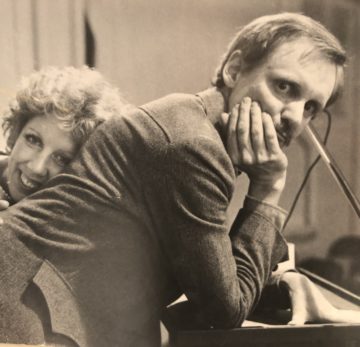 Even in December 2019, when he announced his disease in a long, devil-may-care New Yorker essay, he did it with a dynamite lede: “Lung cancer, rampant. No surprise.” The diagnosis wasn’t the only startling thing about these sentences: Schjeldahl was writing about his personal life for once, and doing so in the same chiseled prose in which he described Giacometti’s bronzes and Manet’s oils. No matter what his subject happened to be, he treated it as an invitation to write beautifully.
Schjeldahl was born in 1942 and grew up in North Dakota and Minnesota. He dropped out of college, and it shows: he had an autodidact’s distaste for teacher’s pets (in the Goya review quoted above, he says the exhibition “was conceived on the Planet of the Scholars, where every question is considered except ‘So what?’”). Poetry was his first literary love.
more here.
Tuesday Poem
Emotional Wasteland
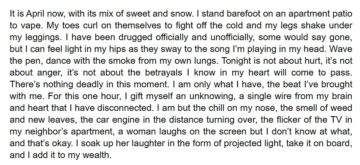
by Suzi F. Garcia
from Split This Rock
There’s Something Sad About Barbenheimer
Stephanie Zacharek in Time Magazine:
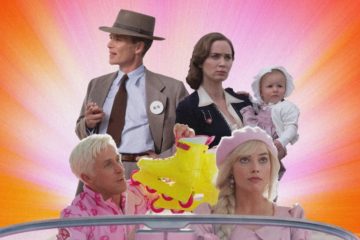 In anticipation of the movie event of summer 2023 known as Barbenheimer, the best and wittiest unpaid advertising Universal and Warner Bros. Pictures could have hoped for wasn’t an Instagram post of a grinning Tom Cruise, along with Mission: Impossible 7 director Christopher McQuarrie, brandishing tickets for Oppenheimer and Barbie. It was a recent tweet from television writer Noah Garfinkel, built around a still from Oppenheimer featuring Tom Conti’s Albert Einstein and Cillian Murphy’s J. Robert Oppenheimer, ostensibly involved in a serious conversation about atom splitting and stuff. The caption read “‘We’re gathering a group of top scientists to go see Barbie.’”
That tweet is great because it’s a life raft of spontaneity in a sea of hype that has come to feel desperate. In the week leading up to the dual releases of Oppenheimer and Barbie, on July 21, the fever has gone off the thermometer. Christopher Nolan, with his fixation on craft (and his status as the guy who made those Batman movies), tackling the story of one of history’s most famous theoretical physicists? The idea is so antithetical to the I.P.-fixated pack-em-in mentality of the past few years that it’s no wonder anticipation among actual grownups, whether they’re Nolan fans or not, is high. The juggernaut around Greta Gerwig’s Barbie is even more formidable: Barbie pink, a hothouse hue verging on fuchsia, is everywhere. And at the film’s Los Angeles premiere, on July 9, Margot Robbie appeared in a life-size version of one of early Barbie’s most famous ensembles, a strapless sparkle evening gown accessorized with a chiffon hankie and the famous Barbie mules, known as “Solo in the Spotlight.” She looked glamorous, sexy and adorable. You’d have to be a certified funkiller not to love it.
More here.
The $1 billion gamble to ensure AI doesn’t destroy humanity
Dylan Matthews in Vox:
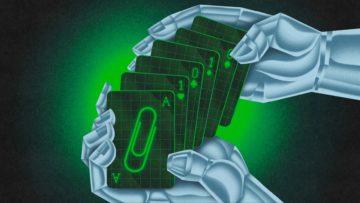 The scientists want the AI to lie to them.
That’s the goal of the project Evan Hubinger, a research scientist at Anthropic, is describing to members of the AI startup’s “alignment” team in a conference room at its downtown San Francisco offices. Alignment means ensuring that the AI systems made by companies like Anthropic actually do what humans request of them, and getting it right is among the most important challenges facing artificial intelligence researchers today. Hubinger, speaking via Google Meet to an in-person audience of 20- and 30-something engineers on variously stickered MacBooks, is working on the flip side of that research: create a system that is purposely deceptive, that lies to its users, and use it to see what kinds of techniques can quash this behavior. If the team finds ways to prevent deception, that’s a gain for alignment.
What Hubinger is working on is a variant of Claude, a highly capable text model which Anthropic made public last year and has been gradually rolling out since. Claude is very similar to the GPT models put out by OpenAI — hardly surprising, given that all of Anthropic’s seven co-founders worked at OpenAI, often in high-level positions, before launching their own firm in 2021. Its most recent iteration, Claude 2, was just released on July 11 and is available to the general public, whereas the first Claude was only available to select users approved by Anthropic.
More here.
Sunday, July 16, 2023
John McPhee Finds His Unending Project
David Adams at The Millions:
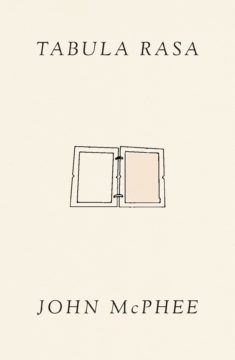 On the phone from his home in Princeton, N.J., on an unseasonably warm day in April, McPhee stresses that Tabula Rasa, which gathers the 92-year-old New Yorker writer’s reflections on projects he once contemplated but never wrote, is not an autobiography. It was, however, done according to Twain’s instructions for “how someone ought to do an autobiography—in a totally random miscellaneous way.” McPhee continues, “Twain’s point is just to jump in anywhere, anywhere at all, and start talking. And if something distracts you, if it seems more interesting, leave the first thing, and go to the second or the third. You can always go back to the first thing next week.”
Legions of McPhee fans will need a moment to pick themselves up off the floor. Anyone who’s cracked the spine of 2017’s Draft No. 4, an immersive blend of writerly advice and career retrospective that sets down lessons McPhee has been teaching at Princeton University since the 1970s, will recall the intricate diagrams of his New Yorker essays, and the arduous process by which he arrived at their elegant structures.
More here.
TikTok Extends the Wasteland
Jeff Hewitt in The Hedgehog Review:
 In 1961, Federal Communications Commission chairman Newton N. Minow delivered a scathing assessment of the state of television to the National Association of Broadcasters, famously dubbing their collective output—from vapid and violent programing to the clamor of endless commercial breaks—a “vast wasteland.” Today, decades into the digital age, signs of this wasteland’s demise abound. Broadcast viewership has fallen by a third since 2015. Millions are pulling the plug on their cable subscriptions. Most adults under the age of thirty say they don’t watch TV. But is what Minow called “the television age” truly over? Or does the wasteland endure?
More here.
Black-hole computing
Sabine Hossenfelder in Aeon:
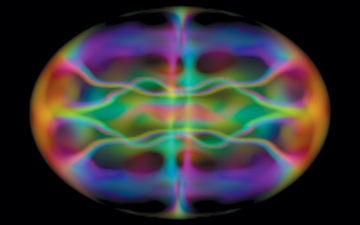 After you die, your body’s atoms will disperse and find new venues, making their way into oceans, trees and other bodies. But according to the laws of quantum mechanics, all of the information about your body’s build and function will prevail. The relations between the atoms, the uncountable particulars that made you you, will remain forever preserved, albeit in unrecognisably scrambled form – lost in practice, but immortal in principle.
There is only one apparent exception to this reassuring concept: according to our current physical understanding, information cannot survive an encounter with a black hole. Forty years ago, Stephen Hawking demonstrated that black holes destroy information for good. Whatever falls into a black hole disappears from the rest of the Universe. It eventually reemerges in a wind of particles – ‘Hawking radiation’ – that leaks away from the event horizon, the black hole’s outer physical boundary. In this way, black holes slowly evaporate, but the process erases all knowledge about the black hole’s formation. The radiation merely carries data for the total mass, charge and angular momentum of the matter that collapsed; every other detail about anything that fell into the black hole is irretrievably lost.
Hawking’s discovery of black-hole evaporation has presented theoretical physicists with a huge conundrum: general relativity says that black holes must destroy information; quantum mechanics says it cannot happen because information must live on eternally.
More here.