
Category: Recommended Reading
How the Internet obeys you
Tara Isabella Burton in The New Atlantis:
 Reality is different these days. It isn’t just that we have the tools to experience reality differently, or augment reality, by affixing a Meta Quest headset or an Apple Vision Pro to our skulls. It isn’t just that we have the ability to quantify reality, through smartwatches and heart rate monitors and step counters and sleep trackers, or that we have the ability to manipulate people’s perceptions of reality, through social media filters so ubiquitous that there is now a whole cottage industry of plastic surgery devoted to making people’s fleshly faces match the selfies they post on Instagram. Nor is it just the fact that our social world includes the conversations we have with virtual personal assistants like Siri and Alexa, whose soothing voices greet us when we come home, or remind us of the weather.
All of these, of course, play some role in the seismic reimaging of our selves, and our world, that the Internet — in particular, smartphone-enabled online culture — has engendered. But the shift we’re experiencing is bigger, and more totalizing, than any single phenomenon.
More here.
Friday Poem
have you eaten yet
…………………………the mystery of your lungs
…………………………the spaceship of your yes
the ethereal of your puns
……….. the eternal of your sexts
……… the chic vivacity
of your spiritual & political & sensual rage
….. the tiny
………… extremely
……. efficient post office
………… of your least wild dreams
…………… the enormous
….. hocus of your trembling pocus
……. the dirt of your muse
the deity of your musk
………………….. why
………………………. haven’t you eaten yet
…… this daily
………………….. breath of yours
come eat
….. this chest magic brain planet
……………………….. this mischief
………………. & power
…………………………………………… this anger
…………………………………………… good anger
…………………………………………… your anger
……………………. from which you sing your most joyful
……………………….. deepest no
by Chen Chen
from Split This Rock
Does ChatGPT “Think”? A Cognitive Neuroscience Perspective
Walter Benjamin’s Radio Years
Peter E. Gordon at The Nation:
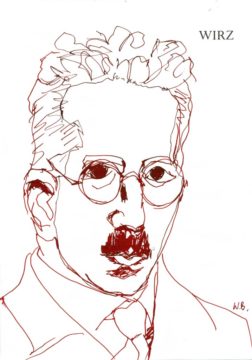 No audio recordings of Walter Benjamin have survived. His voice was once described as beautiful, even melodious—just the sort of voice that would have been suitable for the new medium of radio broadcasting that spread across Germany in the 1920s. If one could pay the fee for a wireless receiver, Benjamin could be heard in the late afternoons or early evenings, often during what was called “Youth Hour.” His topics ranged widely, from a brass works outside Berlin to a fish market in Naples. In one broadcast, he lavished his attention on an antiquarian bookstore with aisles like labyrinths, whose walls were adorned with drawings of enchanted forests and castles. For others, he related “True Dog Stories” or perplexed his young listeners with brain teasers and riddles. He also wrote, and even acted in, a variety of radio plays that satirized the history of German literature or plunged into surrealist fantasy. One such play introduced a lunar creature named Labu who bore the august title “President of the Moon Committee for Earth Research.”
more here.
What Happened in Vegas
David Hill at The Baffler:
 LASTING FOR THREE STRAIGHT DAYS, the grand opening of Caesars Palace in August of 1966 was a spectacle unlike any the city of Las Vegas had ever seen. The owners of the casino, a brash Southern hotelier and gambler named Jay Sarno and his straight-laced partner Stan Mallin, dropped over a million dollars on food and booze, doling out fifty thousand glasses of champagne and two tons of filet mignon to their fourteen hundred guests. Nearly every high-rolling gambler and bookmaker in America, as well as a veritable who’s-who of celebrities, were in attendance. John Wayne, Johnny Carson, Maureen O’Hara, Eydie Gorme—even Grant Sawyer, the governor of Nevada, was on hand. The guest of honor, however, was someone who didn’t drink, didn’t gamble, and didn’t much care for lasciviousness or ostentatious displays of wealth. Yet here he was in the middle of a three-day bacchanal christening a $24 million Roman palace, the most expensive casino ever built up to that point in history, anywhere. His name was Jimmy Hoffa, and he was the president of the International Brotherhood of Teamsters, the 1.7 million-member trucking and transportation union.
more here.
Shaping Brain Recovery Using Bioelectricity
Iris Kulbatski in The Scientist:
 Humans are bioelectrical beings. The collections of cells that make up tissues and organs communicate using the language of voltages and electric fields. This electrical code is produced by specialized ion channels and proteins imbedded in cell membranes. Bioelectricity also directs embryonic development. Long before the growing brain reaches maturity, stem cells are abuzz with activity, engaging in bioelectrical conversations.1 This network chatter coordinates the self-organization of tissues and gives physical shape to the human body, including the brain—a concept that was first popularized by Harold Saxton Burr in 1935.2 Although controversial at the time, modern technology eventually showed the prescience of Burr’s idea, providing a basis for exploring the intrinsic regenerative potential of the human body.3,4
Recently, Paul George, an assistant professor of neurology and neurological sciences at Stanford University, and his team applied insights from the field of developmental bioelectricity to regenerate the brain. “People respond very differently to strokes—younger patients recover a lot better than older patients. We asked whether we could recreate that younger environment,” George said. “A lot of cues help with the formation of the nervous system, including electrical, chemical, and physical cues.” Optimizing these conditions can help transplanted stem cells survive, integrate with local brain cells, and stimulate the body’s own repair mechanisms.
More here.
J. Robert Oppenheimer’s Grandson on What the Movie Gets Right and the One Scene He Would Have Changed
Megan McClusky in Time:
 Moviegoers turned out in droves this weekend for writer-director Christopher Nolan’s new film Oppenheimer, fueling an expectations-shattering domestic box office debut of $80 million. The three-hour-long biopic recounts the life story of J. Robert Oppenheimer (played by Cillian Murphy), the theoretical physicist widely known as the “father of the atomic bomb,” and has been praised by critics for its nuanced examination of a complicated historical figure. The movie is based on Kai Bird and Martin J. Sherwin’s Pulitzer Prize-winning 2006 biography American Prometheus: The Triumph and Tragedy of J. Robert Oppenheimer, one of numerous accounts of Oppenheimer’s life and legacy. But according to Oppenheimer’s grandson, Charles Oppenheimer, the famous physicist’s family has their own their own approach to depictions of him and additional nuance to include.
More here.
Thursday, August 10, 2023
David Chalmers: Within the next decade, we may well have AI systems that are serious candidates for consciousness
David J. Chalmers in the Boston Review:
 When I was a graduate student at the start of the 1990s, I spent half my time thinking about artificial intelligence, especially artificial neural networks, and half my time thinking about consciousness. I’ve ended up working more on consciousness over the years, but over the last decade I’ve keenly followed the explosion of work on deep learning in artificial neural networks. Just recently, my interests in neural networks and in consciousness have begun to collide.
When Blake Lemoine, a software engineer at Google, said in June 2022 that he detected sentience and consciousness in LaMDA 2, a language model system grounded in an artificial neural network, his claim was met by widespread disbelief. A Google spokesperson said:
Our team—including ethicists and technologists—has reviewed Blake’s concerns per our AI Principles and have informed him that the evidence does not support his claims. He was told that there was no evidence that LaMDA was sentient (and lots of evidence against it).
The question of evidence piqued my curiosity. What is or might be the evidence in favor of consciousness in a large language model, and what might be the evidence against it? That’s what I’ll be talking about here.
More here.
The Mind of a Bee
Leon Vlieger in The Inquisitive Biologist:
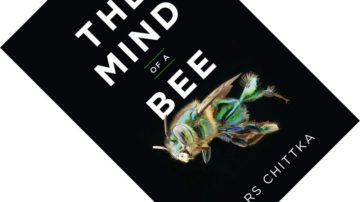 Justifiably, the book opens with sensory biology. Before we understand what is in the mind of any organism, Chittka argues, we first need to understand the gateways, the sense organs, through which information from the outside world is filtered. These are shaped by both evolutionary history and daily life (i.e. what information matters on a day-to-day basis and what can be safely ignored). Chapter 2 deals with the historical research that showed that bees do have colour vision and furthermore can perceive ultraviolet (UV) light. Many flowers sport UV patterns invisible to us. Remarkably, UV photoreceptors are found in numerous insects and other crustaceans whose shared ancestry goes back to the Cambrian, predating the evolution of flowers in the Cretaceous by hundreds of millions of years. In other words, it seems flowers adapted to insect colour vision rather than the other way around.
More here.
Pankaj Mishra on the Eternal Present of Amit Chaudhuri’s The Immortals
Pankaj Mishra at Literary Hub:

The Immortals is one of the most mesmerizing novels I have read. It is also, for that reason, one of the most mysterious books I know. Set in a highly specific time and place—Bombay in the 1980s—and seemingly faithful to the conventions of realist prose-narrative, its overall impact, however, is auditory, quite like that of the tanpura, the instrument crucial to North Indian classical music: the sound, as Chaudhuri writes, “shocked you every time you heard it,” “its four strings combining to create not only a single vibration, but a world” and, furthermore, “a world without time.”
I must have read the novel six or seven times since its publication in 2009. But the sum of readings does not exhaust its fascination, or its mystery. On my first reading, the book touched me as only the memory of something personally experienced can: the growth and deepening of a young man’s sensibility in late twentieth-century India, his quickening awareness of himself as a simultaneously free and elusive consciousness.
More here.
What Does IQ Actually Measure?
Great American Novelist
Laura Miller in Slate:
 “You know, I don’t really talk to that many other novelists,” James McBride told me. “I don’t spend a lot of time with other writers.” It was a statement that explained a lot, while at the same time shooting a pet theory out of the water. If McBride’s most recent books—the celebrated Deacon King Kong, published in 2020, and this summer’s The Heaven and Earth Grocery Store—feel as if they’re swimming hard against the tide of current literary fashion, it’s apparently not deliberate. McBride has had other matters on his mind. Perhaps the best way to write a Great American Novel is not to think of yourself as a novelist at all.
The other matters preoccupying McBride include music—as a saxophonist, he toured with Jimmy Scott, and he has written songs for artists as varied as Anita Baker and Barney the purple dinosaur—and the New Brown Memorial Baptist Church, founded by his parents in 1954, and to which McBride still belongs. The church is in Red Hook, Brooklyn, where Deacon King Kong is set, where McBride grew up, and where he keeps an apartment, although he also has a place in New Jersey for when he wants to be left alone to write. That’s where he wrote his National Book Award–winning 2013 novel The Good Lord Bird.
More here.
Christian Petzold’s “Afire”
Jack Hanson at Commonweal:
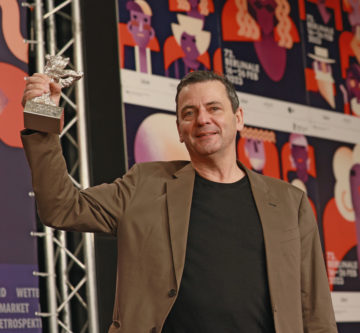 Petzold has said in interviews that, when he contracted Covid in 2020, he spent weeks watching the films of Eric Rohmer, a French director whose films tell deceptively simple stories, almost fables, and Afire follows this model. The first two acts of the film are essentially a dark comedy of manners: Devid and Felix sleep together, Leon makes fumbling attempts to win Nadja’s affections while offending her and embarrassing himself at every turn. Wildfires are raging in a nearby forest, but our vacationers assure one another that, due to prevailing wind patterns, they are safe from the ongoing devastation—a presumption begging to be challenged.
Some reviewers have questioned whether, when the reckoning arrives for the naïve Leon and his slightly less naïve companions, Petzold executes it with the same narrative eloquence for which he is known. But the primary question Afire asks is not what the characters will do when the fire finally comes, but rather how they will come to terms with the fact that, at some level, they always knew it was coming.
more here.
Undine (2020) by Christian Petzold
https://www.youtube.com/watch?v=mLfvNwsI5RQ&ab_channel=RareFilm%27sChannel
How a controversial US drug policy could be harming cancer patients worldwide
Jyoti Madhusoodanan in Nature:
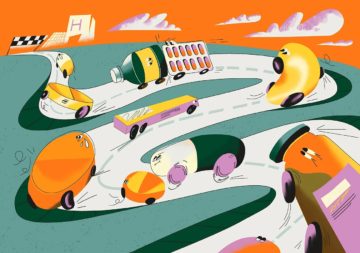 In August 2021, Amol Akhade, an oncologist at Nair Medical Hospital in Mumbai, India, received an e-mail from the Swiss drug manufacturer Roche recommending the use of a drug named atezolizumab to treat a specific kind of breast cancer. Akhade was surprised. That month, Roche had withdrawn the drug for this purpose in the United States (although it is still approved to treat other kinds of cancer).
For the type of breast cancer in question — known as triple-negative because it lacks three key protein markers — atezolizumab was made available in 2019 through the US Food and Drug Administration’s (FDA’s) Accelerated Approval Program. Accelerated approval is a fast-track process designed to place desperately needed drugs in the hands of patients quicker than is possible with conventional drug approval. But a follow-up study found that atezolizumab made little difference to tumour growth, and that people who received it were less likely to survive up to two years after treatment than were those not taking it1. When the FDA received these data in 2021, it indicated that accelerated approval was no longer appropriate, and Roche withdrew the drug for this form of breast cancer. The same thing happened with the European Medicines Agency (EMA), based in Amsterdam, but not everywhere else.
In India, for example, where the drug was still approved for triple-negative breast cancer, Roche continued to promote the treatment until at least September, a fact that Akhade says he found “quite shocking”.
More here.
Modern Buildings in London
Travis Elborough at The Paris Review:
 It seems no less than highly appropriate that when Ian Nairn’s Modern Buildings in London first appeared in 1964 it was purchasable from one of a hundred automatic book-vending machines that had been installed in a selection of inner-London train stations just two years earlier. Sadly, these machines, operated by the British Automatic Company, were short-lived. Persistent vandalism and theft saw them axed during the so-called Summer of Love, by which time, and perhaps thanks to Doctor Who’s then-recent battles with mechanoid Cybermen, the shine had rather come off the idea of unfettered technological progress. Stanley Kubrick’s 2001: A Space Odyssey, with its malevolent supercomputer HAL 9000, after all, lay only a few months away. And so too, did the partial collapse of the Ronan Point high-rise (a space-age monolith of sorts) in Canning Town, East London—an event widely credited with helping to turn the general public against modernist architecture.
more here.
Thursday Poem
Sea
— It seems, sea, that you struggle
— oh, endless disorder, incessant iron!—
to find yourself or that I may find you.
— How incredible that you should show yourself
in all your naked solitude
— without ever a companion
neither a he nor a she—projecting
such an image of our
entire world today!
—You are as if in childbirth
—with so much effort!—
of yourself, matchless sea,
of yourself, just yourself, in your own
solitary abundance of abundances
. . . to find yourself or that I may find you!
by Juan Ramón Jimenéz
from The Poet & the Sea
White Pine Press 2009
Wednesday, August 9, 2023
‘Living Drug’ CAR T Is Taking on Some of Humanity’s Worst Medical Scourges
Shelly Fan in Singularity Hub:
 Ask a cancer researcher what the breakthrough treatment of the decade is, and they’ll tell you CAR T takes the crown. The therapy genetically engineers a person’s own immune cells, turning them into super soldiers that hunt down cancerous blood cells. With astonishing speed, multiple CAR T therapies have been approved by the FDA for previously untreatable blood cancers. So far, over 15,000 patients have been treated with the therapy. To Dr. Carl June, a pioneer of the technology at the University of Pennsylvania, we’re only scratching the surface of CAR T’s potential.
In a perspective article published in Nature this week, June and colleagues laid out a path forward. At its root, CAR T therapy taps into the natural “killer instinct” of a type of immune cell, called a T cell, and directs it to a particular target—for example, blood cancer cells. But with careful redesign, CAR T therapy can be genetically engineered to tackle a wide range of humanity’s most prominent medical enemies: autoimmune diseases, asthma, and heart, liver, and kidney diseases caused by increasingly stiffening muscles.
Even more intriguing, CAR T may help clean out senescent “zombie” cells, which are linked to age-related diseases, or combat HIV and other viral infectious diseases. “We are only beginning to realize the full potential of this living drug,” said the authors.
More here.
Capturing the Brain Tumor Microenvironment with Tissue Engineering
Deanna MacNeil in The Scientist:
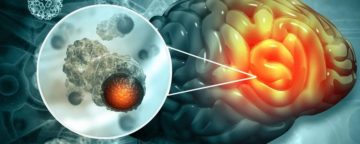 Glioblastoma (GBM) is the most common and malignant form of primary brain cancer. More effective treatments for GBM are direly needed, as the median survival with current therapeutic options is 15 months. One difficulty that scientists face is developing GBM treatments that overcome therapeutic resistance. GBM tumor cells invade the surrounding brain tissue and acquire resistance mediated by factors in the tumor microenvironment (TME). Conventional drug screens that rely on tumor cells grown in culture lack the TME, highlighting the need for better screening models to overcome invasion-mediated therapeutic resistance.1
Researchers use 3D models to study multiple types of cancer, but most current GBM models focus on examining one element of the TME at a time. Jennifer Munson, a bioengineer at Virginia Tech, created a model of the human GBM TME that incorporated patient-derived GBM stem cells, human astrocytes and microglia, and a biophysical force involved in tumorigenesis called interstitial fluid flow.2 The researchers evaluated their model based on four key metrics of GBM behavior—tumor cell death, invasion, proliferation, and stemness.
More here.