 Dan Hitchens in Compact Magazine:
It’s OK,” the title of Bernie Sanders’ new book informs us, “to be angry about capitalism.” But of course, we already knew that. The background noise of our time is of resentment toward the neoliberal order—the insecurity it has foisted on the poor and increasingly on the middle class, the destruction it has wreaked on the environment, its hollowing-out of families, communities, and traditions. What we need isn’t permission to be angry, but a better comprehension of a system so complex that both admirers and critics struggle to get their heads around it.
That, I think, is why more and more readers—from big-name academics like Adam Tooze and Mariana Mazzucato to ordinary citizens trying to make sense of the world—are enthralled by the work of the economic geographer Brett Christophers, a professor at the University of Uppsala. Nobody could accuse Christophers of ignorantly ranting against a half-understood enemy: His books resemble vast excavation projects, in which the author drills through mile after mile of granite-like material—balance sheets, annual reports, parliamentary-committee minutes, documents from the National Infrastructure Commission, and at one point (he writes with a self-deprecating twinkle) a “fascinating if dry 2016 review of taxation of the UK water companies.”
From these subterranean expeditions, Christophers usually emerges with some outrageous claim that seems both shocking and appropriate to our disorienting era. In 2018, he published a book explaining that the largest privatization in modern British history had gone unnoticed. (See if you can guess: The answer is below.) Then, in 2020, Christophers’s Rentier Capitalism argued that the heart of the British economy wasn’t entrepreneurship or innovation or anything like that, but rent: that is, the ability to make money by controlling assets such as land or intellectual property in an uncompetitive environment. Christophers’ new book, meanwhile, states its audacious thesis in the title, Our Lives in Their Portfolios: Why Asset Managers Own the World.
More here.

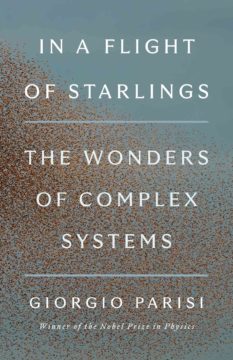 Who hasn’t gazed at a murmuration of thousands of starlings wheeling rhythmically above their roost at dusk, and not wondered at the majesty and mystery of natural systems? For the Italian theoretical physicist Giorgio Parisi, merely marveling at nature wasn’t enough. In the early 1990s, he embarked on a decades-long project to install high-end commercial cameras on the rooftops of Rome, timed with millisecond-precision to capture and track every bird in the flock in three dimensions.
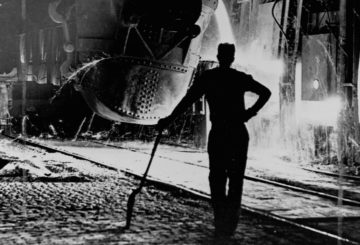 On the one hand, the promise of a liberal society is of a society of equals – of people who are equally entitled and empowered to make decisions about their own lives, and who are equal participants in the collective governance of that society. Liberalism professes to achieve this by protecting liberties. Some of these are personal liberties. I get to decide how to style my hair, which religion to profess, what I say or don’t say, which groups I join, and what I do with my own property. Some of these liberties are political: I should have the same chance as anyone else to influence the direction of our society and government by voting, joining political parties, marching and demonstrating, standing for office, writing op-eds, or organising support for causes or candidates.
 Driverless cars have the green light to operate as paid ride-hailing services in San Francisco after the companies Waymo and Cruise won approval from California state regulators. But the decision comes amidst pushback from city officials and residents over the cars creating traffic jams and interfering with the work of firefighters and police officers.
 The Bible is a foundational text in Western literature, ignored at an aspiring writer’s hazard, and when I was younger I had the ambition to read it cover to cover. After breezing through the early stories and slogging through the religious laws, which were at least of sociological interest, I chose to cut myself some slack with Kings and Chronicles, whose lists of patriarchs and their many sons seemed no more necessary to read than a phonebook. With judicious skimming, I made it to the end of Job. But then came the Psalms, and there my ambition foundered. Although a few of the Psalms are memorable (“The Lord is my shepherd”), in the main they’re incredibly repetitive. Again and again the refrain: Life is challenging but God is good. To enjoy the Psalms, to appreciate the nuances of devotion they register, you had to be a believer. You had to love God, which I didn’t. And so I set the book aside.
 After a retired speech-language pathologist had a stroke,
 Allison Parshall in Quanta:
 Daron Acemoglu, Gary Anderson, David Beede, Catherine Buffington, et. al., in VoxEU:
 O
O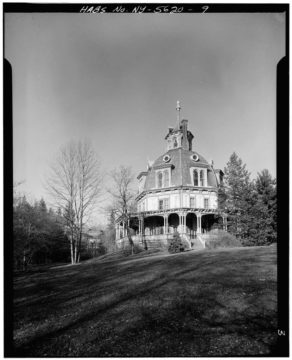 Has any man in history loved anything as much as Orson Squire Fowler loved the octagon? Fowler, born in Cohocton, N.Y., in 1809, published a book in 1848 arguing that all houses should be eight-sided. He influenced a (failed) utopian community in Kansas called Octagon City, delivered an estimated 350 public orations on octagon supremacy and built himself a 60-room octagonal palace in upstate New York.
 “Streaming” music. Sounds so simple, so peaceful, right? If you’re listening closely, though, you know that contemporary pop is a much choppier body of water, oceanic in its breadth and volume. In little sips and big gulps, I’ll be keeping track of my new faves with the following list of 2023’s best recordings — organized chronologically by release date — and I’ll be updating it continuously throughout the year.
 F
F Here/After The Art is an attempt to elevate a discussion and research the future of art as it has never been done before. We ask creators to produce NFTs that make predictions on the future of art. This project invites diversity across continents and creative disciplines. For example, in addition to visual artists we will also reach out to renowned filmmakers, musicians, and designers to create a vibrant mix of personalities who have a voice in what art has been, is, and especially what it will be. We recognise and appreciate that all this takes place in the age of emerging technologies including AI, NFT, and in the new spaces such as web3, metaverse and the decentralisation of culture.