
Shahin Vallée in Phenomenal World:
A profound sense of uncertainty dominates the question of the international monetary order today. Trump’s presidency in the US, the growing Sino-American rivalry, and widespread sanctions against Russia’s Central Bank reserves are all contributing to the general indeterminacy. The rise of crypto assets, digital currencies and the return of precious commodities as a potential store of value have prompted some to predict the demise of a fiat based monetary order powered by fractional reserve banking at home and offshore money creation abroad.
After decades acting as the anchor of the global monetary order, the role of the dollar has now come into question. The promotion of stablecoins and other advanced commercial cryptocurrencies have been designed to expand the dollar’s global role, but the outcome of this cryptomercantilism remains to be seen. China has its own internationalization strategy built on the expansion of its central bank’s bilateral swap network to advance renminbi invoicing and the creation of a fully digital payment system backed by a digital currency.
Europe’s strategy is yet to emerge. There is an opportunity for European leaders—not just central bankers—to seize the moment to expand Europe’s global monetary role. A stronger role for the euro would likely enhance European resilience, be it by expanding protections from US sanctions, by helping to insulate Europe’s economy from swings in foreign exchange rates, or by securing better financing conditions for European governments, businesses, and households. But a stronger role for the euro, which doesn’t preclude some costs, will require a degree of planning and policy coordination across member states, as well as between fiscal and monetary authorities—both of which are so far lacking.
More here.
Enjoying the content on 3QD? Help keep us going by donating now.
 When Plato was an infant, bees alighted on his lips and, nestling there, set about making honey. His parents had placed him, sleeping, on the summit of a mountain while they paid tribute to the gods, and when they turned their attention back to him, they found the infant’s mouth full of golden sweetness. Cicero provides our first surviving record of the legend, which is repeated with variations over centuries, always as a portent of the sweet style the infant would ultimately possess.
 “Heated Rivalry” has become a breakout hit. The hockey drama — adapted from an erotic romance novel for the Canadian streaming service Crave — just ended its first season on HBO Max and has left gay men crying at watch parties that feel more like 19th-century religious revivals. If you want to understand why this show has become our community’s equivalent of a cultural earthquake, the answer is that watching a gay couple be mildly boring and in love is still radical.
 In an unremarkable New York apartment, sometime in the not-too-distant future, a man tells his robot to come to bed. She is a “Stella,” an intelligent machine who looks and sounds like a woman. We soon learn that she is a “Cuddle Bunny,” a euphemistic term for the sex-robot setting she’s currently running. She is also set to “autodidactic” mode, which gives her a searching intellect and a nascent independence. Her name is Annie, and we will follow her on the journey to elevated consciousness in “Annie Bot,” Sierra Greer’s slyly profound debut novel.
 If you want to lose weight, exercise doesn’t really matter.
 In a way I’ve never experienced in my life, I feel in synch with a political turn, felt by millions of voters, that’s now being reflected in the voice of one of the most dynamic leaders we’ve seen in a long time.
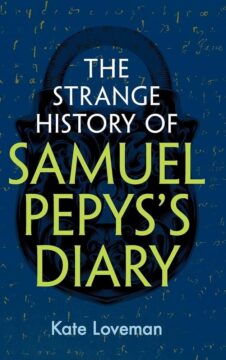 Pepys was a meticulous – some might say compulsive – record-keeper, and his talent for storing and retrieving vast amounts of information would be useful to him throughout his career. Loveman argues that the diary became his ‘catch-all’ for anything he couldn’t safely or conveniently note in his official or household accounts. Into its pages went social debts (who had given him dinner, who still owed him one), gossip, the music he heard and the plays he saw, and the most intimate aspects of his life, from bodily functions (including what has been called ‘one of the best documented attacks of flatulence in history’) to sex.
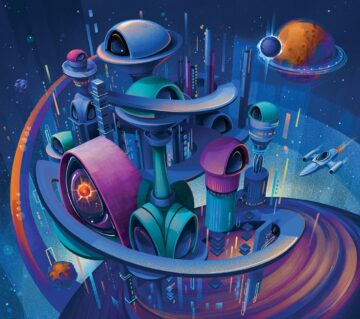 The Roman sage Marcus Aurelius said we should never let the future disturb us. But then he never had a conversation with the futurologist Nick Bostrom about the state of the world in 2050. “There’s a good likelihood that by 2050, all scientific research will be done by superintelligent AI rather than human researchers,” Bostrom said in an e-mail. “Some humans might do science as a hobby, but they wouldn’t be making any useful contributions.” Time to rethink your career options, Nature readers!
 W
W “I don’t have a clear-cut film identity,” Rob Reiner
 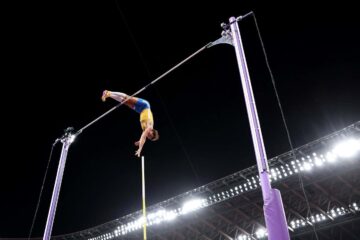 International chess masters, Olympic gold medallists and Nobel prize-winning scientists were rarely child prodigies, a review reveals. Likewise, early