
Category: Recommended Reading
I’m a Death Doula. One Man’s Son Refused His Dying Wish
Charon Collier in Newsweek:
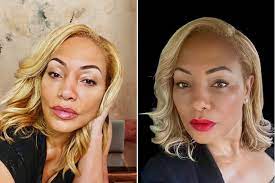 In the quiet corner of a dimly lit hospice room, I stood beside my friend Diane and her son Hans, also one of my dearest friends, who was journeying home. I told Diane to rest as she moved over, and I continued holding Hans’ hand, as I watched Diane rest. The room was filled with a sense of peace and acceptance. At this moment, I realized I was no longer a hospice volunteer. I was living my purpose as a death doula, accompanying souls as they gracefully depart this world. My death doula journey began several years ago when I started as a hospice volunteer. I had no experience in end-of-life care, but I did possess a strong desire to become a better human being.
I recognized that there were people in the world facing much greater challenges than I was. I was young, healthy, educated, and had a decent income. It was in this moment of reflection that I realized how grateful I was for my life and how I could contribute to making the world a better place while shifting the focus away from myself.
More here.
Scientists will unleash an army of crabs to help save Florida’s dying reef
Benji Jones in Vox:
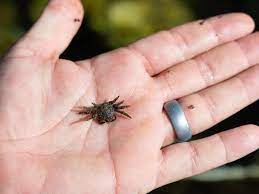 With giant pincers and rough, spider-like legs, Caribbean king crabs don’t look like your typical heroes. Yet these crustaceans may be key to solving one of the world’s most pressing environmental problems: the decline of coral reefs. In recent decades, warming seas, diseases, and other threats have wiped out half of the world’s corals and 90 percent of those in Florida. And this past summer, the problem accelerated. A devastating heat wave struck the Caribbean, pushing the reef in the Florida Keys — the largest in the continental US — closer to the brink of collapse. The decline of coral reefs is an enormous problem for wildlife and human communities. Reefs not only provide habitat for as much as a quarter of all marine life, including commercial fish, but they also help safeguard coastal communities during severe storms. Simply put, we need coral reefs.
Coral reefs, meanwhile, need crabs.
Lucky for them, help is on the way. Scientists are in the process of building a crab army — hundreds of thousands of crustaceans strong — that they’ll unleash on Florida’s reefs, giving this ailing ecosystem a tool to fight back.
More here.
Dua Lipa In Conversation With Patti Smith (for Abbas)
The Genius Of Brian Wilson And The Beach Boys
Charlotte Shane at Bookforum:
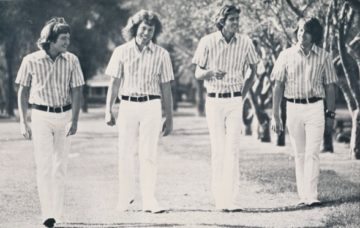 BRIAN WILSON HAS BEEN DEAF IN HIS RIGHT EAR since childhood. He mixed the Beach Boys’ albums, including Pet Sounds, in mono because he couldn’t hear them any other way. “It was sort of like being robbed of something, some pleasure of life,” he said in 1976. “I’m not complaining, but it’s a little bit of a setback.” I think the deafness might explain why the left side of his mouth reaches up when he speaks, like he’s addressing his good ear. (The affect has become more pronounced with age, but it’s visible in footage from the 1960s.) “I got one ear left and your big loud voice is killin’ it,” Brian yelled at his father and former band manager, Murry Wilson, during 1965’s “Help Me, Rhonda” recording session. Murry, drunk but not untrue to his sober form, had been berating the guys for almost forty minutes as they tried to get down the vocals.
While Brian’s hearing loss is undisputed, its cause has never been confirmed. In his second, most recent autobiography, I Am Brian Wilson, Brian says another kid hit him in the head with a lead pipe.
more here.
The Fraud By Zadie Smith
Anthony Cummins at Literary Review:
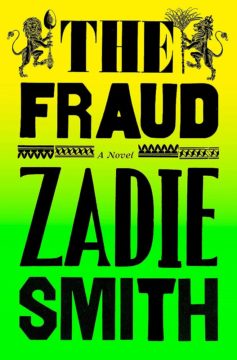 Zadie Smith’s first historical novel spins a tangled web around the knotty case of the Tichborne claimant, a long-running legal saga that divided Victorian Britain. The book’s title, The Fraud, ostensibly refers to Arthur Orton, a butcher who, in 1866, claimed (falsely, in the eyes of the law) that he was Sir Roger Tichborne, an aristocratic heir long presumed lost at sea. Yet in Smith’s crowded narrative – crafted to imply that the much-debated phenomena of polarisation and disinformation are hardly new – the frauds multiply, the titular slur clinging to everything from writing novels (for Smith, always a suspicious enterprise) to neoliberal economics.
Orton’s case serves largely as a backdrop for emotional drama in the household of another real-life figure, William Harrison Ainsworth, a contemporaneous author of bestselling potboilers who is now forgotten and, the novel shows, fell into neglect in his own lifetime, overshadowed by Charles Dickens and even reckoned by one of his publishers to have died before he actually did.
more here.
Thursday Poem
Racists
Vas en Afrique! Back to Africa! The butcher we used to patronize in the
…… Rue Cadet market,
beside himself, shrieked at a black man in an argument the rest of the
…… import of which I missed
but that made me anyway for three years walk an extra street to a shop
…… of definitely lower quality
until I convinced myself that probably I’d misunderstood that other thing
…… and could come back.
Today another black man stopped, asking something that again I didn’t
…… catch, and the butcher,
who at the moment was unloading his rotisserie, slipping the chickens
…… off their heavy spit,
as he answered—how to get this right?—casually but accurately brandished
…… the still-hot metal,
so the other, whatever he was there for, had subtly to lean away a little,
…… so as not to flinch.
by C.K. Williams
from Selected Poems
Farrar, Straus and Giroux, 1994
Wednesday, September 27, 2023
Confessions of a Viral AI Writer
Vauhini Vara in Wired:
One night, with anxiety and anticipation, I went to GPT-3 with this sentence: “My sister was diagnosed with Ewing sarcoma when I was in my freshman year of high school and she was in her junior year.”
GPT-3 picked up where my sentence left off, and out tumbled an essay in which my sister ended up cured. Its last line gutted me: “She’s doing great now.” I realized I needed to explain to the AI that my sister had died, and so I tried again, adding the fact of her death, the fact of my grief. This time, GPT-3 acknowledged the loss. Then, it turned me into a runner raising funds for a cancer organization and went off on a tangent about my athletic life.
I tried again and again. Each time, I deleted the AI’s text and added to what I’d written before, asking GPT-3 to pick up the thread later in the story. At first it kept failing. And then, on the fourth or fifth attempt, something shifted. The AI began describing grief in language that felt truer—and with each subsequent attempt, it got closer to describing what I’d gone through myself.
When the essay, called “Ghosts,” came out in The Believer in the summer of 2021, it quickly went viral. I started hearing from others who had lost loved ones and felt that the piece captured grief better than anything they’d ever read. I waited for the backlash, expecting people to criticize the publication of an AI-assisted piece of writing. It never came. Instead the essay was adapted for This American Life and anthologized in Best American Essays. It was better received, by far, than anything else I’d ever written.
More here.
Sean Carroll’s Mindscape Podcast: Rosemary Braun on Uncovering Patterns in Biological Complexity
Sean Carroll in Preposterous Universe:
 Biological organisms are paradigmatic emergent systems. That atoms of which they are made mindlessly obey the local laws of physics; even cells and organs do their individual jobs without explicitly understanding the larger whole of which they are a part. And yet the system as a whole functions beautifully, with apparent purpose and function. How do the small parts come together to form the greater whole? I talk with biophysicist Rosemary Braun about what we’re learning about collective behavior within organisms from the modern era of huge biological datasets, especially crucial aspects like timekeeping (with bonus implications for dealing with jet lag).
More here.
“Florida Man,” explained
Kristen Arnett at Vox:
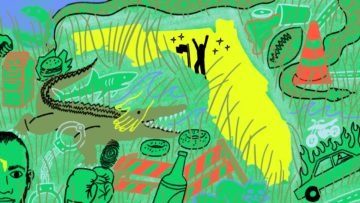 There’s a game people like to play online. In fact, there’s an entire website dedicated to it. It’s called the “Florida Man Birthday Challenge” and the premise is simple enough: You type your birthday into the site’s search bar — month, date — along with the words “FLORIDA MAN.” Whatever headline pops up becomes your official intro into the Florida Man historical record. When I type my own birthday on the site (December 16th, Sagittarius Sun), I discover that a naked Florida man once stole a pickup truck from a car dealership. That’s right. Simply walked into the dealership, fully nude, and then climbed inside a 2021 model Ram pickup and promptly drove off.
More here.
Hannah Ritchie: Are we the last generation — or the first sustainable one?
The Case for Mediocrity
Jamie Ducharme in Time:
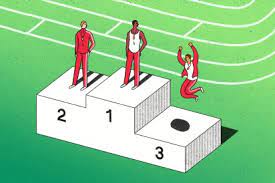 The night before my first book came out, I lay awake envisioning all the ways it could ruin my life. What if I get sued because I made a mistake? What if I get harassed online? What if I get such bad reviews I never work in journalism again?
I’d spent the past 18 months obsessing over the project, thinking about it on a loop. I often struggled to sleep, ruminating over all the ways it might fall short. I started seeing a therapist for the first time in my life. My career was at its high point, and I had accomplished a dream so big I’d never actually thought it would come true, but my mental health had never been worse.
More here.
How to stop AI deepfakes from sinking society — and science
Nicole Jones in Nature:
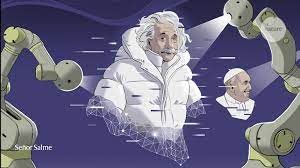 This June, in the political battle leading up to the 2024 US presidential primaries, a series of images were released showing Donald Trump embracing one of his former medical advisers, Anthony Fauci. In a few of the shots, Trump is captured awkwardly kissing the face of Fauci, a health official reviled by some US conservatives for promoting masking and vaccines during the COVID-19 pandemic.
“It was obvious” that they were fakes, says Hany Farid, a computer scientist at the University of California, Berkeley, and one of many specialists who examined the pictures. On close inspection of three of the photos, Trump’s hair is strangely blurred, the text in the background is nonsensical, the arms and hands are unnaturally placed and the details of Trump’s visible ear are not right. All are hallmarks — for now — of generative artificial intelligence (AI), also called synthetic AI.
More here.
On Matthew Barney’s “Secondary”
Samuel Fury Childs Daly at the LARB:
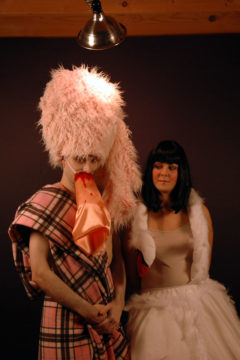 Despite his Yale education and his patrician tone, Barney has a working-class sensibility; watch an interview with him and you’ll see someone who speaks like an academic but dresses like a teamster. This means that Barney cuts an unusual figure in the art world. He is thoroughly a jock, and his work is so unapologetically macho that describing it can sound like parody. A “cycle” of films named after part of the scrotum? A six-hour opera about Norman Mailer? This is art by, for, and about men, even though the machismo is more mottled than it might appear at first glance.
The scenes Barney stages can be so repellent that they end up being strangely beautiful (one scatological moment from 2014’s River of Fundament will be with me forever), or so reactionary that they come full circle and become radical. Barney celebrates, and seems to revel in, the rites and emblems of a traditional masculinity that is today almost universally pathologized—especially among people who tend to work in art galleries.
more here.
Matthew Barney’s River of Fundament
On Marcottage
Kate Briggs at The Paris Review:
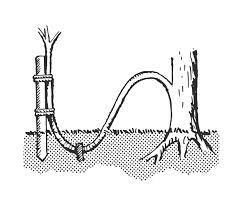 Marcottage could be a possible metaphor for translation. This work of provoking what plants, and perhaps also books, already know how to do, what in fact they most deeply want to do: actively creating the conditions for a new plant to root at some distance from the original, and there live separately: a “daughter-work” robust enough in its new context to throw out runners of its own, in unexpected directions, causing the network of interrelations to grow and complexify.
For me, marcottage is a way to make sense of my own translations of Barthes’s lecture courses. Officially, there have been two—two translations into English of two volumes of lecture notes published in French more than a decade ago: The Preparation of the Novel and How to Live Together. But to my mind, there have really been four: two further books, translations in a more expanded sense. This Little Art, my long essay that stays close to Barthes’s late work, frequently citing it, renarrating it, making an adjacent space to keep thinking with it.
more here.
Wednesday Poem
A beautiful wish, spoken so ardently that truth fractures,
must be fact-checked before promulgation. What otherwise
follows are shattered hearts, and disbelief in truth.
……………………………. ……………………….. —Anonymous
Ginsberg
No blame. Anyone who wrote Howl and Kaddish
earned the right to make any possible mistake
for the rest of his life.
I just wish I hadn’t made this mistake with him.
It was during the Vietnam war
and he was giving a great protest reading
in Washington Square Park
and nobody wanted to leave.
So Ginsberg got the idea, “I’m going to shout
‘the war is over’ as loud as I can,'” he said
“and all of you run over the city
in different directions
yelling the war is over, shout it in offices,
shops, everywhere and when enough people
believe the war is over
why, not even the politicians
will be able to keep it going.”
I thought it was a great idea at the time
a truly poetic idea.
So when Ginsberg yelled I ran down the street
and leaned in the doorway
of the sort of respectable down-on-its-luck cafeteria
where librarians and minor clerks have lunch
and I yelled “the war is over.”
And a little old lady looked up
from her cottage cheese and fruit salad.
She was so ordinary she would have been invisible
except for the terrible light
filling her face as she whispered
“My son. My son is coming home.”
I got myself out of there and was sick in some bushes.
That was the first time I believed there was a war.
by Julia Vinograd
from Poetic Outlaws
Tuesday, September 26, 2023
Containing AI In Open Societies
Nathan Gardels at Noema:
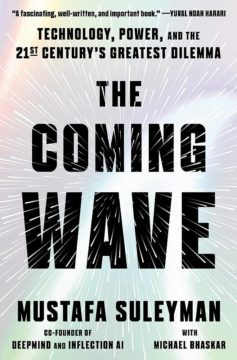 Mustafa Suleyman, a co-founder of DeepMind and former vice president for AI products and policy at Google, offers some deep thoughts in his just-released book, “The Coming Wave: Technology, Power and the 21st Century’s Greatest Dilemma” (written with Michael Bhaskar).
The “wave” he sees washing over all aspects of society, for better and worse, is propelled by generative AI and another general-purpose technological innovation — synthetic biology, which, powered by the processing prowess of intelligent machines, can read and rewrite genetic code and then boot up life in the lab. “For the first time core components of our technological ecosystem directly address two foundational properties of our world: intelligence and life. In other words, technology is undergoing a phase transition. No longer simply a tool, it’s going to engineer life and rival — and surpass — our own intelligence,” Suleyman writes.
more here.
The Animals Are Talking. What Does It Mean?
Sonia Shah at the New York Times:
 Evidence of continuities between animal communication and human language continued to mount. The sequencing of the Neanderthal genome in 2010 suggested that we hadn’t significantly diverged from that lineage, as the theory of a “human revolution” posited. On the contrary, Neanderthal genes and those of other ancient hominins persisted in the modern human genome, evidence of how intimately we were entangled. In 2014, Jarvis found that the neural circuits that allowed songbirds to learn and produce novel sounds matched those in humans, and that the genes that regulated those circuits evolved in similar ways. The accumulating evidence left “little room for doubt,” Cedric Boeckx, a theoretical linguist at the University of Barcelona, noted in the journal Frontiers in Neuroscience. “There was no ‘great leap forward.’”
As our understanding of the nature and origin of language shifted, a host of fruitful cross-disciplinary collaborations arose. Colleagues of Chomsky’s, such as the M.I.T. linguist Shigeru Miyagawa, whose early career was shaped by the precept that “we’re smart, they’re not,” applied for grants with primatologists and neuroscientists to study how human language might be related to birdsong and primate calls.
more here.