
Adam Reiner at Eater:
 “What’s that thing with the fire?” a woman from the table behind me asks, tugging on the vents of my tuxedo jacket and gesturing toward the dessert I just finished flambéing. I’m tempted to lie and tell her we just sold out, but instead I explain the Bananas Foster — caramelized bananas flamed with dark rum over house-made banana-buttermilk ice cream — the restaurant’s most popular dessert. But she isn’t listening. I can already sense her plans to cast me as the lead in her TikTok video or the poster child for her “en fuego” meme. “Oh my God, I hate bananas,” she says, turning toward her tablemates, “but we should totally order it anyway!” They haven’t even finished their appetizers.
Scenes like this were not uncommon during the three years I worked as a captain at the Grill in midtown Manhattan — a midcentury chophouse in the former Four Seasons Restaurant space where tableside theatrics and culinary sleight of hand are calculated distractions.
More here.

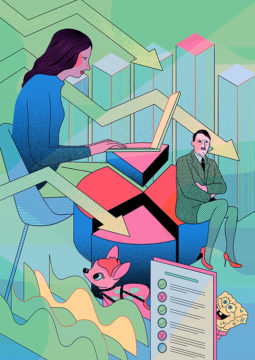 If you’re new to my work, I’m a self-taught researcher, driven to learn through fortunate access to high sample sizes and sheer curiosity. As of this writing, over 700,000 people have responded to my
 ‘That’s our mountain,’ a wordy Neapolitan told Hester Piozzi, ‘which throws up money for us, by calling foreigners to see the extraordinary effects of so surprising a phenomenon.’ The hermits were only one part of a flourishing and lucrative Vesuvius service industry that visitors encountered as they began their ascents. As Brewer says, what the industry was ‘selling was a sublime experience’. Making your own way up the mountain to see the extraordinary effects was perilous, but help was at hand. Your first encounter upon arrival would be with a disorganised horde of vociferous guides, all offering their services. The spectacle seems to have been distinctly off-putting: the poet Shelley, generally a friend of humanity, thought these particular humans ‘degraded, disgusting & odious’. Degraded or not, some guides became celebrities: Salvatore Madonna (‘il capo cicerone’) was well-known for his narrative skills and general charm, as well as for his knowledge of the territory, and he even appeared in guidebooks as a colourful feature of the scene to be looked out for. Madonna seems to have been a professional type, but untrustworthy guides were not uncommon.
 Aviation produces about
 Staring into the mirror, on a Tuesday morning, you decide that your self needs all the help it can get. But where to turn? You were reading James Clear’s “
 Artificial General Intelligence (AGI) means many different things to different people, but the most important parts of it have already been achieved by the
  BETWEEN 1956 AND 1967, the Coenties Slip on the lower tip of Manhattan was home to a group of artists who had moved to the city with grand ambitions for their work and little money to their names. In those lean years, before they were canonized, Robert Indiana, Ellsworth Kelly, Agnes Martin, James Rosenquist, Lenore Tawney, Jack Youngerman, and Delphine Seyrig all took up residence in this “down downtown,” on a dead-end street on the East River where they nested themselves among fishing ships and sailors, the changing tides and unremitting grime, living at a remove from the New York City art world. Here on “the Slip”—a commercial dock designed for transience and exchange—they lived in cheap and drafty lofts, nurturing intuitions and ideas into radical practices, producing bodies of work that would, in the end, be very much a part of the zeitgeist.
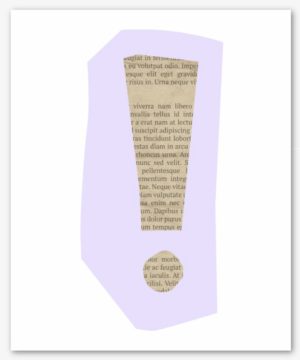 Noisy. Hysterical. Brash. The textual version of junk food. The selfie of grammar. The exclamation point attracts enormous (and undue) amounts of flak for its unabashed claim to presence in the name of emotion which some unkind souls interpret as egotistical attention-seeking. We’ve grown suspicious of feelings, particularly the big ones needing the eruption of a ! to relieve ourselves. This trend started sometime around 1900 when modernity began to mean functionality and clean straight lines (witness the sensible boxes of a Bauhaus building), rather than the “extra” mood of Victorian sensitivity or frilly playful Renaissance decorations.
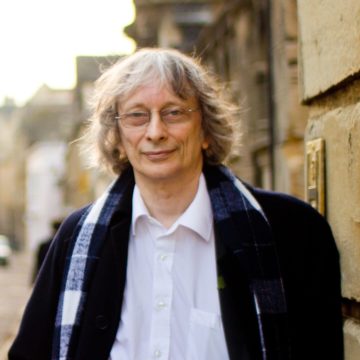 David Deutsch is one of the most creative scientific thinkers working today, who has as a goal to understand and explain the natural world as best we can. He was a pioneer in quantum computing, and has long been an advocate of the Everett interpretation of quantum theory. He is also the inventor of
  What happens when lonely men, embittered by a sense of failure in the sexual marketplace, find each other and form communities on the internet? The result can be deadly.
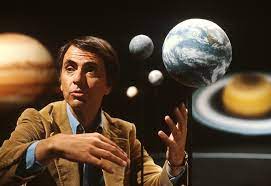 Early in 1993, a manuscript landed in the Nature offices announcing the results of an unusual — even audacious — experiment. The investigators, led by planetary scientist and broadcaster Carl Sagan, had searched for evidence of life on Earth that could be detected from space. The results, published 30 years ago this week, were “strongly suggestive” that the planet did indeed host life. “These observations constitute a control experiment for the search for extraterrestrial life by modern interplanetary spacecraft,” the team wrote (
 Last week the literary association