
 Ho-Fung Hung in Sidecar:
In the early 2010s, the economist Justin Lin Yifu, a former World Bank chief official with ties to the Chinese government, predicted that China’s economy would have at least two more decades of growth above 8%. He reckoned that since the country’s per capita income at that time was about the same level as Japan’s in the 1950s and South Korea’s and Taiwan’s in the 1970s, there was no reason China could not replicate the erstwhile successes of these other East Asian states. Lin’s optimism was echoed by the Western commentariat. The Economist projected that China would become the world’s biggest economy by 2018, surpassing the United States. Others fantasized that the Communist Party would embark on an ambitious programme of political liberalization. The New York Times’s Nicholas Kristof wrote in 2013 that Xi would ‘spearhead a resurgence of economic reform, and probably some political easing as well. Mao’s body will be hauled out of Tiananmen Square on his watch. Liu Xiaobo, the Nobel Peace Prize-winning writer, will be released from prison’. The political scientist Edward Steinfeld likewise argued in 2010 that China’s embrace of globalization would kickstart a process of ‘self-obsolescing authoritarianism’ resembling that of Taiwan in the 1980s and 90s.
Ten years later, the naivety of these forecasts is apparent. Even before the onset of Covid-19, the Chinese economy had slowed down and entered a domestic debt crisis, visible in the collapse of major real estate developers like Evergrande. After Beijing lifted all pandemic restrictions in late 2022, a widely anticipated economic rebound failed to materialize.
More here. Also see this piece by Michael Pettis from a decade ago.
 Inanna is remarkably little known these days, but at the dawn of civilisation, she was vastly important. She went on to become Ishtar, who is more widely recognised, and then aspects of her character were incorporated into the goddesses Aphrodite and Venus. Of all the deities, she is arguably the one who has lived the longest.
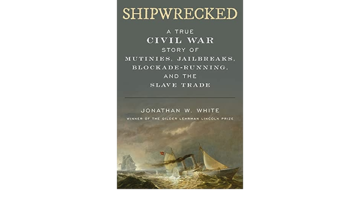 Who was Appleton Oaksmith? One contemporary described him as a “good seaman, & a bold & daring officer.” His enemies, President Abraham Lincoln among them, judged him a scoundrel and a traitor. Oaksmith, writing six years after the Civil War, wasn’t sure what to think: “I look upon myself sometimes with a sort of doubt as to my own identity.”
 Former U.S. Vice President Al Gore has been a huge player in the fight against climate change for as long as most of us can remember. As the founder and current chair of the
  Like her patron goddess, Venus, Helen of Troy represents, in
  Ninety-three days
 This July has been the hottest in our
 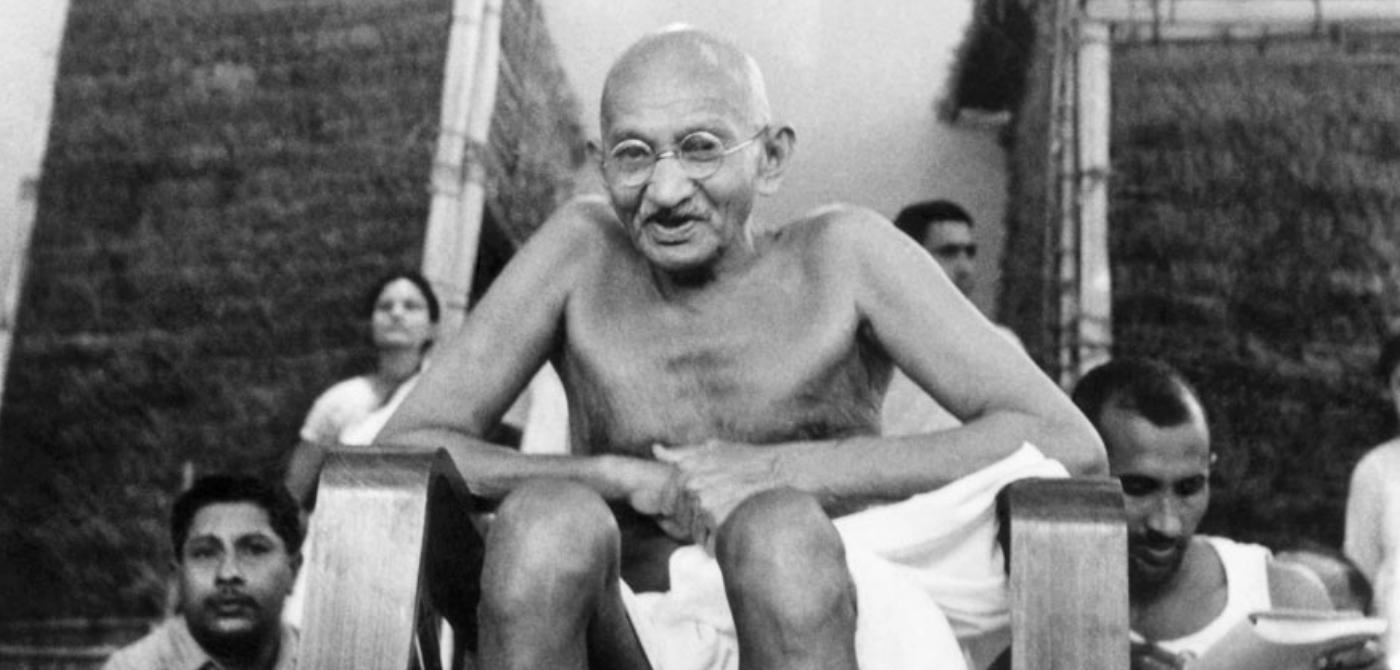 I will begin on a self-conscious note. For some years, I have put off writing about Gandhi’s views on caste for my long-gestating book manuscript on Gandhi’s thought. The subject had become so fraught, as a result of recent invectives directed at Gandhi, that I did not trust myself to not get caught up in an ideological maelstrom in which anything one said by way of trying to merely even understand his views would come off as a kind of apologetics, which I had no wish to produce since, for all my admiring interest in him, I am not a Gandhi-bhakt. Indeed, as will emerge in what I am about to say, he is sometimes quite wrong on this subject as, no doubt, on others.
 Scotus remains a polarising figure, but his humanist detractors would be horrified to learn that here in the
  In “The Song of Myself”, Whitman tells us “I am the man, I suffered, I was there”. The poetic force of his work, which the American poet James Wright terms his “delicacy”, arises from the exactness of his observations; Whitman’s dedication to what he called “every organ and attribute”. This commitment to specificity is vital in understanding Del Rey’s artistic evolution; in her work on NFR! and beyond, she exhibits an oblique approach to individual experience, one that places a similar emphasis on precision. An instinct for poetic specificity is most apparent on “Blue Bannisters”, “Kintsugi” and “Fingertips”, sprawling, stream-of-consciousness confessionals that speak to Jesus, her family, lovers past and present, the dead and the living and the unborn, America, the Earth and the heavens, herself. There’s a Whitman-esque delicacy to her lyrics, whether they’re about the way John Denver holds the note on “Rocky Mountain High”, her sister making birthday cake while chickens run around the yard, or dropping a location pin to her lover on a hot night in the canyon.
 The 2024 presidential election is 14 months away, which means political news sites are already saturated with poll-obsessed prognostication and horse-race reporting. In this way, every election season is alike—but this year’s run-up has felt particularly repetitive. Joe Biden, who reportedly told advisers in 2019 that he
  How long can human beings live? Although
 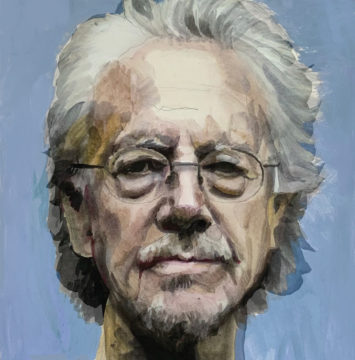 Although Handke first came to prominence as a playwright and novelist of prolific output (he’s the author of dozens of works), he has become much better known for his politics. His support for Serbia in the Balkan Wars of the 1990s, particularly his statements about the genocidal violence committed against Bosnian Muslims, has made him a pariah. A habitual contrarian, Handke embraced his outcast status and offered a bizarre disputation of the facts of the war that struck many as delusional, especially considering that he had only a glancing personal interest in Balkan politics—his mother was Slovenian, a fact he clung to with increasing intensity. In the years that followed, Handke has dug in even deeper. When Slobodan Milošević died in 2006 during his trial for war crimes, Handke spoke at his funeral. Years later, he was feted and decorated by the Serbian government. Despite the support of high-profile writers like Elfriede Jelinek and Karl Ove Knausgaard, his reputation has suffered. When he was awarded the Nobel Prize in Literature in 2019, protest was widespread and one member of the Nobel committee promptly resigned, in part because of his politics.
 The goal of this article is to make a lot of this knowledge accessible to a broad audience. We’ll aim to explain what’s known about the inner workings of these models without resorting to technical jargon or advanced math.
 Let’s get a few things straight to start with. First, higher education as it currently exists is not going anywhere. There are more than