
Rob LeDonne in The Guardian:
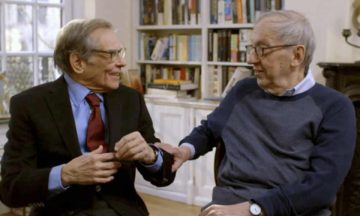 The director Lizzie Gottlieb was hosting a birthday party for her father, the renowned editor Robert Gottlieb at her Brooklyn brownstone when she struck up a conversation with one of the many guests. “A lovely older gentleman came up to me and said, ‘What do you think of the Barclay’s Center on Flatbush Avenue and how do you think it’ll affect the neighborhood?’ I started spouting completely uninformed, random opinions.” Mid-sentence, she came to a realization. “It was Robert Caro, and I was talking to him about New York City infrastructure.”
As one of the most respected living authors of the written word, 87-year-old Robert Caro has actually only authored six books, from The Power Broker, his 1974 opus about New York City planner Robert Moses to an epic, and still unfinished, series focusing on the life of President Lyndon Baines Johnson (more on that later). It’s a body of work that shines a stark spotlight on power; from the thirst some have for it, how they obtain it, and how the world – and the powerless at large – are shaped by their whims. As a result of his scrupulous and exhaustive research, vivid storytelling and poetic prose, Caro has become a cult figure. The latest facet of his lore is the new documentary Turn Every Page. Directed by Lizzie, it zeroes in on Caro’s creative relationship with his 91-year-old editor, Robert Gottlieb, who also happens to be Lizzie’s father.
More here. (Note: One of the best films I saw this year so far)
 THE FINNISH PHOTOGRAPHER and video artist Iiu Susiraja’s first US solo museum exhibition,
 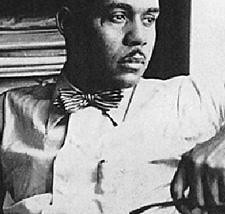 As Ellison would teach his European pupils in Salzburg, the existence of many diverse communities rendered his native land richly heterogeneous—a veritable “international country”—and also testified to an ongoing and still challenging attempt at reconciling color and democracy. The best of American literature, and its novels in particular, contributed to the ongoing effort to forge “unity in diversity,” and this national dilemma manifested important ties to the crises “faced…by peoples throughout the world.” “Through forging forms of the novel worthy of [American diversity],” argued Ellison in his 1953 National Book Award acceptance speech, “we anticipate the resolution of those world problems of humanity which for the moment seem…completely insoluble.” The literary instantiation of American pluralism would help teach Europeans and all the world’s peoples how to create a better future, a valuable lesson for the Salzburg students who had historically received little if any exposure to literatures of color.
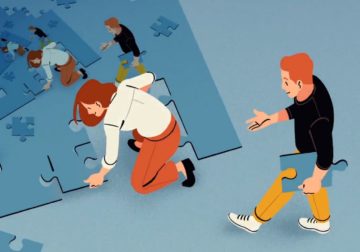 Despite decades of effort by researchers in the field of computational complexity theory — the study of such questions about the intrinsic difficulty of different problems — a resolution to the P versus NP question has remained elusive. And it’s not even clear where a would-be proof should start.
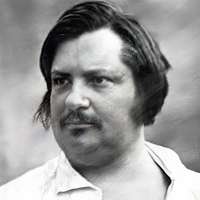 If I’d had to explain to myself why, with only three days to spend in Paris, I felt such an acute need to visit the home where Honoré de Balzac, a writer I wasn’t even that familiar with, had composed the bulk of The Human Comedy, a fictional project I’d barely even dipped my toes into, I’m not sure what I would have said. Probably it just seemed that if anyone would have had an interesting house, it would have been him. Open one of his novels at random, and chances are you’ll find a gratuitous description of a room and its furnishings, a flurry of signifiers that, today, can seem hard to place. Take Monsieur Grandet’s living room, for instance, as it appears in the opening chapter of Eugénie Grandet. We learn the room has two windows that “gave on to the street,” that its floor is wooden, that “grey, wooden panelling with antique moulding lined the walls from top to bottom,” that its ceiling is dominated by exposed beams. “An old copper clock, inlaid with tortoiseshell arabesques, adorned the white, badly carved, stone chimney-piece,” Balzac goes on. “Above it hung a greenish mirror, whose edges, bevelled to show its thickness, reflected a thin stream of light along an old-fashioned pier-mirror of damascened steel.” I don’t know what a pier-mirror is, and I couldn’t begin to differentiate an old-fashioned model from a sleeker, more modern one. In a sense, this feeling of being lost was part of the appeal of Balzac’s world as I’d imagined it.
 Many “pro-Europeans” – that is, supporters of European integration or the “European project” in its current form – imagine that the
  Consciousness presents a “hard problem” to scholars. At stake is how the physical body gives rise to subjective experience. Why consciousness is “hard”, however, is uncertain. One possibility is that the challenge arises from ontology—because consciousness is a special property/substance that is irreducible to the physical. Here, I show how the “hard problem” emerges from two intuitive biases that lie deep within human psychology: Essentialism and Dualism. To determine whether a subjective experience is transformative, people judge whether the experience pertains to one’s essence, and per Essentialism, one’s essence lies within one’s body. Psychological states that seem embodied (e.g., “color vision” ∼ eyes) can thus give rise to transformative experience. Per intuitive Dualism, however, the mind is distinct from the body, and epistemic states (knowledge and beliefs) seem particularly ethereal. It follows that conscious perception (e.g., “seeing color”) ought to seem more transformative than conscious knowledge (e.g., knowledge of how color vision works). Critically, the transformation arises precisely because the conscious perceptual experience seems readily embodied (rather than distinct from the physical body, as the ontological account suggests). In line with this proposal, five experiments show that, in laypeople’s view (a) experience is transformative only when it seems anchored in the human body; (b) gaining a transformative experience effects a bodily change; and (c) the magnitude of the transformation correlates with both (i) the perceived embodiment of that experience, and (ii) with Dualist intuitions, generally. These results cannot solve the ontological question of whether consciousness is distinct from the physical. But they do suggest that the roots of the “hard problem” are partly psychological.
 Every organism responds to the world with an intricate cascade of biochemistry. There’s a source of heat here, a faint scent of food there, or the crack of a twig as something moves nearby. Each stimulus can trigger the rise of one set of molecules in an animal’s body and perhaps the fall of others. The effect ramifies, tripping feedback loops and flipping switches, until a bird leaps into the air or a bee alights on a flower. It’s a vision of biology that entranced
 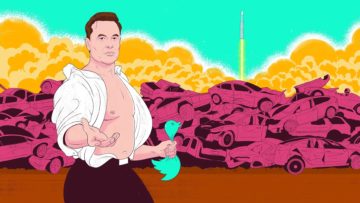 Elon Musk
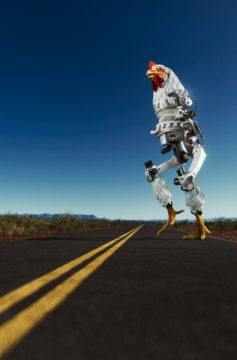 Last month, in the crowded back room of a bar in Williamsburg, Brooklyn, the fate of humanity hung in the balance.
 Michaels is intimately acquainted with this power, having spent the last half-century using SNL to launch bankable talents and profit from their careers. Bupkis isn’t just a Pete Davidson vehicle; it’s a Lorne Michaels production. So is Staten Island Summer, for that matter, and Shrill, The Tonight Show, Schmigadoon!, and That Damn Michael Che—not to mention the recently departed The Other Two and Kenan. The promise of SNL under Michaels’ leadership is simple: If you are loyal to the family, you will reap handsome rewards. Over almost 50 years, that promise has come to justify a legacy of alleged workplace abuses ranging from the familiar to the shocking. Beyond 30 Rock’s walls, it has become the promise of the massive live comedy ecosystem feeding SNL, an amorphous network of small businesses that successfully encoded their exploitative labor practices and regressive cultural norms into the industry’s DNA. As they churned ruthlessly through generations of comedy workers, they helped create the world we’re in now, the one Hollywood writers and actors are striking to change. It’s a world where talent and hard work aren’t nearly enough to earn a stable living; a world where a few fabulously wealthy men hold the power to shape entire art forms in their image.
 A useful tool from Harvard’s Growth Lab: