
Category: Recommended Reading
Loved, yet lonely
Kaitlyn Creasy in aeon:
 Although one of the loneliest moments of my life happened more than 15 years ago, I still remember its uniquely painful sting. I had just arrived back home from a study abroad semester in Italy. During my stay in Florence, my Italian had advanced to the point where I was dreaming in the language. I had also developed intellectual interests in Italian futurism, Dada, and Russian absurdism – interests not entirely deriving from a crush on the professor who taught a course on those topics – as well as the love sonnets of Dante and Petrarch (conceivably also related to that crush). I left my semester abroad feeling as many students likely do: transformed not only intellectually but emotionally. My picture of the world was complicated, my very experience of that world richer, more nuanced.
After that semester, I returned home to a small working-class town in New Jersey. Home proper was my boyfriend’s parents’ home, which was in the process of foreclosure but not yet taken by the bank. Both parents had left to live elsewhere, and they graciously allowed me to stay there with my boyfriend, his sister and her boyfriend during college breaks. While on break from school, I spent most of my time with these de facto roommates and a handful of my dearest childhood friends.
More here.
Why Do Fingers Prune?
Danielle Gerhard in The Scientist:
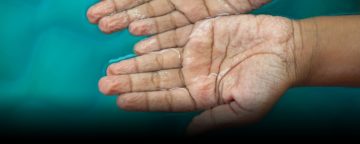 Why fingers shrivel up in water is an age-old question that every child asks at bath time, but the answer may come as a surprise. “The whole body doesn’t wrinkle, and that says a lot,” said Einar Wilder-Smith, a neurologist at Luzerner Kantonsspital. Unlike the surrounding skin, the outermost layer of the fingertip is highly innervated with and tethered to vasculature, setting the stage for pruney fingers.
While osmosis, particularly into dead skin cells, seems like a compelling explanation for this curious phenomenon, Wilder-Smith clarified, “In fact, it’s the opposite.”
In the early 2000s, while working at the National University Hospital in Singapore, Wilder-Smith suspected that the surrounding vasculature drives the wrinkling. He found that after a long soak, blood vessels nestled just below the skin constrict, resulting in negative pressure and downward tugging of the outermost layer of skin. The uneven puckering pattern likely results from varied skin tautness, or tethering, throughout the fingertip.
More here.
Friday Poem
The Engine Cowling
Let engine cowling rivets
………. adhere. Let hydraulic systems operate
flaps without interruption
………. and electrical signals work as expected
O 747
………. that carries Glaucus across the Atlantic
and slants down over the brief
………. Mediterranean to the Grecian shore,
Keep him safe. Not long ago
………. flying required noticeable bravery
as a bold Frenchman, not to
………. say Dayton Ohio’s bicycle-making
brothers, ascended on frail
………. boxes into an alien windstream, never
questioning propriety
………. but taking on challenge as their domain.
When their eyes teared with the wind,
………. did they fear wind? Although they climbed the breezes
of our own century, they
………. seem ancient as Leonardo or Fulton.
They were gallant without guilt
………. as they rose up, and expected to return —
after ingenuity
………. and courage sustained them their moment of release
from the ponderable weight
………. of gravity — to accept the gratitude
of their descendants. But they
………. prepared us Dresden’s fire and Nagasaki’s.
Are we grateful for the death
………. that drops on us from flying mental engines
the Renaissance invented
………. with enlightened conceit? If we beg pardon,
as we dig holes for ourselves,
………. all right; but if we ascend, separated
from grief’s ground without terror
………. or foreboding, we add complacency to
wickedness, idiocy,
………. and engineering. Fear death. Anxiety
mothers and fathers souls
………. giddy with vacuum — otherwise orphaned.
by Donald Hall
from The Museum of Clear Ideas
Ticknor & Fields, 1993
Thursday, November 16, 2023
What’s on Top of TikTok?
Tess McNulty at Public Books:
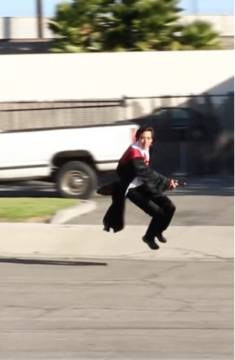 First, watch this very brief video. Or, if you prefer, read this description: For five seconds, an adult man, dressed up as the boy-wizard Harry Potter, appears to fly through the air on a broomstick, while twinkly music plays (a parodic riff on the Potterverse theme). Next, he exposes the ostensible mechanism behind his illusion: a contraption (concealed beneath his midsection) involving a mirror, a prosthetic leg, and a longboard. Finally, he engages with his cameraman in a verbal, slapstick squabble over who owns the longboard. “Come back here!” the cameraman yells, while the faux-wizard rolls away.
The sequence, at only 18 seconds long, is almost vanishingly slight. Yet it has done anything but escape notice. According to multiple sources, “Zach King’s Magic Ride”—as it is sometimes called—which was first posted to TikTok on December 9, 2019, is currently the “Most Viewed TikTok of all Time.” That makes it, arguably, one of the most visible new aesthetic creations in the contemporary world.
More here.
In India, a Need for New Antidotes to Curb Deadly Snakebites
Kamala Thiagarajan in Undark:
 According to the Million Death Study, one of the largest ongoing global studies of premature mortality, around 58,000 Indians die from snakebites every year, the highest rate in the world. And a growing proportion of these bites come from less common species of venomous snakes in specific pockets of the country, for which, according to researchers at the Indian Institute of Science, available antivenin — also often called antivenom — are not very effective.
People living in India’s rural areas, who are exposed to a broad range of snakes, are particularly at risk. Treating these patients can be difficult, said Gnaneswar Ch, project leader of the Snake Conservation & Snakebite Mitigation Project at the Madras Crocodile Bank Trust Center for Herpetology, where the Irula Co-op is located.
For instance, in Tamil Nadu, data on snakebites and how to prevent them — gathered by Gnaneswar’s team since 2015 — suggest that people are most likely to be bitten on their legs when they walk across agricultural fields barefoot. And they may not seek treatment at the hospital until hours after the bite, turning first to natural or folk remedies. As a result, Gnaneswar said, “we’re seeing many amputations and loss of limbs.”
More here.
Secularism in Iran
Patrick Hassan in Aeon:
 The latest waves of uprisings in Iran following the movement in defence of Iranian women’s freedoms are among the most significant since the Islamic Republic was established after the overthrow of Mohammad Reza Pahlavi in 1979. The regime’s resulting crackdown has led to mass arrests and prison sentences, as well as a string of executions. These uprisings are symptomatic of prolonged and multifaceted discontent with the Islamic Republic’s perceived governance. One of the oft-cited causes is growing dissatisfaction with principles of government grounded in a religious worldview, and its subsequent patterns of civil liberty violations. The most visible of these violations, which has served as a focal point for resistance, is the law of mandatory hijab for women.
Gathering reliable empirical data on religious belief in Iran is difficult – apostasy (at least from Islam) is illegal and punishable by death under the vaguely defined crime of Ifsad-e-filarz, or ‘corruption on Earth’. Nevertheless, some available evidence from 2020 suggests predominant opposition to mandatory hijab, to the extent that even some hijabi women have joined the protests to defend everyone’s equal right to liberty. More recent evidence from 2022 also suggests a significant favourable shift towards secularism broadly, with the majority in favour of a separation of religious and civil affairs. Some contemporary research has suggested that, ironically, Iranian theocracy has triggered these trends, which have naturally raised the question of the role of religion in Iranian society.
More here.
What The Longest-Running Study on Happiness Reveals
Selfless Minds: A Contemporary Perspective on Vasubandhu’s Metaphysics
Jay L Garfield at Notre Dame Philosophical Reviews:
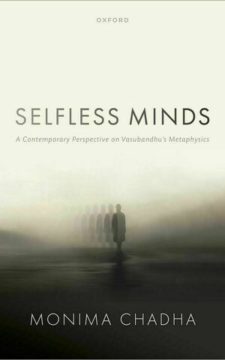 Monima Chadha has given the world of Anglophone philosophy more reason to take Indian Buddhist philosophy seriously in this closely argued study of the philosophy of the 4th century philosopher Vasubandhu, generally regarded as one of the founders (with his older brother Asaṅga) of the Yogācāra tradition, a tradition associated sometimes with idealism, and sometimes with phenomenology. However one reads the vast literature of this school—or, more specifically, the work of Vasubandhu himself—the close attention that Vasubandhu and his followers give to the philosophy of mind and the structure of subjectivity is inescapable and fascinating. Vasubandhu’s influence on subsequent Buddhist philosophy in India, Tibet, China, and beyond is incalculable, and he is surely one of the two or three most important philosophers in the Indian Buddhist tradition. An investigation of his work by an astute philosopher at home in contemporary philosophy of mind is hence most welcome.
more here.
Logic As An Endless Task
Timothy Williamson at Aeon Magazine:
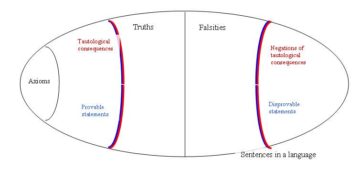 Since logic is the ultimate go-to discipline for determining whether deductions are valid, one might expect basic logical principles to be indubitable or self-evident – so philosophers used to think. But in the past century, every principle of standard logic was rejected by some logician or other. The challenges were made on all sorts of grounds: paradoxes, infinity, vagueness, quantum mechanics, change, the open future, the obliterated past – you name it. Many alternative systems of logic were proposed. Contrary to prediction, alternative logicians are not crazy to the point of unintelligibility, but far more rational than the average conspiracy theorist; one can have rewarding arguments with them about the pros and cons of their alternative systems. There are genuine disagreements in logic, just as there are in every other science. That does not make logic useless, any more than it makes other sciences useless. It just makes the picture more complicated, which is what tends to happen when one looks closely at any bit of science. In practice, logicians agree about enough for massive progress to be made. Most alternative logicians insist that classical logic works well enough in ordinary cases. (In my view, all the objections to classical logic are unsound, but that is for another day.)
more here.
On Language and Logic | Saul Kripke and Timothy Williamson
18 Organizations, 246 Scientists and Scholars Send Letter to New Director of NIH, Urging Shift Away From Animal Use in Medical Research
From Physicians Committee for Responsible Medicine:
 WASHINGTON, D.C.—A group of scientists, physicians, ethicists, and advocates sent a letter this Wednesday to the newly confirmed director of the National Institutes of Health, Dr. Monica Bertagnolli, urging her to reduce the agency’s use of animals in medical research. Led by the Physicians Committee for Responsible Medicine and co-signed by 246 individuals and 18 organizations, including biotechnology companies, think tanks, and animal protection groups, the letter requests that Dr. Bertagnolli prioritizes funding for developing, validating, and using nonanimal human disease models. It also requests divestment from animal use in research areas where poorly predicted human outcomes have been demonstrated, such as vaccine development and liver toxicity.
The NIH is the largest funder of biomedical research in the world, overseeing a budget of nearly $50 billion this fiscal year. Despite evidence that animal experiments are unreliable predictors of human physiology and disease states, they remain the presumed “gold standard” in basic and preclinical research by the NIH and others within the research community. This reliance on animals contributes to failures and wasteful spending in the drug development pipeline and puts clinical trial participants at risk by failing to capture unsafe or ineffective products. It also requires that untold numbers of dogs, cats, monkeys, mice, rats, and other animals be bred and used in painful and deadly procedures—estimated to be greater than 100 million per year in the U.S.
More here.
How wild monkeys ‘laundered’ for science could undermine research
Gemma Conroy in Nature:
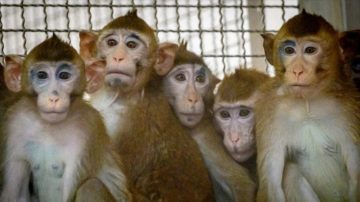 In 2019, immunologist Jonah Sacha received a shipment of monkeys for his research into infectious diseases. But while conducting preliminary chest X-rays, Sacha found one monkey that stood out for all the wrong reasons: it was carrying the bacterium that causes tuberculosis (TB). The infected animal rendered the entire shipment of 20 monkeys unusable for research because of the risk that the infection would spread. “We lost all of those animals,” says Sacha, who investigates stem-cell transplants as a treatment for HIV at the Oregon Health & Science University’s Oregon National Primate Research Center in Beaverton. “That cost hundreds of thousands of dollars of damage and delayed our research by many years.”
In a lot of ways, Sacha was lucky that he detected the diseased monkey: if it had made its way into a medical trial, it could have confounded the results, says Ricardo Carrion, a microbiologist at the Texas Biomedical Research Institute’s Southwest National Primate Research Center in San Antonio. Sacha doesn’t know how the monkeys got TB — research monkeys are typically captive-bred, which should guarantee that they are free of diseases. But the risk of disease is a growing concern among scientists who work with monkeys; news reports suggest that some laboratory monkeys are being illegally poached from the wild, falsely labelled as captive-bred and sold as research animals, a practice known as monkey laundering.
More here.
Thursday Poem
Above the River
I believe we’re all breakable
old bridges black paint &
rust building behind dirt
roads boarded up
unraveled with longing
looking down on some crazy
river world & driven so
when you brush
past me & honor my
shoulder with your small gift
of a hand because you just
can’t not all the sins of all
the people who never touched me
right seem forgiven
by Jim Bell
from Crossing the Bar
Slate Roof Publishing Collective
Northfield, Ma.
Wednesday, November 15, 2023
The Letters of Seamus Heaney
John Banville in The Guardian:
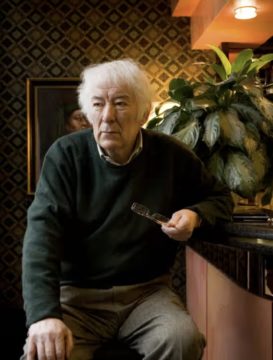 If letter writing is an art form, then Seamus Heaney was one of its master practitioners. Christopher Reid’s 800-page selection from what he assures us was an “enormous output” – “I have had to cut back severely to make a book of publishable proportions” – is a trove of delights as much as it is a literary testament.
Heaney was as fluent in prose as he was sublime in verse, as readers will know from his essays and articles, and his extensive memoir, Stepping Stones, compiled in interview form with the poet Dennis O’Driscoll. Yet the style in the letters, many of them obviously composed at breakneck speed, is astonishing in its quality and unflagging grace. As one of his correspondents said of Heaney: “He makes the simplest words shine.”
Despite occasional asperities, his generosity and enthusiasm for the work of others are remarkable. Here he is writing in 2006 to Ted Hughes’s widow, Carol, about the poet’s posthumous Selected Translations – and note the beautifully sustained oceanic metaphor: “The delights are dolphin-like, the mighty talent rising again and showing his back above the elements … I got [the book] and swam in and out of the different coves and caves, safe havens (few) and strange strands. A strong sense of being lifted on the tide of it all.”
More here.
DeepMind AI can beat the best weather forecasts – but there is a catch
Matthew Sparkes in New Scientist:
 AI can predict the weather 10 days ahead more accurately than current state-of-the-art simulations, says AI firm Google DeepMind – but meteorologists have warned against abandoning weather models based in real physical principles and just relying on patterns in data, while pointing out shortcomings in the AI approach.
Existing weather forecasts are based on mathematical models, which use physics and powerful supercomputers to deterministically predict what will happen in the future. These models have slowly become more accurate by adding finer detail, which in turn requires more computation and therefore ever more powerful computers and higher energy demands.
Rémi Lam at Google DeepMind and his colleagues have taken a different approach. Their GraphCast AI model is trained on four decades of historical weather data from satellites, radar and ground measurements, identifying patterns that not even Google DeepMind understands. “Like many machine-learning AI models, it’s not very easy to interpret how the model works,” says Lam.
More here.
Francis Bacon has been charged with robbing science of its innocence. But what if we’ve all been reading him wrong?
Louise Liebeskind in The New Atlantis:
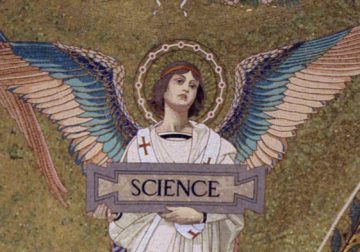 Francis Bacon is known, above all, for conceiving of a great and terrible human project: the conquest of nature for “the relief of man’s estate.” This project, still ongoing, has its champions. “If the point of philosophy is to change the world,” Peter Thiel posits, “Sir Francis Bacon may be the most successful philosopher ever.” But critics abound. Bacon stands accused of alienating human beings from nature, abandoning the wisdom of the ancients, degrading a philosophy dedicated to the contemplation of truth, and replacing it with something cruder, a science of power.
In The Abolition of Man, C. S. Lewis goes so far as to compare Bacon to Christopher Marlowe’s Faustus:
You will read in some critics that Faustus has a thirst for knowledge. In reality, he hardly mentions it. It is not truth he wants … but gold and guns and girls. “All things that move between the quiet poles shall be at his command” and “a sound magician is a mighty god.” In the same spirit Bacon condemns those who value knowledge as an end in itself: this, for him, is to use as a mistress for pleasure what ought to be a spouse for fruit. The true object is to extend Man’s power to the performance of all things possible.
Lewis draws the final phrase of this critique from Bacon’s New Atlantis, the 1627 utopian novella from which this journal takes its name. But why would a publication like The New Atlantis, dedicated to the persistent questioning of science and technology, name itself after a philosopher’s utopian dreams about magicians on the verge of becoming mighty gods?
More here.
Martin Rees and Brian Greene Discuss the Past and Future of Life and the Cosmos
Wednesday Poem
The Such Thing As the Ridiculous Question –
Where are you from???
When I say ancestors, let’s be clear:
I mean slaves. I’m talkin’ Tennessee
cotton & Louisiana suga. I mean grave
dirt. I come from homes & marriages
named after the same type of weapon –
all it takes is a shotgun to know
I’m Black. I don’t got no secrets
a bullet ain’t told. Danger see me
& sit down somewhere.
I’m a direct descendant of last words
& first punches. I got stolen blood.
My complexion is America’s
darkest hour. You can trace my great
great great great great grandmother back
to a scream. I bet somewhere it’s a haint
with my eyes. My last name is a protest;
a brick through a window in a house
my bones built. One million
scabs from one scar.
Heavy is the hand that held
the whip. Black is the back that carried this
country & when this country’s palm gets
an itch, I become money. You give this country
an inch & it will take a freedom. You can’t talk slick
to this legacy of oiled scalps. You can’t spit
on my race & call it reign. I sound like my mama now,
who sound like her mama who sound like her mama who
sound like her mama, who sound like her
mama who sound like her mama who sound like her
mama who sound like her mama, who sound like a scream.
& that’s why I’m so loud, remember? You wanna know
where I’m from? Easy. Open a wound
& watch it heal.
by Siaara Freeman
from Split This Rock
The Whole World Is at Risk for ‘Compassion Fatigue’
Jamie Ducharme in Time Magazine:
 After serving in the Vietnam War, Charles Figley became interested in the concept of trauma—not only the lasting psychological wounds that people experienced after living through traumatic events themselves, but also how their loved ones often came to share those burdens. “Simply being a member of a family and caring deeply about its members makes us emotionally vulnerable to the catastrophes which impact them,” he wrote in 1983.
At the time, Figley—who now runs the Tulane University Traumatology Institute—called these trickle-down effects “secondary traumatic stress reactions.” Today, however, he often uses the term “compassion fatigue” to refer to the emotional and physical exhaustion that sometimes afflicts people who are exposed to others’ trauma.
More here.